

Frequenz ist nicht Leistung - es ist Tiefe. Hier erfahren Sie, wie 40k- und 80k-Ultraschall tatsächlich funktionieren und welcher davon in Ihren Behandlungsraum gehört.
01Warum die Frequenz bei der Kavitation eine Rolle spielt - Die Physik, die die meisten Käufer falsch verstehen
Jedes Kavitationsgerät versetzt eine Ultraschallsonde mit einer bestimmten Frequenz in Schwingung: 40.000 Zyklen pro Sekunde bei einem 40k-Gerät oder 80.000 Zyklen pro Sekunde bei einem 80k-Gerät. Diese Frequenz bestimmt die Wellenlänge der Schallwelle. Und die Wellenlänge bestimmt, wie tief die Energie wandert, bevor sie vom Gewebe absorbiert wird.
Stellen Sie sich das wie Schall durch eine Wand vor. Ein tiefer Basston (lange Wellenlänge) dringt bis zur Wohnung Ihres Nachbarn durch. Ein hoher Pfeifton (kurze Wellenlänge) wird von der Trockenmauer absorbiert. Ultraschall folgt der gleichen Regel. 40k erzeugt eine Wellenlänge von etwa 8,5 mm, die 1,3 bis 2,5 cm in das Unterhautfettgewebe eindringen kann. Die 80k-Welle mit einer Wellenlänge von etwa 4,3 mm zerstreut sich innerhalb von 0,8 bis 1,2 cm.
Das ist kein Konstruktionsfehler oder eine Kosteneinsparungsmaßnahme. Es liegt an der Physik. Niedrigere Frequenzen erzeugen größere Kavitationsblasen - mit einem Durchmesser von etwa 60 bis 100 Mikrometern -, die mit ausreichender mechanischer Kraft kollabieren, um Fettzellmembranen in der Tiefe zu zerreißen (PMC, 2023). Höhere Frequenzen erzeugen kleinere, sanftere Blasen, die sich in der Nähe der Oberfläche konzentrieren.
Die Ein-Satz-Regel: 40k ist ein Vorschlaghammer für tiefes Fett. 80k ist ein Skalpell für die Oberflächenarbeit. Sie sind keine Konkurrenten. Es sind unterschiedliche Werkzeuge.
0240k Cavitation - Das Arbeitspferd für die Körperkonturierung mit tiefer Penetration
40k ist nicht ohne Grund der Standard. Nicht, weil es billiger ist. Sondern weil damit die Fettschicht erreicht wird, für deren Behandlung die meisten Kunden tatsächlich bezahlen.
Wie 40k-Ultraschall auf tiefes Fett abzielt
Wenn 40.000 Ultraschallzyklen pro Sekunde auf das Gewebe treffen, entstehen durch die abwechselnden Kompressions- und Verdünnungszyklen Hohlräume in der Flüssigkeit zwischen den Fettzellen. Dabei handelt es sich um mikroskopisch kleine Hohlräume. Die Blasen wachsen mit jedem Zyklus und kollabieren dann heftig. Die daraus resultierende Schockwelle reißt die Zellmembranen der Fettzellen mechanisch auf, wodurch Triglyceride in den Zwischenzellraum freigesetzt werden. Von dort aus transportiert das Lymphsystem den Abfall zur Leber, wo er verstoffwechselt wird. Der gesamte Ausscheidungszyklus dauert etwa 72 Stunden.
Beste Behandlungsbereiche für 40k Cavitation
Die eigentliche Frage lautet nicht: "Wo kann man 40k einsetzen?" Sie lautet: "Wo ist das Fett dick genug, dass nur 40k es erreichen kann?"
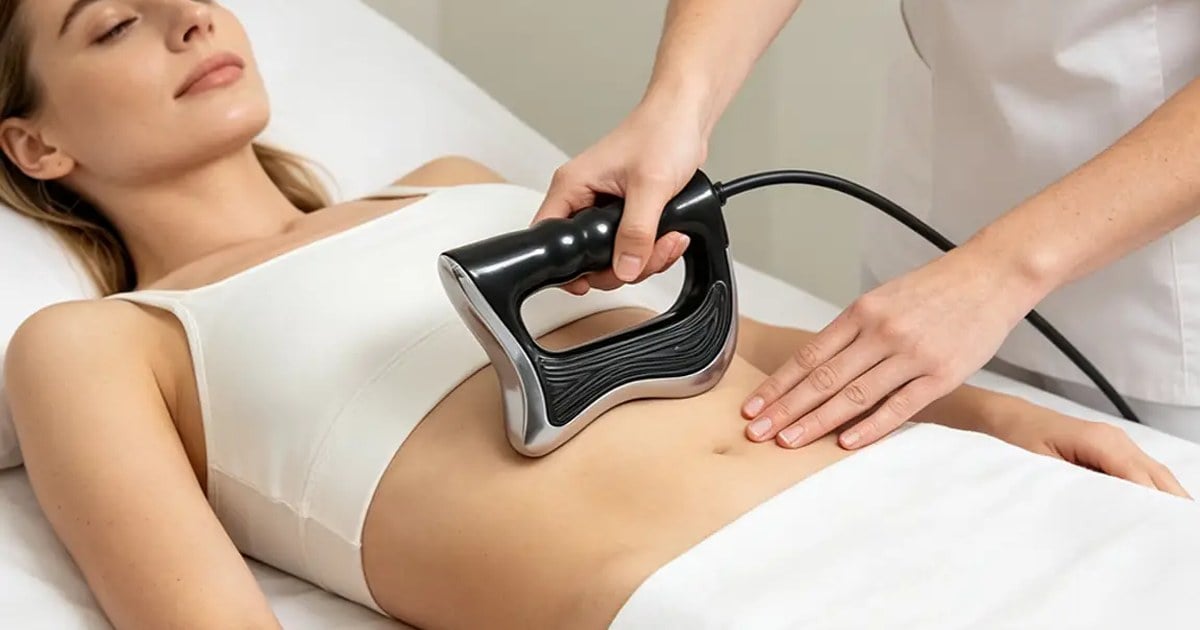
- Unterleib, insbesondere nach der Schwangerschaft: Das subkutane Bauchfett ist in der Regel 2 bis 4 cm dick. Bei einer Eindringtiefe von 1,3 bis 2,5 cm erreicht 40k den größten Teil des Fettes. 80k bei 0,8 bis 1,2 cm durchdringt kaum die Dermis. Für Kundinnen nach der Geburt ist dies der Unterschied zwischen sichtbaren Ergebnissen und vergeudeten Sitzungen.
- Oberschenkel und Reiterhosen (seitlicher Oberschenkel): Fettdepots an der Außenseite der Oberschenkel sind oft faserig und widerstandsfähig. Die niederfrequente mechanische Wirkung von 40k hilft, die fibrösen Septen aufzubrechen, die das Fett in hartnäckigen Taschen einschließen.
- Fettpölsterchen und BH-Wülste: Diese dichten, lokalisierten Ablagerungen befinden sich im Sweet Spot der Tiefe für 40k. Sie gehören auch zu den am stärksten nachgefragten Behandlungsbereichen in Kliniken für Körperkonturierung.
- Gesäß und unterer Rücken: Großvolumige Bereiche, in denen nur ein tiefes Eindringen einen messbaren Unterschied im Umfang bewirken kann.
Der "klingelnde" Elefant im Zimmer: Wie man mit 40k-Tinnitus umgeht
Wenn Sie oder Ihr Personal 40k verwendet haben, kennen Sie die Hauptbeschwerde der Kunden: ein scharfes, hohes Klingeln in den Ohren während der Behandlung. Dies ist keine Fehlfunktion des Geräts, und es ist nicht Luftschall, der ihr Gehör schädigt. Es handelt sich um ein biologisches Phänomen namens Knochenleitung.
Wenn die 40.000-Hz-Schallwelle auf tiefer liegendes Gewebe trifft, wird sie durch die Körperflüssigkeiten und die Skelettstruktur direkt zum Innenohr (Hörnerv) geleitet. Je tiefer sie eindringen, desto ausgeprägter ist die Weiterleitung.
Das klinische Skript für Saloninhaber: Entschuldigen Sie sich niemals für den Klang. Sehen Sie es als Beweis für die Wirksamkeit gegenüber Ihren Kunden. Sagen Sie: "Sie werden dabei ein hochfrequentes Geräusch hören. Das ist eigentlich genau das, was wir wollen. Es bedeutet, dass die Ultraschallenergie erfolgreich tief genug in Ihre hartnäckige Fettschicht eindringt und durch Ihren Körper geleitet wird. Wenn Sie das Klingeln nicht hören, erreicht das Gerät das tiefe Fett nicht."
0380k Cavitation - Präzisionsskulpturierung für oberflächliches Fett und Cellulite
80k ist nicht schwächer als 40k. Es ist präziser. Es ist das Werkzeug, das Orte erreicht, an denen 40k physikalisch überschießt.
So funktioniert die höhere Frequenz von 80k
Bei 80.000 Zyklen pro Sekunde ist die Ultraschallwelle nur halb so lang wie bei 40k - etwa 4,3 mm. Die Gewebedämpfung ist viel höher. Die Energie wird innerhalb des ersten Zentimeters absorbiert. Dadurch entstehen kleinere Kavitationsblasen - etwa 20 bis 50 Mikrometer - und ihr Zusammenbruch ist sanfter und kontrollierter. Weniger brachialer Fettabbau, viel mehr Präzision.
In einer geringen Tiefe von 0,8 bis 1,2 cm kann 80k selektiv auf die faserigen Bindegewebsbänder einwirken, die die Haut nach unten ziehen und die Dellen der Cellulite hervorrufen. Dieser Mechanismus - die Unterbrechung der fibrotischen Septen - ist einzigartig für Hochfrequenz-Ultraschall. Das ist der Grund, warum 80k die beste Wahl zur Cellulite-Reduzierung ist.
Wo sich 80k auszeichnet - Doppelkinn, Arme und Cellulite
Dies sind die Behandlungsbereiche, in denen 80k nicht nur "besser" ist als 40k. Es ist die einzig richtige Wahl.
- Doppelkinn (submentales Fett): Die Haut und das Fett sind hier extrem dünn, und der Bereich liegt gefährlich nahe an Knochen und Nerven. Das ist wichtig: Auch bei 80k muss die submentale Fettschicht während der Operation vorsichtig vom Kieferknochen weggeklemmt werden, um schwere Knochenleitungs- und Nervenbeschwerden zu vermeiden.
- Oberarme (Fledermausflügel) und BH-Wulst (subaxilläres Fett): Arm- und Achselfett ist in der Regel dünn - 1 bis 1,5 cm. 40k dringt zu tief ein und verschwendet Energie auf Muskeln oder Knochen. 80k deponiert seine gesamte Energie genau in der Tiefe der oberflächlichen Fettschicht.
- Cellulite (an jeder Stelle): Die fibrösen Septen, die für die Grübchenbildung verantwortlich sind, liegen in einer Tiefe von 0,5 bis 1,5 cm und damit genau im Bereich von 80k. Die klinische Einstufung zeigt eine deutliche visuelle Glättung nach 8 bis 10 Sitzungen (PMC, 2021).
Eine kritische klinische Warnung: Verwenden Sie niemals jede Kavitation (40k oder 80k) im Gesicht (Wangen, Stirn) oder am Hals (Schilddrüsenbereich). Da kein tiefes Unterhautfettgewebe vorhanden ist, treffen die Ultraschallwellen direkt auf die Gesichtsknochen, was starke Schmerzen, Zahnschmerzen und potenzielle Nervenschäden verursacht. Für die Konturierung und Straffung des Gesichts sollten Sie sich ausschließlich auf RF oder HIFU verlassen.
"40k Erfolg = Maßband. 80k Erfolg = Spiegel."
0440k vs. 80k - Ein Vergleich auf einen Blick
| Dimension | 40k Kavitation | 80k Kavitation |
|---|---|---|
| Frequenz | 40.000 Hz | 80.000 Hz |
| Eindringtiefe | 1,3-2,5 cm | 0,8-1,2 cm |
| Kunde Sensation | Lauter Knochenleitungs-Tinnitus ("Klingeln") | Ruhigeres, warmes Oberflächengefühl |
| Beste Körperbereiche | Bauch, Oberschenkel, Hüften, Rücken, Gesäß | Doppelkinn, Arme, BH-Wulst, Cellulite |
| Dauer der Sitzung | 20-40 Minuten pro Bereich | 10-20 Minuten pro Bereich |
| Hautstraffung | Keine (Erfordert RF-Follow-up) | Minimal (Abwärme der Sonde ist kein Ersatz für RF) |
| Am besten für | Tiefe, dichte, großvolumige Fettreduktion | Präzises Modellieren und oberflächliches Glätten |
Keine der beiden Säulen ist "der Gewinner". Die richtige Spalte hängt ganz davon ab, wer durch Ihre Tür kommt.
05Welches Gerät sollten Sie wählen? - Passen Sie das Gerät an Ihre Kunden an
Auswahl nach Kundenprofil
Die postpartale Mutter - Ihr Hauptproblem ist das Bauchfett, das sich seit der Schwangerschaft nicht verändert hat. Das subkutane Bauchfett ist in diesem Stadium normalerweise 2,5 bis 4 cm dick. Nur 40k erreicht diese Tiefe. Wenn dieses Profil 40% oder mehr Ihrer Buchungen ausmacht, sollten Sie mit einem 40k-Gerät beginnen.
Die Braut oder der Kunde, der die Veranstaltung vorbereitet - Sie will ein scharfes Doppelkinn und straffe Oberarme in einem trägerlosen Kleid. Das sind 80k-Themen. Wenn sich Ihr Salon in einer gehobenen Gegend mit imagebewussten Kunden befindet, die auf der Suche nach Raffinesse sind, können Sie sich mit einer 80k-Strategie anders positionieren als Ihre Konkurrenten, die allgemeine "Körperverschlankung" anbieten.
Der Cellulite-bewusste Kunde - 85 bis 90% der erwachsenen Frauen haben sichtbare Cellulite. 80k zielt speziell auf die fibrotischen Bänder ab, die die Dellen verursachen. Dies ist einer der am meisten untervermarkteten Behandlungswinkel bei der Körperkonturierung.
Die klinische SOP: Kombinationstherapie (40k + 80k/RF)
Wenn Sie in ein Multifunktionsgerät investieren, sollten Sie Ihre Kunden nicht vor die Wahl stellen. Kombinieren Sie Technologien für einen erstklassigen Service. Das Master-Protokoll: Beginnen Sie mit einer 20-minütigen 40k-Behandlung in einem begrenzten Bereich (z. B. einem dichten Unterbauch), um das tiefe Fettgewebe zu durchbrechen. Danach folgen sofort 10-15 Minuten 80k oder RF auf genau demselben Gebiet. Das 40k wirkt wie ein Vorschlaghammer, um das Fett aufzubrechen, während die oberflächliche Frequenz wie ein Bügeleisen wirkt, um die Haut zu glätten und die Lymphdrainage anzuregen. Dieses Kombinationsprotokoll rechtfertigt routinemäßig einen um 30% bis 50% höheren Eintrittspreis.
Bei der Berechnung der Kapitalrendite betrachten erfahrene Besitzer die Gesamtbetriebskosten (TCO). Selbst wenn man die Kosten für Ultraschallgel und die eventuelle Abschreibung des Schallkopfs berücksichtigt, ergibt sich bei einem Kurs mit sechs Sitzungen zu einem Preis von $80 bis $120 pro Sitzung eine erstaunliche Nettogewinnspanne, mit der sich ein Multifunktionsgerät der Mittelklasse in nur 12 bis 18 Kundenkursen amortisiert.
Related guides for cavitation buyers:
• Comparing cavitation with laser lipo? Read Laser Lipo vs Cavitation: Which ROI Is Better for Clinics?
• Adding fat freezing to the same room? See the Cryolipolysis Machine Buyer Guide.
• Building out a pain relief or physical therapy corner? See Focused vs Radial Shockwave: Which Platform Fits Your Clinic.
06Nicht vertretbare Sicherheitsgrenzen (Kontraindikationen)
Da diese Frequenzen in unterschiedlichen Tiefen arbeiten, unterscheiden sich ihre Sicherheitsprofile geringfügig, aber die wichtigsten medizinischen Grenzen sind nicht verhandelbar. Screening jedes Kunden vor der Behandlung.
- Absolute Kontraindikationen (sowohl 40k als auch 80k): Schwangerschaft oder Stillen, Herzschrittmacher oder implantierte elektronische Geräte, aktiver Krebs, Leber- oder Nierenfunktionsstörungen (da sie die freigesetzten Triglyzeride verarbeiten) und tiefe Metallimplantate im unmittelbaren Behandlungsbereich.
- 40k Spezifische Risiken: Niemals über der Brust, dem Herzen, dem Rücken (über Nieren/Wirbelsäule) oder im Gesicht/Hals verwenden. Die tiefe 2,5-cm-Welle kann von inneren Organen oder Schädelknochen zurückgeworfen werden.
- 80k Spezifische Risiken: Während es für oberflächliches Fett (wie ein Doppelkinn) sicherer ist, darf es nie über Bereichen mit aktiven Hautinfektionen, schweren Ekzemen oder kürzlich durchgeführten oberflächlichen Metallfadenlifts (z. B. PDO-Fäden) verwendet werden, da die flache Welle das heilende Gewebe stören kann.
07Was macht eine Kavitationsmaschine wirklich zuverlässig - 3 Checks

Kein Blog eines Herstellers wird diese Frage für Sie beantworten - denn die meisten von ihnen möchten lieber nicht, dass Sie diese Frage stellen. Hier sind die drei Kriterien, die eine professionelle Maschine von einem Glücksspiel unterscheiden:
1. Überprüfen Sie Zertifizierungen, nicht Werbeaussagen. ISO 13485 ist die internationale Qualitätsmanagementnorm speziell für Medizinprodukte. Sie umfasst Designkontrollen, Lieferantenmanagement und die vollständige Rückverfolgbarkeit von Chargen. Wenn der Hersteller wirklich nach ISO 13485 zertifiziert ist, wird er eine Zertifikatsnummer angeben. Die CE-Kennzeichnung und die FDA 510(k)-Zulassung sind die Mindestanforderungen für die Einhaltung der Exportbestimmungen.
2. Fragen Sie nach QC-Tests, nicht nach der Dauer der Garantie. Eine Garantie behebt Probleme später; die Qualitätskontrolle verhindert sie jetzt. Ein glaubwürdiger Hersteller sollte sein Verfahren zum Einbrennen von Leiterplatten (mindestens 48 Stunden Dauerbetrieb unter Spannung) und Alterungstests für die gesamte Baugruppe vor der Verpackung beschreiben.
3. Prüfen Sie die tatsächliche Leistungsabgabe. Ein Gerät mit der Aufschrift "9-in-1" sagt Ihnen nichts. Für eine wirksame Kavitationsbehandlung ist normalerweise eine Leistungsdichte von 2 bis 5 W/cm² erforderlich. Bei weniger als 1 W/cm² handelt es sich um eine warme Massage. Fragen Sie nach der Nennleistung des Handstücks in Watt.
Bei der Bewertung dieser drei Säulen sollten Sie nach Anbietern suchen, die über Zertifizierungen für die einzelnen Technologien verfügen. Konmisonbietet beispielsweise Multifrequenz-Kavitationsplattformen an, die durch eine vollständige internationale Konformitätsdokumentation (CE, FDA, RoHS) für jede eingebettete Technologie unterstützt werden (Konmison Qualitätssicherung). Da das Unternehmen ISO-zertifiziert ist und über globale Servicezentren verfügt, bietet es auch eine vollständige OEM/ODM-Anpassung an - von den internen Komponenten und dem Gehäuse bis hin zur Sprache der Benutzeroberfläche -, wenn Sie Ihre eigene Markengerätelinie aufbauen möchten (Konmison OEM/ODM-Dienstleistung). Damit entfällt das Szenario, dass ein gebrochenes Handstück wochenlange Ausfallzeiten für Ihren Salon bedeutet.
Sind Sie bereit für ein Upgrade Ihres Behandlungsraums?
Hören Sie auf zu raten, welche Frequenz den ROI Ihres Salons steigern wird. Sprechen Sie noch heute mit dem klinischen und technischen Support-Team von Konmison. Wir helfen Ihnen, die richtige Kavitationstechnologie für Ihre demografischen und geschäftlichen Ziele zu finden.
Erhalten Sie eine kostenlose Ausrüstungsberatung →Referenzen
- Nationales Zentrum für Biotechnologie-Informationen. "Entwicklung eines piezoelektrischen Niederfrequenz-Ultraschallwandlers für die Beschallung von biologischen Geweben". Sensoren, 2023. https://pmc.ncbi.nlm.nih.gov/articles/PMC10098853/
- Nationales Zentrum für Biotechnologie-Informationen. "Cellulite-Schweregrad-Skalen und Bildgebungsmethoden - Vergleichstabelle". PMC, 2021. https://pmc.ncbi.nlm.nih.gov/articles/PMC8129470/
- Konmison. "Produktlinie Kavitationsmaschinen". https://www.konmison.com/cavitation-machine/
- Konmison. "OEM/ODM-Anpassungsdienst." https://www.konmison.com/oem-odm/
- Konmison. "Qualitätssicherung und Kundendienst". https://www.konmison.com/quality/
- Konmison. "Custom Beauty Machine Manufacturers - Homepage". https://www.konmison.com/contact/


 EN
EN  RU
RU  ES
ES  IT
IT  AR
AR  FR
FR  DE
DE  JA
JA  KO
KO  NL
NL