
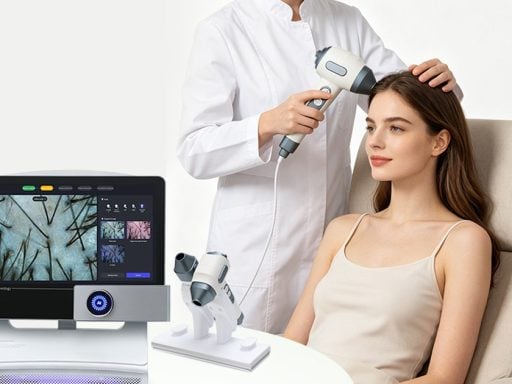
A head spa sells something the client cannot see. They arrive with a scalp that itches, flakes, oils up within a day or feels thinner at the crown — and none of that is visible in a mirror at arm’s length. A scalp analysis machine changes the conversation in about ninety seconds: the 200× image turns a vague complaint into a named condition, and a named condition turns into a programme of six to twelve sessions.
That is why the analyzer, not the massage chair, is the piece of head spa equipment that decides whether the service line makes money.
This guide separates the category into three layers — imaging, therapy and operations — so you can see which machine you are buying, what the spec sheet is really saying, and what to verify before you order.
01 Why the Analyzer, Not the Chair, Sells the Programme
Most salons that add a head spa start from the wrong end. They buy a comfortable wash unit and a massage chair, run a relaxing forty-minute service, then wonder why nobody books a second visit. A relaxation service is a one-off purchase. A scalp programme is a subscription, and subscriptions need a reason to continue that the client can see.
The analyzer supplies that reason. It does three jobs at once:
- It converts. A magnified image of a blocked follicle or an inflamed patch is persuasive in a way a verbal description never is. The client is not told they have a problem, they are shown it.
- It sets a baseline. A stored image from session one makes session six measurable. Progress you can display is the strongest argument for rebooking.
- It tells your staff what to do. Different scalp presentations need different protocols, products and session intervals. Without imaging, the operator is guessing — and guessing produces inconsistent results.
The practical consequence: budget for the analyzer first, and treat the therapy hardware as the thing the analyzer’s findings point to.
02 The Three Equipment Layers of a Head Spa
Head spa equipment becomes manageable once you sort it by what each layer does for the business.
| Layer | What it does | Typical equipment | Why it matters commercially |
|---|---|---|---|
| Imaging | Produces the visible evidence that starts and sustains a programme | Scalp analyzers with white light, polarised light and UV, 50×–200× magnification, client records and printable reports | Converts enquiries; creates the baseline that justifies a repeat booking |
| Terapia | Delivers the service the imaging step points to | Head massage and multi-function scalp care units, red light and low-level laser domes and caps, high-frequency and infusion handles | Provides the billable sessions; repeat visits carry the revenue |
| Operations | Makes the service repeatable and comfortable | Wash and basin units, treatment chairs, carts, consumables, record keeping | Sets your session length, your staffing model and your capacity per day |
A useful sanity check when a quotation arrives: therapy equipment without an analyzer is capacity without a demand engine; an analyzer without therapy hardware is a consultation with nowhere to send the client.
03 Reading a Scalp Analyzer Spec Sheet
Suppliers describe scalp analyzers with the same handful of numbers. Here is what each one actually decides for you.
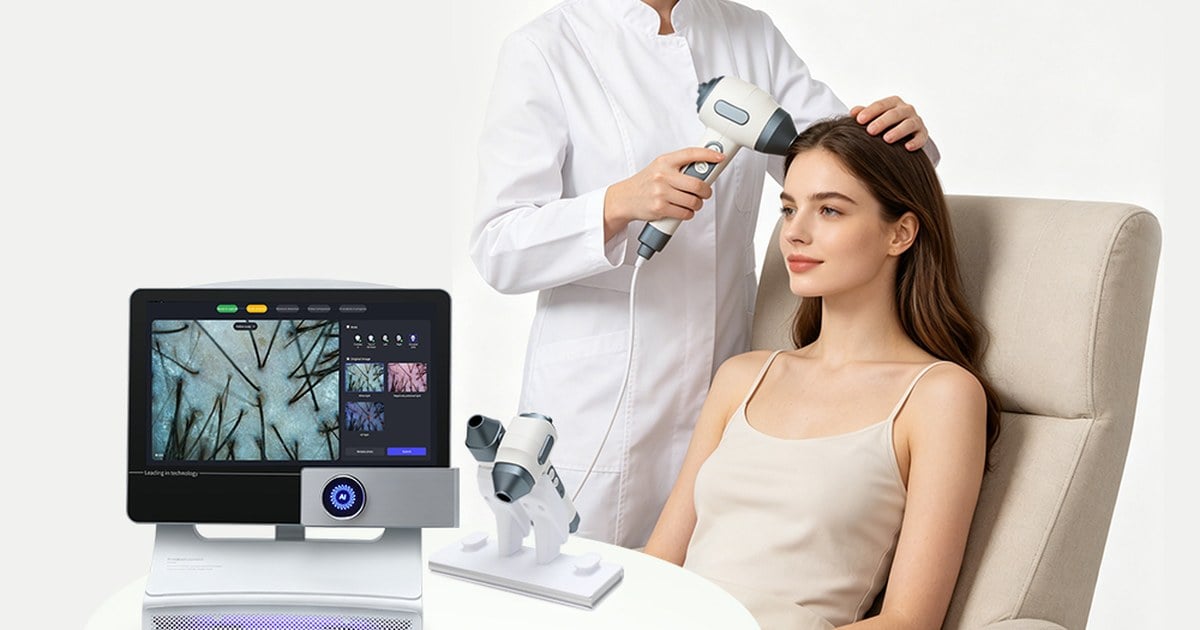
Spectra (the number of light sources). The most over-marketed figure, and the one buyers most often misread. A three-light machine — white, polarised and UV — is the working minimum for scalp work: white light shows surface texture and flaking, polarised light shows inflammation and capillary activity, UV fluoresces oil and follicle blockage. Machines advertising eight or ten spectra add facial reading modes such as parallel polarisation and Wood’s light. Those are worth paying for if the same machine will also sell facials, and largely decorative if your business is scalp care only.
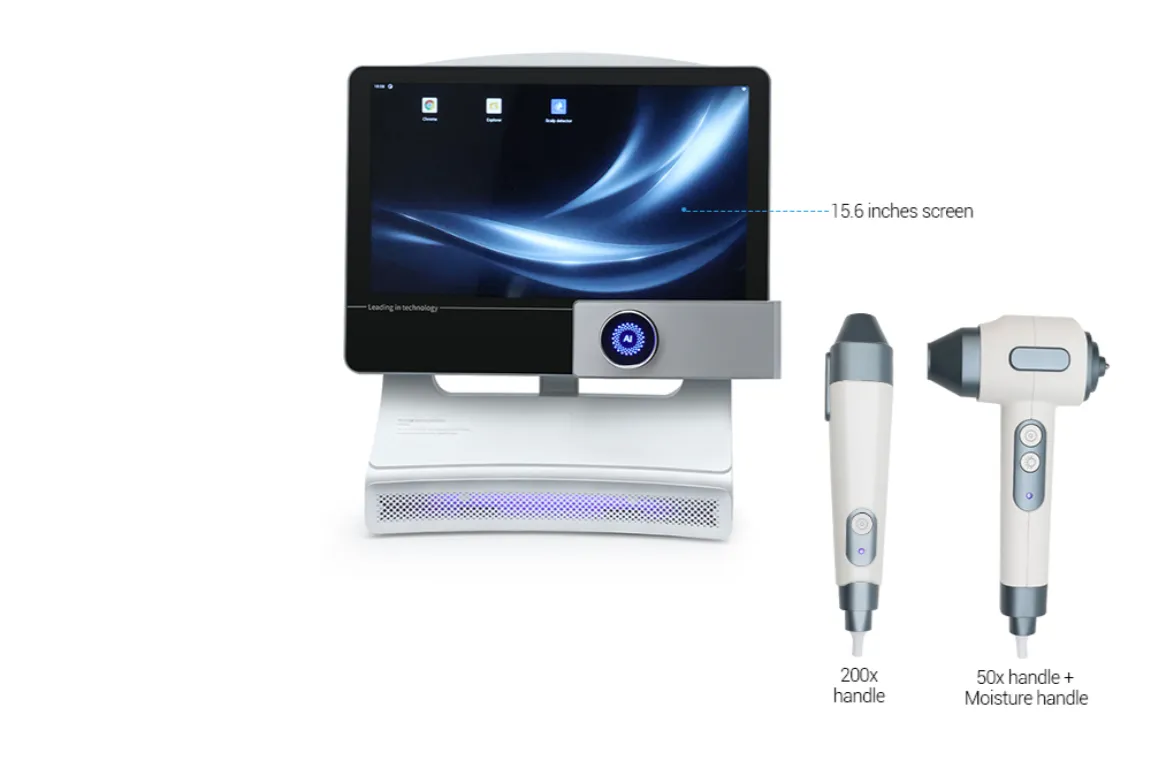
Magnification and lens count. Twenty times shows hair density; 50× shows follicle openings and oil; 200× is where individual follicles and micro-inflammation become readable. Fixed single-lens machines are cheaper but slower, because the operator has only one scale of view. A 50× and 200× handle, or a four-lens set spanning 10× to 200×, lets one consultation sweep from overview to detail without moving the client.
Screen, platform and language count. A 15.6-inch screen at 1920×1080 is the current standard, and large enough for a four-way split comparison of scalp zones. The platform version decides how long the machine stays current; the language count decides whether staff can run it on day one. For an export-facing salon, 15 or more languages is what lets a distributor resell into several markets.
Records, reports and export. A printable report and a customer file are what make the machine a business tool rather than a magnifier. Check whether the record lives only on the unit or syncs to an app and web backend, and check what the report holds: a score, a scalp type, a severity per indicator and a care recommendation is usable in a consultation; a bare photograph is not.
Physical footprint. Packing weight runs from roughly 3.5 kg for a compact boxed unit to 17 kg for a large-screen model — which tells you the shipping cost, whether it fits an existing counter, and whether one person can move it.
04 Three, Eight and Ten Spectra: What Each Light Actually Shows
Sellers present spectra as a quality ladder. In practice each light answers a different question, and a machine is worth its extra spectra only if your staff will use them.
| Light source | What it reveals | Needed for scalp work? |
|---|---|---|
| Luce bianca | Surface texture, flaking, hair density and shaft condition | Yes — baseline view |
| Cross-polarised / negative polarised light | Beneath the surface: redness, inflammation, capillary activity, sensitivity | Yes — separates irritation from dry flaking |
| Luce UV | Fluorescence of oil, residue and blockage around the follicle opening | Yes — the reference image for cleansing protocols |
| Parallel polarised light | Specular reflection patterns on facial skin | Only if the machine also sells facial services |
| Wood’s light | Pigmentation and bacterial fluorescence on facial skin | Only for facial skin analysis |
| Mapped colour views (red / brown / black-and-white maps) | Pigment and vascular distribution rendered as false-colour maps on the face | Only for facial skin analysis |
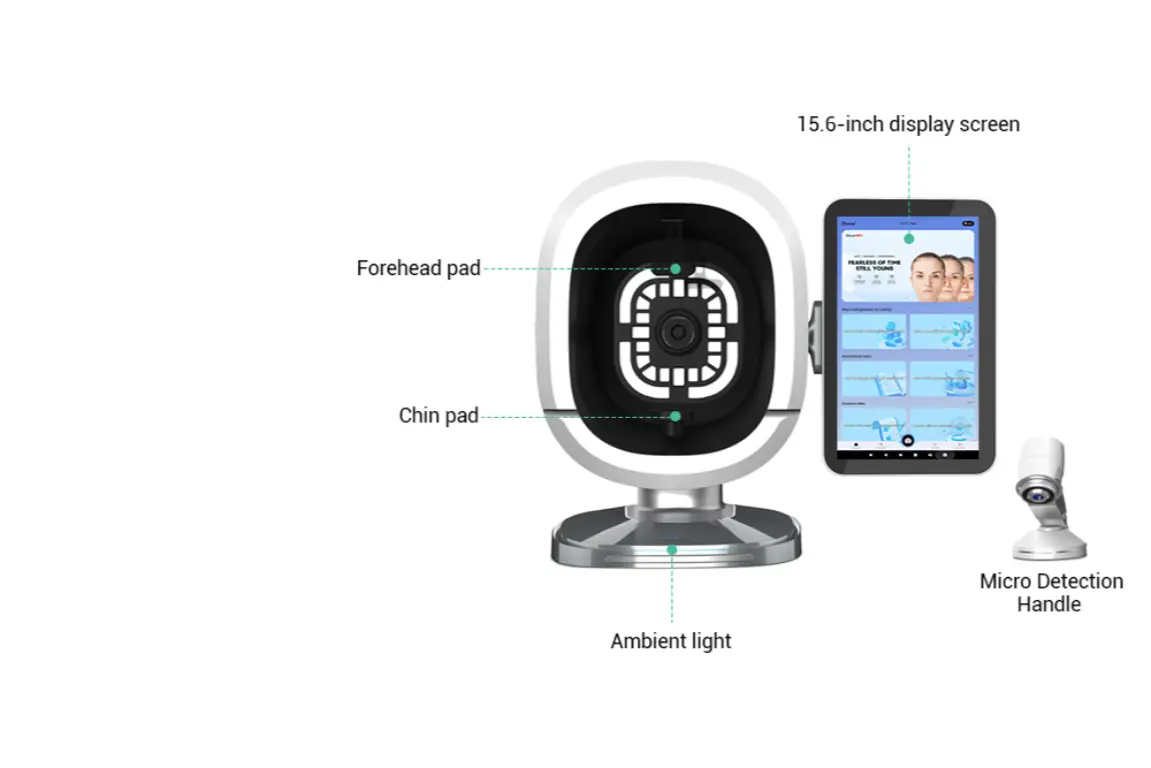
Read a machine’s spectral claim against this table. A three-spectra machine covering white, polarised and UV is complete for a scalp-only business. An eight-spectra machine earns its price if the same unit must also serve a facial room — the case for most salons adding a head spa to an existing beauty business. Machines built on the wider light set, such as the M17 AI skin analyzer with hair scalp detection, pair the extra facial spectra with a detection handle that still reads the three scalp views.
05 Magnification: Why Variable Beats Fixed
The magnification question is decided by how a consultation actually runs.
A fixed 50× lens shows oil and flaking well but cannot show the follicle opening clearly enough to explain a programme. A fixed 200× lens gives a striking close-up but is disorienting as a first image — the client cannot place what they are looking at.
The sequence that works in the room is wide first, then close. That is why a second magnification point, or a multi-lens set, shortens consultations noticeably. A four-lens set covering 10×, 50×, 100× and 200× lets the operator open wide to orient the client, then step in to the follicle; a 50× moisture handle paired with a 200× handle achieves the same in one unit. If counter space is the constraint rather than budget, the same four magnifications run from a portable scalp analysis machine with a 15.6-inch Android tablet instead of a fixed console.
One caution on specification sheets: magnification describes the lens, not the image quality. A 200× lens behind a low-resolution sensor produces an unimpressive picture, so ask for the sensor resolution alongside the magnification and look at sample scalp images.
06 Handles, Probes and Scalp-versus-Skin Detection
Scalp analysis and facial skin analysis are not the same measurement, and the difference shows up in the probes.
| Configuration | Typical behaviour | Best suited to |
|---|---|---|
| Single handle, single fixed lens | One scale of view; fastest to train, least flexible | Entry scalp-only service |
| Single handle, two replaceable probes | One body, two probes — one for scalp, one for facial skin; stored magnetically on the base | Salons running scalp and facial analysis from one counter |
| Two dedicated handles | A 50× plus moisture handle and a 200× handle; no swapping mid-consultation | Busy scalp-only clinics running back-to-back consultations |
| Multi-lens set (four lenses) | 10× to 200× from one handpiece or a lens set | Operators who want maximum flexibility for teaching and training |
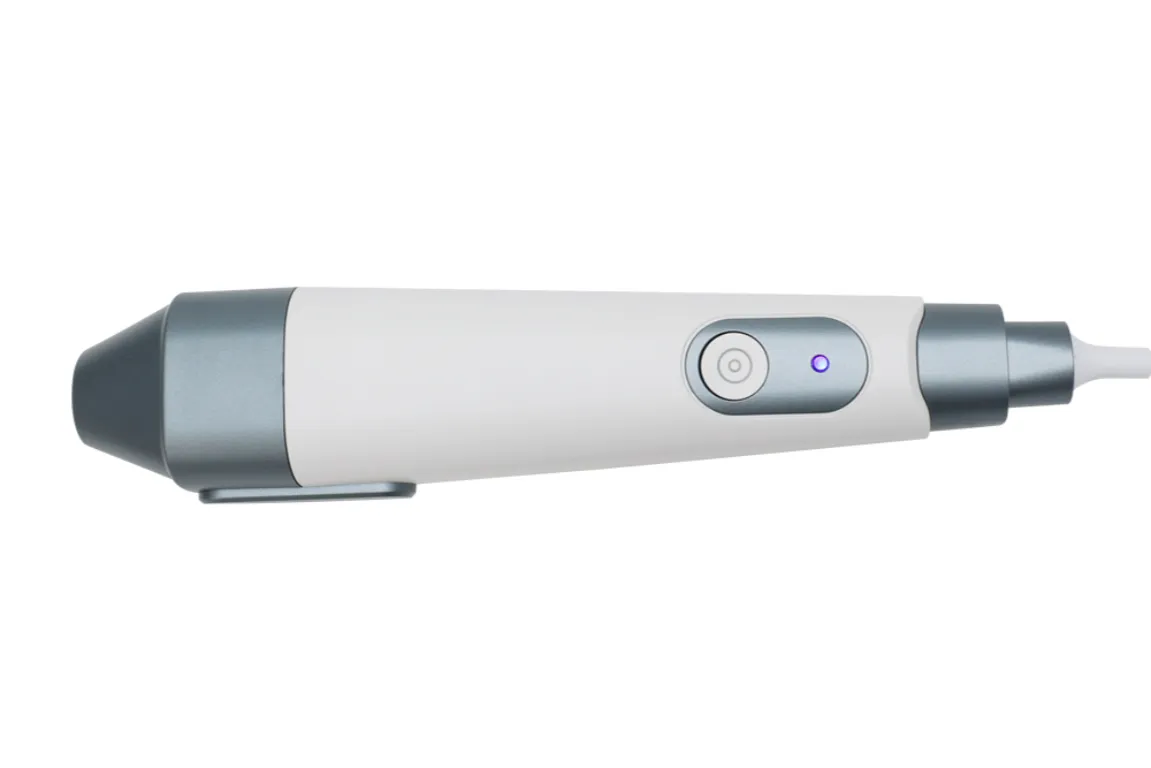
Two checks decide this for you. Ask whether the probes dock magnetically and swap without a tool — a probe change that takes thirty seconds will not happen between clients, and staff default to one probe. Then ask whether the moisture reading is built into a detection handle or is a separate step, because the answer changes both your consultation script and your training time.
07 Comparing the Analyzer Tier at a Glance
The table below summarises the specifications of the analyzer models Konmison builds for this category.
| Macchina | Light sources | Indicators | Handle / probe setup | Schermo | Le lingue | Peso dell'imballaggio |
|---|---|---|---|---|---|---|
| 8 Spectra AI analyzer with hair scalp detection | 8 | 17 | 1 micro detection handle (white, polarised, UV) | 15.6 in, foldable | 18 | 17 kg |
| 2 in 1 T5 AI scalp analyzer | 3 (white, negative polarisation, UV) | 13 | 2 handles: 50× with moisture, and 200× | 15.6 in, 1920×1080 | 15 | 8.2 kg |
| DS-2 dual-dimensional hair scalp and skin detector | 3 (white, cross-polarised, UV) | Scalp and facial skin, dual probe | 1 handle, 50× lens, 2 replaceable probes | 15.6 in, 1920×1080 | 5 | 4.2 kg |
| X3PRO AI skin image analyzer with scalp analysis | 8 | 20+ | 1 handle; microscope handle on the B variant | 15.6 in, 1920×1080 | 24 | 12.2 kg |
| K33 AI scalp and facial tester | 8 | 19 | 1 detection handle with microscope probe | 15.6 in, 1920×1080 | 19 | - |
| 4-spectrum follicle scalp and skin analysis machine | 3 on the 50× lens, plus 200× optical | Follicle and skin indicators | 2 lenses: 50× and 200× | 15 in | - | 3.5 kg |
Two notes on reading this table. Where a model lists fewer light sources but a scalp-specific handle layout, it is usually the better scalp instrument — the spectra point at the right subject. Where a model lists eight spectra and 20+ indicators, it is the better choice if the same unit must carry your facial analysis too. The X3PRO range also illustrates a naming trap: the B variant adds a microscope handle and a comprehensive report, the non-B variant does not.
08 The Therapy Layer: What the Imaging Step Points To
Once the analyzer has produced an image, three families of hardware deliver the programme.
| Equipment family | What it is | Typical configuration | Role in the programme |
|---|---|---|---|
| Multi-function scalp care unit | A console combining imaging with treatment handles | 5 handles plus 2 detection heads (a 200× white-light head and a 50× three-spectra head); functions include nano spray, microcurrent, meridian massage, warming and vibration | One machine runs detection, cleansing and care in a single session |
| Red light and low-level laser dome | A hood or cap that covers the whole scalp | 261 emitters in a full-head coverage dome, a 3-in-1 cap with warming and vibration, or a 7-in-1 dome that also runs facial care | The repeat-visit workhorse; no consumables, short sessions, easy to schedule |
| High-frequency, infusion and microneedle handles | Handpieces that support product penetration and scalp conditioning | High-frequency comb with red laser, oxygen spray, infusion stamp handles | Adds a billable step and a product retail hook to the session |
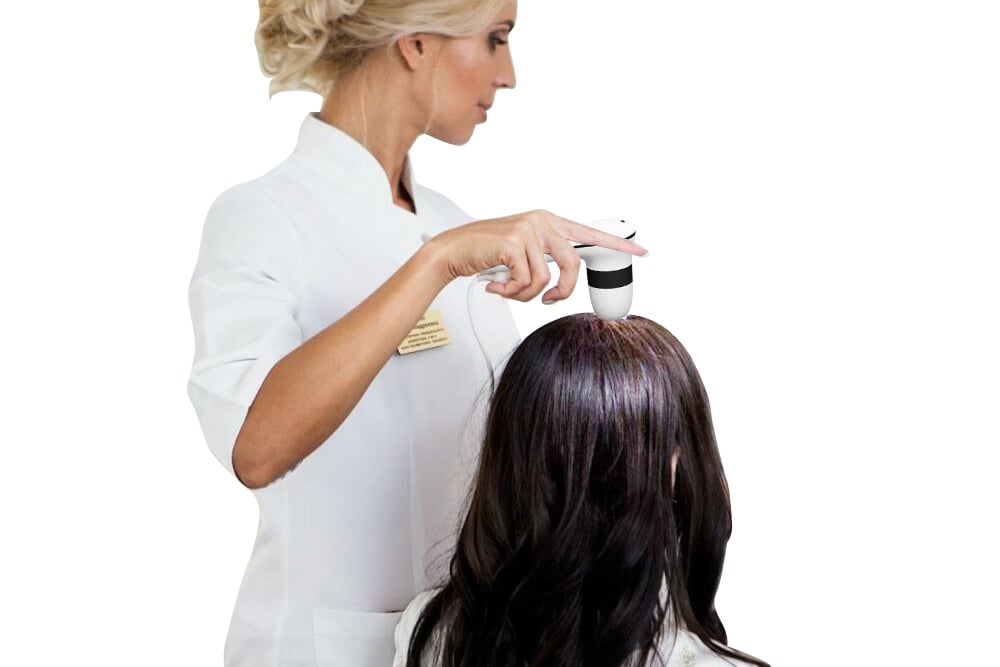
Three configurations show how the families differ in practice. The 5 in 1 scalp detection head massage machine puts imaging and five care handles in one console, so detection and treatment happen in a single appointment. The 261-lamp full head coverage red light machine e il 3 in 1 LED light hair care cap with heating and vibration both cover the whole scalp without an operator holding a handpiece, while the 7 in 1 full head coverage red light hair and facial care machine extends that coverage to facial care in the same hood. Where the programme needs product penetration, a handle-based option such as the 5 in 1 high frequency and red laser machine with scalp analyzer adds the step, and an EMS microneedle derma stamp covers infusion on its own.
If you are choosing the first therapy purchase, the decision usually comes down to session economics rather than capability. A dome or cap runs a fixed-length session with no operator skill ceiling and no consumable, which makes it easy to schedule alongside other services. A console delivers more per session but needs a trained operator and a longer slot. Salons with limited staff often buy the dome first and add the console once the programme has a client base.
09 Room, Workflow and Staffing: the Part Quotations Leave Out
The equipment decides more about your operation than most buyers expect. Four items are worth settling before you order.
- Session length. Imaging plus cleansing plus care is a longer appointment than most salons assume. One machine that images and treats in a single pass keeps the slot predictable; imaging in a consultation area and treating in a separate room shortens the treatment slot but uses more floor space.
- Privacy and layout. Scalp work means hair, water and a reclined client. Plan for a basin within reach, a screen for the imaging step, and a surface that takes a 15 to 17 kg unit with the screen at seated eye level.
- Staff skill and training time. The imaging step is the part staff are least comfortable with at first. A large screen, a guided detection mode and a documented set of scalp zones are quicker to teach than a handheld unit used freehand.
- Consumables and record keeping. Light-based therapy hardware has no per-session consumable, which keeps pricing simple. Either way, decide where records live — on the unit, on an app, or in a web backend. Records that cannot be found will not be used.
A short list of questions to put to any supplier, in writing, before you order:
- How many light sources, which ones by name, and which are scalp-specific?
- What sensor resolution sits behind the magnification figures, and can you send sample scalp images?
- How many handles and probes are included, and do the probes swap without a tool?
- Does the unit store client records, print a report and export data — and where does that data live?
- What does the unit not do that a competing model does? Ask this one last; the answer is usually the most informative.
10 Frequently Asked Questions
Can a scalp analysis machine be used for facial skin analysis too?
Some can, and the choice affects both price and spectra. A scalp-first machine pairs white, polarised and UV light with scalp-specific probes, which is all a head spa service needs. A dual-purpose machine adds facial reading modes such as parallel polarisation and Wood’s light, and usually carries a higher spectra count. If you already run facial treatments, one dual-purpose instrument beats two specialised units.
How important is 200× magnification for a salon?
It matters for one job: showing the client the follicle opening and the condition around it, which is the image that justifies a multi-session programme. A 50× view is better for orientation, oil and flaking. Holding both a wide and a close view in one instrument shortens the consultation and makes the images land better.
What is the difference between a scalp analyzer and a scalp care or head massage machine?
They sit in different layers. A scalp analyzer images and assesses, producing the evidence, baseline and record. A scalp care or head massage machine delivers the treatment, usually with several handles for cleaning, warming, massage and product application. Most salons need both, and the analyzer is the better first purchase because it creates the demand the treatment unit serves.
Do I need a separate machine for red light or low-level laser scalp care?
Not necessarily a second console, but a separate unit, yes. Light-based scalp care is delivered by a dome or cap covering the whole scalp — a different format from a detection console. The advantage is operational: fixed session length, no consumables and no operator skill ceiling, so it schedules easily alongside other services.
How many languages should the machine support?
Enough that your staff can operate it without translating a manual, and ideally enough to resell. Fifteen or more is common on current models and covers most export markets. Check which languages, not just the count — a high total can still miss the one your team needs.
What should I check in the report the machine produces?
Four things: whether it stores a client record you can retrieve by name, whether it prints or exports, whether each indicator carries a severity reading rather than a bare image, and whether it recommends a care direction. A report with scores and per-indicator detail is usable in a consultation; a folder of photographs is not.
What is the minimum setup for a salon adding a head spa service?
One analyzer with 50× and 200× views, one treatment console or a light-based dome, and a wash and seating position that supports a reclined client. Everything beyond that should be added after you know how many clients the programme actually brings in.
11 Conclusion and Where to Go Next
The category rewards a specific order of decisions. Start with the imaging instrument, because it converts an enquiry into a programme and makes a second visit meaningful. Choose spectra and magnification by the work you will actually do — three light sources and a wide-to-close lens pair serve a scalp-only service completely. Then add the therapy hardware the imaging step points to.
Two specifications are worth insisting on regardless of budget: a retrievable client record, and a magnified view that shows the follicle rather than just the hair shaft. Those separate a machine that supports a scalp programme from a magnifier with a screen.
Where to go next
- Running a facial room as well? Our AI skin analyzer machine buyer’s guide covers the facial assessment side of the same equipment family.
- Need maximum flexibility on lenses rather than the widest light set? The 10X~200X AI intelligent hair scalp analysis machine covers four magnifications from one setup.
- Leave a comment or send us a message with your room layout and the scalp services you plan to run, and we will map the three layers against your floor plan.


 EN
EN  RU
RU  ES
ES  IT
IT  AR
AR  FR
FR  DE
DE  JA
JA  KO
KO  NL
NL