
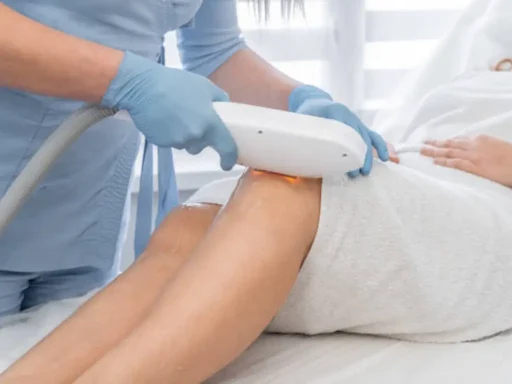
Short answer: it pays when your consultations are the bottleneck, not when your treatment room is. Three capabilities on one chassis — a diode handle for hair removal, an Nd:YAG handle for tattoo and pigment work, and an imaging unit that reads skin before you treat it — only earn their keep if the third one changes what you do in front of the client. If your team already sells well without pictures, the analyzer is an expensive accessory. If clients routinely ask “but how do you know what I need?”, it becomes the cheapest sales tool in the room.
This guide is about that decision. It is not a wavelength comparison (that is a separate question, covered in Diode vs Alexandrite vs Nd:YAG), and it is not a buyer’s guide for standalone imaging devices (that one is 여기). It answers one question: should the analyzer live inside the laser platform you are about to buy?
1. What “3 in 1” actually means in 2026 — and why the label misleads you
Three completely different machines are sold under the same three-word label. When you compare quotes and the numbers look wildly different, this is usually why.
| Configuration | What the three things are | Typical buyer | Where it stops |
|---|---|---|---|
| Light-based 3-in-1 | IPL + SHR + Nd:YAG (or IPL + RF + laser) | Salon adding hair removal and skin rejuvenation on a budget | IPL is broadband — pigment and vascular work is coarse, and dark skin types need care |
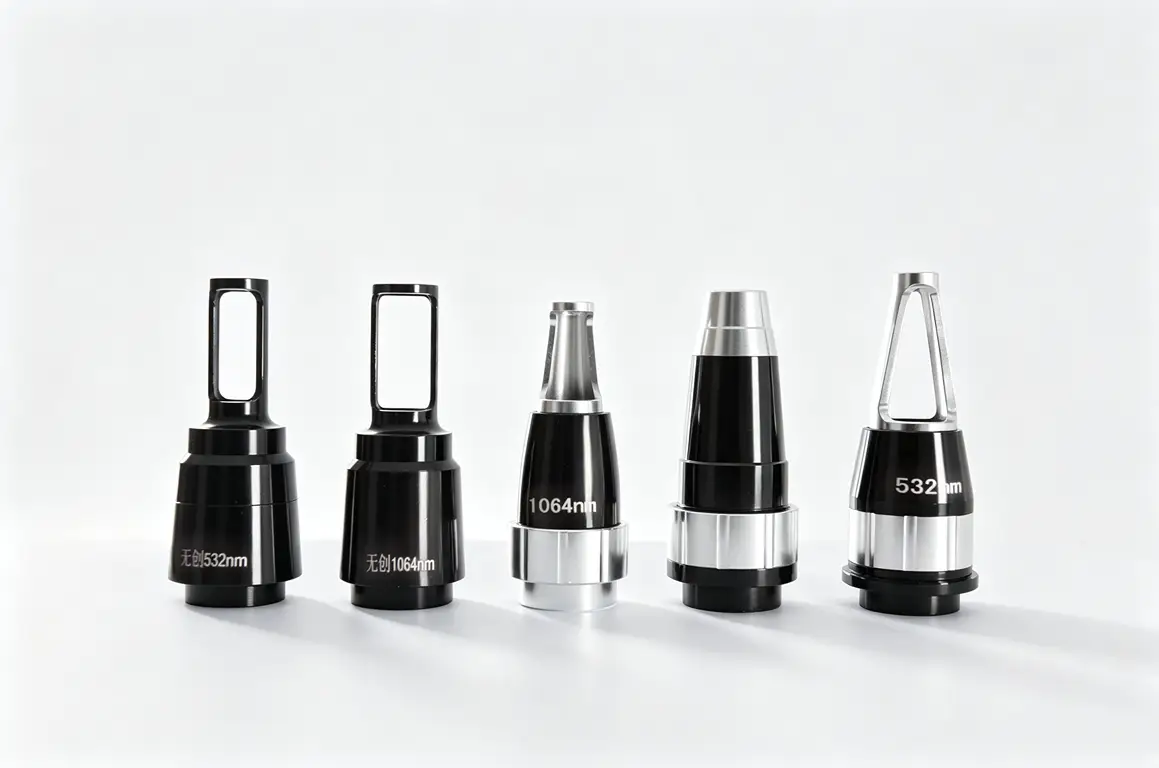
| Laser-based 3-in-1 | Diode (755/808/1064nm) + Nd:YAG (532/1064/1320nm) + a third modality | Clinic that wants hair removal, tattoo removal and pigment work from one footprint | The third slot is often either a second laser or, increasingly, an imaging unit |
| Laser platform + analyzer | Laser handles plus a camera/spectral imaging head with reporting software | Clinic whose bottleneck is consultation, not treatment capacity | The analyzer is a screening and education tool — it is not a diagnostic device |
The third row is the configuration this article is about, and it is the one where spec sheets mislead most. A quote can list “3 handles” and mean three laser wavelengths; another can list “3 handles” and mean two lasers plus a camera. Those are not the same product, and the second one is usually more expensive for reasons that have nothing to do with treatment power.
Read the handle list, not the headline number. If the third item is described as an imaging head, an analyzer, a skin scanner or a diagnosis handle, you are looking at a combination platform. If all three are described by wavelength, you are looking at a laser-only machine with a broader menu — which is a different value proposition, and the one the 808nm vs triple-wavelength comparison already covers.
2. What a built-in analyzer does that a standalone one doesn’t
The imaging hardware inside a laser platform is usually simpler than a dedicated device: fewer light sources, a fixed focal length, a smaller sensor. What it wins on is not image quality — it is being in the same room, on the same screen, in the same session.
The hardware, in plain terms
Most built-in units image the face under two or three lighting conditions — white light for texture and pores, cross-polarized light for pigment and vascularity beneath the surface, and UV for photodamage that is not yet visible. Software then segments the image into regions and scores things like spot density, pore size, wrinkle depth, redness and UV pigmentation. Higher-end standalone devices add more spectral bands and calibrated lighting; built-in units typically trade some of that for integration.
The three integration wins that actually matter
Where a standalone device still wins
If skin analysis is the product — a skin-clinic-led business selling facials, peels and programmes — buy the dedicated device and buy a good one. Its lighting, calibration and report design are built for that job, and clients who pay for analysis expect a dermatology-grade experience. In that model the laser is the add-on, not the analyzer.
3. The four places the combo changes your day
This is the part that decides payback, so be honest with yourself about each one.
(a) Consultation conversion
A client who can see her own UV pigmentation on a 15-inch screen stops negotiating about price and starts asking about sessions. That shift is the single largest financial effect of an analyzer — bigger than any treatment-menu expansion, and it does not require new consumables. But it only works if someone on your team is trained to narrate the image: point, name, compare to the reference zone, then propose. Untrained staff show a picture, say “your skin is bad”, and lose the room.
(b) Cross-modality treatment planning
With hair removal, tattoo and pigment work on one platform, the analyzer becomes the triage step. Fitzpatrick typing informs which wavelength is safe; visible vascularity argues against aggressive settings on the first pass; a dense pigment pattern in a client asking for “just hair removal” is a reason to quote a second service line. This is where a combination platform earns more than the sum of three single-function machines — if the operator is allowed to re-plan on the spot.
(c) Between-session evidence
Baseline, session three, session six — the same lighting, the same framing, the same software. Clients renew packages when they can see change; they also stop arguing about “it didn’t work” when the before/after is in the record rather than in a phone gallery. This has a retention effect that is hard to quantify but easy to notice after two months.
(d) Package design and add-on revenue
An analyzer gives you a defensible reason to bundle: hair removal plus a pigment pass, or a resurfacing course with imaging at each visit. Packages built on visible evidence sell at higher tickets than packages built on a menu list — and they are the reason a combination platform can beat three cheaper machines on revenue per square metre, not just on floor space.
4. Where the combo does not pay
Four situations where I would tell a buyer to spend the money elsewhere. This section exists because a supplier who only sells you the upgrade is not giving you a decision.
| Situation | Why the analyzer underperforms | Better allocation |
|---|---|---|
| One treatment room, one operator | No consultation bottleneck to remove; the analyzer’s value is workflow, and there is no workflow to fix | Put the budget into handle quality and shot life |
| Hair-removal-only studio | You will use the imaging head twice a week and the diode handle eighty times | Single or dual-wavelength laser with a bigger spot and longer warranty |
| Already own a good standalone analyzer | Two imaging systems create two records and a naming mess | Laser platform without the imaging head; integrate by exporting PDFs into one folder |
| Team will not be trained on it | An unused analyzer is a permanent reminder that you overbought | Buy later as an add-on handle, if the platform allows it |
One more caveat that matters commercially: an analyzer is a screening and education tool, not a diagnostic device. It does not diagnose disease, and any supplier who markets it that way is creating regulatory exposure for the clinic that repeats the claim. Keep the language to “what we can see” and “what we recommend”, and route anything that looks pathological to a physician.
5. What to verify before you sign
Three groups of checks. Print this and take it to the demo.
(a) The analyzer side
- Imaging modes — white light, polarized, UV. Two modes is workable; one mode means you are buying a nice camera.
- Report export — can it produce a client-facing PDF or image set with your logo, in your language, without a laptop plugged in?
- Data storage — local, cloud, exportable? Ask what happens to the images if you stop paying a subscription.
- Framing repeatability — is there a chin rest or a distance guide? Without one, session-three images will not align with baseline and the comparison is worthless.
(b) The laser side
This is where the money actually is, and it is the part buyers skip. Check the wavelength set against your client mix, the spot size against the body areas you treat, energy density range against the darkest skin type you see, shot life against your monthly volume, and cooling against how many sessions you run back-to-back. For how those numbers move between single and triple-wavelength builds, the 808nm vs triple-wavelength table is the reference.
(c) The integration side — the one nobody asks about
Ask, in this order: Is the analyzer on the same screen and the same software as the treatment settings, or is it a second tablet strapped to the trolley? Does the image file carry the treatment parameters that were used? Can you export a whole client history in one action? Can firmware be updated without shipping the unit back? A “yes” to all four is what separates an integrated platform from three devices sharing a chassis.

6. Cost and payback — the formula, not a price list
We do not publish equipment prices, and any number a supplier quotes you without knowing your ticket size is a guess. What you can do before the call is work out what a machine has to earn per month to justify itself.
Plug your own quoted price into the grid below. The rows are average ticket, the columns are how many paying clients per day the new capability adds — not total clients, only the ones the analyzer or the third modality brought in.
| Avg ticket | +1 client/day | +2 clients/day | +3 clients/day |
|---|---|---|---|
| $80 | slowest band | mid band | fast band |
| $150 | mid band | fast band | fastest |
| $250 | fast band | fastest | fastest |
Two honest observations about that grid. First, the analyzer usually moves you right on it (more clients converted per day) rather than up (higher ticket per client) — which is why consultation conversion, not menu expansion, is the number to model. Second, the third modality only counts if your market actually buys it: tattoo removal in a city with twelve providers is a price war, not a revenue line.
7. The 30-minute test drive
Do this on your own skin, in the room you will actually use, in the lighting you actually have. Bring a stopwatch.
If a supplier will not let you run that sequence, you have your answer regardless of the spec sheet. The same discipline applies to reading the paperwork — how to read a beauty machine specification sheet covers which lines to check and which to ignore.
8. FAQ
Is a built-in skin analyzer as accurate as a standalone device?
For screening and client education, usually yes. For clinical-grade measurement — calibrated colorimetry, quantified erythema, longitudinal studies — a dedicated device with controlled lighting is better. If you need the measurement, buy the measurement; if you need the conversation, the built-in unit is enough.
Can I use the analyzer to diagnose skin conditions?
No. It images and scores visible features. Diagnosis belongs to a qualified clinician, and marketing language should never imply otherwise.
I only do hair removal. Do I need the analyzer?
Rarely. It helps with Fitzpatrick assessment and with selling a pigment or vascular add-on, but if your business is volume hair removal, spend the difference on handle quality, spot size and shot life instead.
Which wavelengths should a 3-in-1 laser platform include?
For a mixed client base: 755nm for lighter, finer hair, 808nm as the general workhorse, 1064nm for darker skin types — plus an Nd:YAG handle if you also do tattoo and pigment work. The wavelength comparison explains the trade-offs between builds.
How long do the handles last?
Ask for a shot-life figure per handle and convert it into months at your volume. A 30–50 million shot diode handle at 2,000 shots per full-body session is thousands of sessions; the number that matters is whether the figure is stated per handle or per machine, and whether replacement is a handle swap or a factory return.
Can the analyzer be added later?
On some platforms, yes — as an add-on handle. On others the imaging unit is factory-integrated and cannot be retrofitted. Ask before you sign, because “add it later” is a common reason buyers accept a lower spec today and regret it in year two.
The decision, in one paragraph
Buy the combination platform if your growth is limited by how many consultations convert and your team will actually use images in the room. Buy three separate machines — or one good laser and one good analyzer — if your growth is limited by treatment capacity, if your menu is narrow, or if nobody on staff will be trained to narrate what the screen shows. The analyzer is not a feature you own; it is a habit your clinic has to build. Price it accordingly.
If you want to compare the configuration against your own treatment menu and client mix, send us the list of services you run and the skin types you see most — we will tell you which combination makes sense for your volume, including when the answer is fewer handles rather than more.




 EN
 RU
 ES
 IT
 AR
 FR
 DE
 JA
 KO
 NL