
If you are looking for a skincare treatment that bridges the gap between a basic facial and an aggressive resurfacing procedure, the carbon laser facial offers a perfect balance. By using liquid carbon as a magnet to draw out impurities, this zero downtime treatment gently clears pores, controls acne, and stimulates long term collagen production. This comprehensive guide walks first time patients through the step by step process, realistic results, and essential aftercare. Additionally, it provides aesthetic clinic owners with a crucial equipment buying roadmap, detailing the exact machine specifications and international safety certifications required to deliver professional results.
What Is a Carbon Laser Facial?
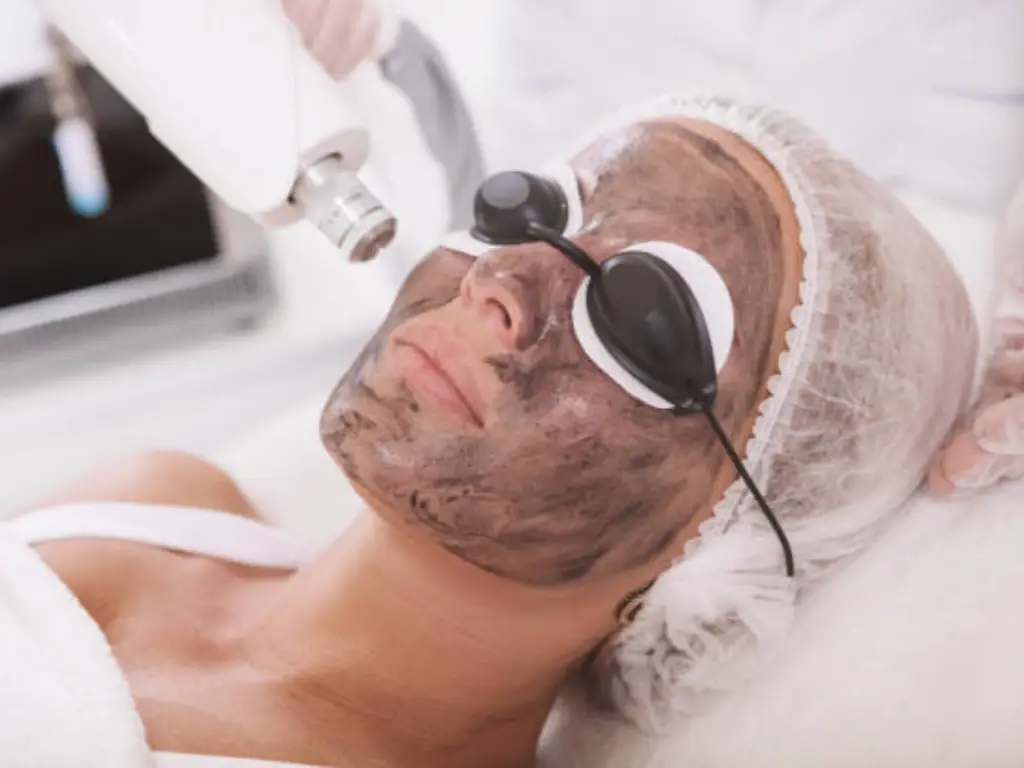
A carbon laser facial is a non-invasive skin treatment that combines medical-grade liquid activated carbon with a Q-switched Nd:YAG laser (1064nm wavelength) to deliver deep pore cleansing, oil control, skin brightening, and collagen stimulation — all with virtually zero downtime. You may know it by one of its other names: Hollywood Peel, Carbon Laser Peel, or Q-Switch Laser Facial. Each name reflects a different marketing angle, but the technology and mechanism are the same.
The carbon lotion acts as a magnet: it seeps into your pores and binds to oil, dead skin cells, and debris. The laser then targets only the carbon particles — not your skin directly — and vaporizes them in an instant, taking all that trapped material with it. Skin comes out cleaner, brighter, and smoother from the very first session. No peeling. No redness that lasts more than a few hours. No need to hide indoors for days afterward. Each session takes about 20 to 30 minutes — a genuine lunchtime facial.
How the Carbon Laser Facial Procedure Works
One idea makes the carbon laser facial different from every other laser treatment: the carbon is the middleman, not your skin. Ablative lasers remove layers of skin directly, which is why they come with weeks of recovery. The Q-switched laser’s energy, by contrast, is absorbed almost entirely by the carbon particles sitting on top of your skin. What reaches the dermis is only gentle, indirect heat — enough to stimulate collagen, not enough to cause damage.
Step-by-Step Procedure Breakdown
Step 1 — Cleansing. The face is thoroughly cleaned to remove surface oil, makeup, and impurities. This ensures the carbon lotion can make direct contact with the skin and penetrate pores effectively.
Step 2 — Carbon Application. A thin, even layer of medical-grade liquid activated carbon is applied to the entire face. The carbon particles are small enough to seep deep into pores, where they bind to sebum, dead skin cells, and debris — functioning like a magnet for everything you want removed.
Step 3 — Drying. The carbon lotion is left to dry for approximately 10 minutes, forming a dark mask-like film on the skin’s surface. During this time, the carbon continues to absorb pore-clogging material at a microscopic level.
Step 4 — First Laser Pass (Low Energy). The practitioner passes the Q-switched Nd:YAG laser over the face at a low energy setting. This gently heats the carbon layer and the upper dermis, strengthening the bond between carbon and impurities while beginning to stimulate fibroblasts — the cells responsible for collagen production.
Step 5 — Second Laser Pass (Higher Energy). The laser is switched to a higher-intensity Q-switched mode. The carbon particles absorb the laser energy and heat up to a vaporization point in nanoseconds. You will hear a light crackling or popping sound — not your skin burning, but the carbon particles vaporizing along with all the oil, dead cells, and debris they captured. This is selective photothermolysis: the laser selectively targets the carbon (dark, absorbs 1064nm energy) and spares the surrounding tissue.
Step 6 — Finishing. A soothing moisturizer, antioxidant serum, and broad-spectrum SPF 50 sunscreen are applied. Your skin is now deeply cleaned, lightly exfoliated, and ready to face the world — often looking noticeably brighter within minutes.
How Carbon Laser Differs from Other Laser Facials
If you are weighing your options, here is how the carbon laser facial stacks up against two other popular treatments:
| Treatment | Technology | Primary Indications | Pain Level | Downtime | Results Visibility |
|---|---|---|---|---|---|
| Carbon Laser Facial (Q-Switched Nd:YAG 1064nm) | Non-ablative, carbon-mediated selective photothermolysis | Oily skin, enlarged pores, dull complexion, mild pigmentation, early fine lines | Minimal — mild warmth and crackling sensation | None to a few hours of mild pinkness | Immediate brightness; progressive improvement over sessions |
| CO2 Fractional Laser (10,600nm) | Ablative — removes microscopic columns of skin to trigger regeneration | Deep wrinkles, significant acne scars, severe sun damage, pronounced skin laxity | Moderate to significant — requires topical anesthetic | 1–2 weeks of redness and peeling; erythema can persist up to 6 months | Dramatic after healing completes (weeks to months) |
| HydraFacial | Non-laser — vortex suction extraction + serum infusion | Mild congestion, dehydration, dullness, maintenance between laser treatments | None — comfortable, no discomfort | Zero | Immediate hydration and glow; cumulative with regular sessions |
In short: the carbon laser facial sits in a sweet spot. It delivers more depth and measurable change than a HydraFacial, but without the pain, risk, and recovery time associated with ablative CO2 lasers. For most first-time laser patients, it is the ideal entry point.
Key Benefits and Clinical Evidence
The benefits of carbon laser facial fall into three layers — what you feel immediately, what you see after a few sessions, and what builds over months:
Deep Pore Cleansing and Acne Control
Most patients notice this benefit first. The carbon lotion penetrates pores and binds to oxidized sebum, dead keratinocytes, and environmental debris. When the laser vaporizes the carbon, all of this trapped material is eliminated — a deep clean that no cleanser or manual extraction can replicate. Unlike squeezing or strip-based pore treatments, which stretch and damage pore walls, the carbon laser clears congestion without mechanical trauma.
The acne-control effect goes deeper than cleaning, too. The laser’s photothermal energy destroys Cutibacterium acnes (the bacteria responsible for inflammatory acne) and selectively heats sebaceous glands, reducing their size and oil output over multiple sessions. Many patients report that after a full series of 3 to 6 treatments, their skin produces noticeably less oil throughout the day — meaning fewer breakouts and less reliance on mattifying products.
Skin Brightening and Pigmentation Reduction
The exfoliating action of the treatment removes the outermost layer of dull, dead skin cells to reveal fresher, more light-reflective skin underneath. This alone explains the immediate “post-facial glow” that makes the carbon laser a popular pre-event treatment.
For pigmentation concerns, the mechanism is more targeted. The 1064nm wavelength is preferentially absorbed by melanin. When the laser fires in Q-switched mode, the ultra-short pulses shatter melanin granules into tiny fragments that the body’s lymphatic system clears naturally over the following weeks. This makes the treatment effective for sun spots, freckles, post-inflammatory hyperpigmentation (acne marks), and mild melasma. Sessions are typically spaced 2 to 4 weeks apart for pigmentation cases, and most patients see meaningful lightening after 3 to 4 treatments.
Collagen Stimulation and Anti-Aging Effects
This benefit builds the slowest — and lasts the longest. The gentle heat delivered to the dermis during both laser passes activates fibroblasts, triggering new synthesis of Type I and Type III collagen, along with elastin. Unlike injectable treatments that add volume from the outside, the carbon laser prompts your skin to rebuild its own structural scaffolding.
Collagen remodeling continues for 3 to 6 months after a full treatment series. The result is not a dramatic “facelift” effect — you will not walk out looking five years younger after one session. What you will notice, gradually, is that fine lines around the eyes and mouth soften, skin texture becomes more uniform, and the face looks more rested and firm. It is closer to strength training than surgery: slow, cumulative, and genuinely your own.
Who Should (and Shouldn’t) Consider Carbon Laser Facial
Use this quick-reference table to assess whether the treatment matches your skin concerns:
| Category | Details |
|---|---|
| Best Candidates | Oily or combination skin with visible congestion Enlarged pores and blackheads Dull, uneven skin tone Mild to moderate post-acne marks and sun spots Early fine lines and loss of skin elasticity Anyone seeking a zero-downtime event-ready glow |
| Should Avoid | Pregnant or breastfeeding (insufficient safety data) Active cystic acne or open facial wounds Recent significant sun exposure or artificial tanning (within 2 weeks) Currently using photosensitizing medications (certain antibiotics, retinoids, isotretinoin) Active eczema or psoriasis in the treatment area Recent chemical peel or other laser treatment (skin barrier not yet restored) |
If you can answer “no” to three quick questions — Have you tanned significantly in the last two weeks? Are you pregnant? Do you have active, inflamed acne right now? — chances are you are a good candidate.
Choosing a Carbon Laser Machine: What Clinic Buyers Need to Know
If you run an aesthetics clinic or spa and are considering adding carbon laser facial to your treatment menu, the equipment you choose directly determines the results your clients will experience. The SERP is full of articles telling consumers where to get the treatment — almost none help the clinic owner decide which machine to invest in. Here is what matters.
Key Machine Specifications That Determine Treatment Quality
Buying a carbon laser machine without understanding its core specifications is like buying a car based on the paint color. Here are the five parameters that actually dictate performance:
| Parameter | Recommended Standard | Why It Matters |
|---|---|---|
| Laser Wavelength | 1064nm (core) + 532nm (epidermal pigmentation); optional 1320nm or 755nm for expanded indications | More wavelengths = broader treatment range. A 1064nm-only machine handles deep cleansing and dermal pigmentation. Adding 532nm lets you treat epidermal spots. |
| Pulse Energy | 500 mJ minimum; 1,000–2,000 mJ recommended | Higher energy per pulse means more effective carbon vaporization and deeper collagen stimulation in fewer passes. |
| Pulse Width | Nanosecond (ns) range standard; picosecond (ps) is the premium upgrade | Shorter pulse widths deliver more precise carbon targeting with less thermal diffusion to surrounding tissue — meaning better results with even less discomfort. |
| Frequency | 1–10 Hz, adjustable | Higher frequency = faster treatment speed. A 10 Hz machine completes a full-face pass significantly faster than a 5 Hz unit. |
| Cooling System | Air + Water minimum; Air + Water + TEC (thermoelectric cooling) preferred | Cooling determines how long the machine can operate continuously without performance degradation. TEC-cooled systems maintain stable output during back-to-back client sessions. |
Before committing to any machine, ask the supplier for a third-party test report verifying these parameters against their spec sheet. Specifications on a brochure mean nothing without independent validation.
Certifications, Supplier Vetting, and After-Sales Support
The biggest risk in equipment procurement is not overpaying — it is buying a machine that does not meet your target market’s regulatory requirements, leaving you with an expensive paperweight that you cannot legally use on clients.
Certifications to verify by target market:
- ISO 13485 — Medical device quality management system. This is the global baseline; any legitimate manufacturer should hold it.
- CE Marking (EU MDR 2017/745, Class IIa/IIb) — Required for placing medical aesthetic devices on the European market.
- FDA 510(k) Premarket Notification — Required for medical laser devices sold in the United States. Verify the clearance number on the FDA Access Data portal — do not take a supplier’s word for it.
- IEC 60825-1 — Laser safety classification and requirements. This is a universal safety standard; a machine without it is a liability risk.
- RoHS and EMC — Environmental and electromagnetic compatibility, required in most developed markets.
Supplier evaluation checklist: Beyond certifications, assess the manufacturer on these dimensions: request a virtual factory tour (reputable manufacturers welcome this — if they refuse, treat it as a red flag); ask for contact information of existing clients in your region and reach out directly; confirm the warranty terms in writing (host machine minimum 1 year, core laser components minimum 2 years); and verify that after-sales support includes video operation training, remote diagnosis capability, and fast spare parts dispatch — not just a PDF manual.
For example, manufacturers like Guangzhou Konmison Beauty Equipment — an ISO 13485-certified producer with CE, FDA, RoHS, FCC, and MSDS compliance across their full equipment range — demonstrate the certification stack buyers should look for. Their quality assurance documentation, available via their verified certification stack, illustrates the level of transparency that separates factory-direct manufacturers from trading-company intermediaries when vetting carbon laser equipment suppliers.
Post-Treatment Care and Expected Results Timeline
A carbon laser facial is low-maintenance, but what you do in the 72 hours after treatment has an outsized impact on your results.

Immediate aftercare (first 3–5 days):
- Apply broad-spectrum SPF 50 sunscreen immediately after treatment and reapply throughout the day. Sun exposure on freshly exfoliated skin is the fastest way to undo your results and trigger pigmentation issues.
- Avoid saunas, steam rooms, hot yoga, and heavy exercise for 24 to 48 hours — heat and sweat can irritate the treated skin.
- Pause all active skincare ingredients — retinoids, AHAs, BHAs, vitamin C serums — for 3 to 5 days. Your skin barrier is temporarily more permeable and does not need chemical exfoliation on top of laser exfoliation.
- Use a gentle, fragrance-free moisturizer to support barrier repair. Look for ingredients like ceramides, panthenol, and squalane.
- Cleanse with lukewarm water and a mild, non-foaming cleanser. Do not scrub, rub, or use any exfoliating tools.
What to expect and when:
| Timeline | What You’ll Notice |
|---|---|
| Immediately (within 24 hours) | Visibly brighter, smoother skin. Pores appear tighter. A subtle pinkness may persist for a few hours. |
| 2–3 days post-treatment | Pore-cleaning effect peaks. Oil production noticeably reduced. Skin feels exceptionally clean. |
| After 2–3 sessions (4–8 weeks) | Pigmentation spots begin to visibly fade. Skin tone looks more even. Acne breakouts less frequent. |
| 3–6 months (after full series) | Collagen remodeling completes. Fine lines softened, skin elasticity improved, overall texture more refined. |
| Maintenance | One session every 1 to 3 months maintains results and prevents the gradual return of congestion and dullness. |
The laser session plants the seed. Aftercare waters it. Results are the growth — and like any garden, patience is part of the process.
If you are evaluating equipment options to add carbon laser facial treatments to your clinic’s service menu, comparing supplier certification portfolios and warranty terms side by side is a practical next step. Konmison’s full product catalog is available on their website.
References
- Europe PMC. “Carbon Peeling Laser Treatment to Improve Skin Texture, Pores and Acne Lesions: A Retrospective Study.” 2022. https://europepmc.org/article/MED/36422207
- Konmison. “Quality Assurance & Certifications.” https://www.konmison.com/quality/
- Konmison. “Custom Beauty Machine Manufacturers — Homepage.” https://www.konmison.com/
- International Electrotechnical Commission. “IEC 60825-1: Safety of Laser Products — Part 1: Equipment Classification and Requirements.”
- ISO. “ISO 13485: Medical Devices — Quality Management Systems.”


 EN
EN  RU
RU  ES
ES  IT
IT  AR
AR  FR
FR  DE
DE  JA
JA  KO
KO  NL
NL