
What Are the Side Effects of Ultrasonic Cavitation?
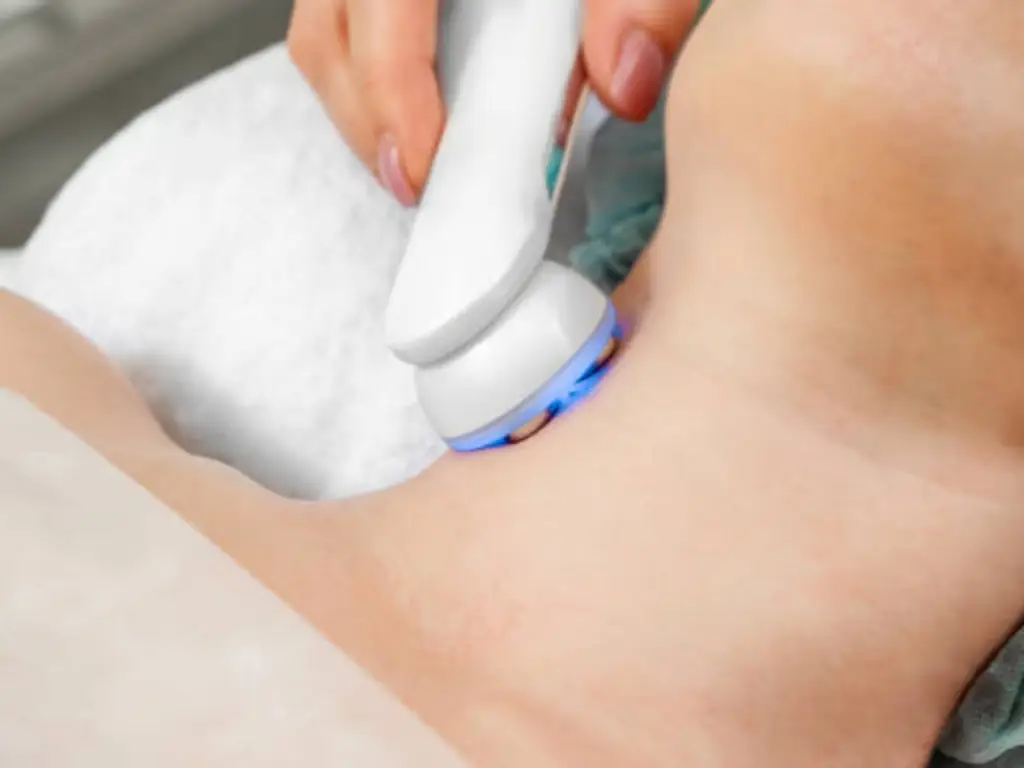
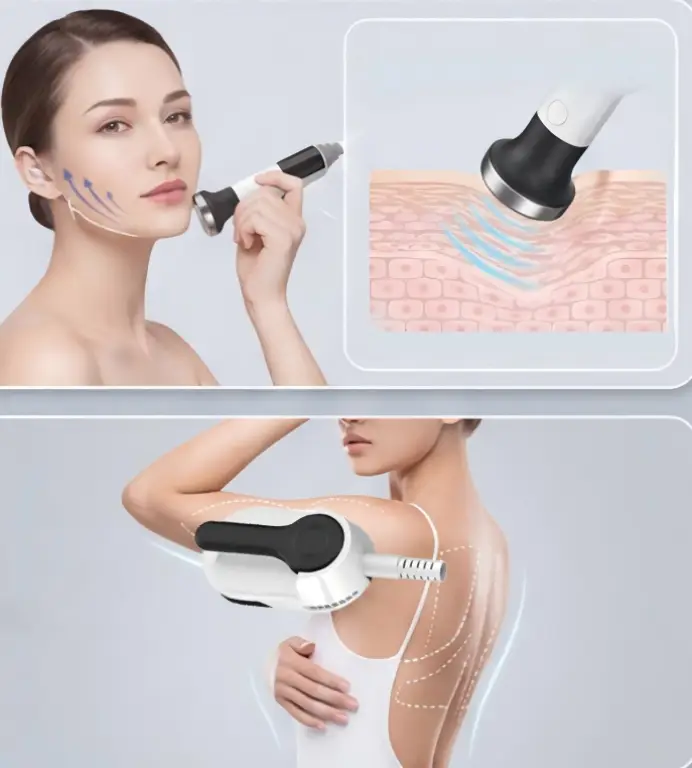
Ultrasonic cavitation delivers low-frequency ultrasound waves through the skin into subcutaneous fat layers. The frequency range is typically 30–80 kHz. These sound waves create microscopic bubbles that rapidly expand and collapse. The resulting mechanical force disrupts fat cell membranes, and the released triglycerides enter the lymphatic system for natural elimination over the following 48–72 hours.
Think of it like shaking a sealed soda can. The bubbles don’t burn the fat. They physically vibrate the cells apart. This distinction matters because it explains why side effects exist on a spectrum: some are normal physiological responses to this mechanical process, while others signal that something went wrong with either the equipment or its operation.
Cavitation is mechanical, not thermal. The ultrasound doesn’t burn fat — it shakes it apart. This matters because side effects change depending on where and how hard you shake.
Most cavitation side effects are temporary and self-limiting: redness, mild bruising, increased thirst. But the severity ceiling of those side effects is not random. It is set by two variables: the quality of the machine producing the ultrasound energy, and the training of the person holding the handpiece. Understanding this distinction is what separates a clinic that treats safely from one that learns about safety through a client complaint.
Common vs. Rare Side Effects — A Risk Spectrum, Not a Checklist
Most online resources present cavitation side effects as a flat list. That approach misses the most important information: which effects are normal and which are warning signs. The table below organizes side effects by frequency, duration, root cause, and clinical significance.
| Side Effect | Frequency | Duration | Root Cause | When to Act |
|---|---|---|---|---|
| Skin redness and warmth | Very common | 1–3 hours | Normal inflammatory response to ultrasound energy and massage | No action needed; reassure client |
| Mild bruising | Common | 3–7 days | Capillary fragility + mechanical pressure from handpiece | No action needed; note in chart for future sessions |
| Temporary swelling | Common | 2–24 hours | Lymphatic response to fat cell disruption | Normal; encourage hydration |
| Increased thirst and urination | Common | 24–48 hours | Triglyceride elimination via lymphatic system | Expected; client should drink 1.5–2 L water |
| Ringing in ears (tinnitus) during treatment | Occasional | Resolves when session ends | Audible frequency range of device near head/neck | Lower power setting; avoid treating near ears |
| Skin dimpling or uneven texture | Uncommon | Days to weeks | Uneven fat absorption due to inconsistent energy delivery | Review handpiece technique; may resolve with follow-up sessions |
| Burns or blistering | Rare | Days to weeks, possible scarring | Excessive power, stationary handpiece, poor coupling gel, or uncertified equipment | Immediate medical attention; audit equipment and protocol |
| Numbness or tingling persisting >24 hours | Rare | Variable | Nerve proximity to treatment zone + excessive energy | Medical evaluation; discontinue treatment on that area until resolved |
The first four rows describe normal physiological responses — they are signs that the treatment is working, not that something is wrong. The bottom four rows describe failures: of technique, of equipment calibration, or of client screening. Notice that equipment quality appears repeatedly in the root cause column for serious events. Burns, in particular, almost always trace back to one of three equipment-related failures: power output instability, inadequate coupling between the handpiece and skin, or the use of a device that was never certified to deliver consistent energy levels.
When serious side effects occur, the root cause almost always traces to one of these three equipment-related failures:
- Power output instability
- Inadequate coupling gel or handpiece contact
- Uncertified device with no calibration baseline
The Equipment Factor — Why Machine Quality Determines Your Side Effect Risk
Here is the thesis that almost no consumer-facing article will give you: cavitation side effects are not random events. The design precision, component quality, factory calibration, and regulatory certifications of your machine directly set the floor and the ceiling of your side effect risk. The operator’s skill determines where within that range each session falls. The machine determines how bad the worst-case scenario can be.
How Device Certifications Translate to Client Safety
Most clinic owners know to look for certification logos. Far fewer understand what those certifications actually protect in daily practice. Here is the translation from wall plaque to treatment room reality:
ISO 13485 is the international quality management system standard specific to medical devices. What it means for side effect risk: every machine that leaves the factory must perform within a documented tolerance range — not just the sample unit that was submitted for testing. When your training says “set power to 3.0 W/cm²,” an ISO 13485-certified device delivers 3.0 W/cm². Not 2.7. Not 3.4. That consistency holds across every unit and across years of use, because the manufacturing process itself is audited against the standard. Without this, the same setting on two machines from the same production batch could deliver meaningfully different energy levels. You would have no way to know.
CE marking (for markets recognizing EU standards) requires electromagnetic compatibility and electrical safety testing. In practical terms: a CE-certified cavitation machine will not produce unexpected power spikes from electrical interference, and its insulation will not degrade in a way that creates burn risk at the handpiece-skin interface.
FDA 510(k) clearance means the device has been reviewed against a legally marketed predicate device and found substantially equivalent in safety and effectiveness. It is not a rubber stamp. The FDA maintains a public adverse event database (MAUDE) where equipment-related injuries are documented. In 2019, a cavitation RF slimming system imported without any 510(k) clearance caused patient burns, and the event was reported to the FDA with the explicit allegation that the device lacked the required clearance (FDA MAUDE, 2019). This is not a hypothetical cautionary tale. It is a documented regulatory record.
When Equipment Cuts Corners — Real Consequences of Uncertified Machines
The flip side of certification is what happens without it. The cost savings of a cheaper machine are not free money. They are risk externalized to your clients.
Three failure chains are particularly common in uncertified or poorly manufactured cavitation devices:
Power instability from downgraded components. When a manufacturer substitutes lower-grade capacitors or skips incoming component inspection, the power output can drift. A capacitor rated at ±5% tolerance versus one at ±20% means the difference between consistent treatment energy and a machine that delivers noticeably different output from one moment to the next. Client A and Client B — same settings, same operator, same treatment area — can have completely different experiences. You lose the ability to build a reliable treatment protocol, and more importantly, you lose the ability to predict side effects.
Early-life failures from skipped burn-in testing. Quality manufacturers subject every PCB board to a 48-hour powered aging test before assembly. This catches the components that will fail in their first weeks of use, the so-called “infant mortality” failures. Machines that skip this step ship their defect rate directly to your treatment room. A handpiece crystal that drifts off its calibrated frequency by even 2 kHz changes the energy distribution pattern in tissue, creating hotspots where the operator did not intend them.
No traceability, no recall mechanism. When a certified manufacturer discovers a safety issue, there is a documented process: identify affected serial numbers, notify distributors, replace or repair. When an uncertified importer’s device causes a problem, there is no system. The clinic absorbs 100% of the legal, financial, and reputational consequences alone.
The cost difference between a certified machine and an uncertified one is, in economic terms, an insurance premium. You are paying for the certainty that what your training taught you about the machine will still be true six months and 500 treatments later.
Frequency, Power, and Penetration Depth — Why Machine Specifications Define the Safety Margin
Frequency is not a marketing number. It is the physical parameter that determines how deep ultrasound energy travels into tissue — and, by extension, what type of side effect risk you are managing. Understanding this causal chain lets you evaluate any machine independently, rather than relying on a sales brochure.
30 kHz vs 40 kHz vs 80 kHz — The Frequency-Risk Gradient
Lower frequencies penetrate deeper. This is basic ultrasound physics: longer wavelength equals greater tissue penetration. But deeper is not automatically better. It is riskier. Each frequency tier comes with a distinct side effect profile.
| Frequency | Penetration Depth | Best Target Tissue | Primary Side Effect Risk | Operator Skill Required |
|---|---|---|---|---|
| 30 kHz | 4–8 cm (deep, can reach muscle fascia boundary) | Large-volume fat: abdomen, thighs, buttocks | Highest: over-penetration into muscle layer can cause soreness or spasm; audible noise may cause client discomfort | Advanced — requires precise depth judgment |
| 40 kHz | 2–5 cm (moderate, industry standard) | General body contouring: waist, back, arms, love handles | Moderate: well-studied risk profile; most clinical data exists for this frequency | Intermediate — most trainable level |
| 80 kHz | 0.5–2 cm (shallow) | Superficial sculpting: double chin, jowls, face, lean clients | Different risk type: shallow energy concentration increases epidermal burn risk if handpiece is stationary | Careful technique needed despite being “gentlest” |
The takeaway is not that one frequency is safer than another in absolute terms. It is that the risk type changes with frequency. A 40 kHz machine used on the abdomen has a different safety profile than the same 40 kHz machine used on the jawline. Multi-frequency devices exist precisely because matching the frequency to the treatment depth is itself a safety feature. You are not forcing one penetration depth to work across every body area.
A practical operator guideline: the handpiece should move continuously at roughly 5–10 cm² per second. A stationary handpiece held on one spot for more than three seconds risks thermal buildup beyond what the tissue can dissipate — regardless of frequency. This is the single most common operator error that leads to burns, and it is also the easiest to correct.
A stationary handpiece held on one spot for more than three seconds risks thermal buildup — regardless of frequency. This is the single most common operator error that leads to burns.
Power Settings, Duty Cycle, and the Operator’s Safety Window
There is a counterintuitive relationship between power and safety in cavitation: the relationship between power output and tissue damage risk is not linear. Every tissue type has a thermal dissipation threshold. Below that threshold, the body’s blood flow carries away excess heat faster than the ultrasound deposits it. Above it, heat accumulates. Fat tissue is especially vulnerable because it has relatively poor blood supply compared to muscle or skin.
This means that increasing power by 10% does not increase risk by 10%. It can double the risk once you cross the threshold. This is why a well-designed machine does not advertise how high its maximum power goes. It demonstrates how low it can go while still achieving clinical effect. Efficient transducer design, precise energy focusing, and stable power delivery across the full duty cycle are the engineering features that make lower-power treatments effective.
Power and risk don’t move together in a straight line. Once you cross the tissue’s thermal dissipation threshold, a 10% power increase can double the burn risk. A well-designed machine proves itself not at its maximum setting, but at its minimum effective one.
Duty cycle is the often-overlooked parameter. Continuous wave output allows no cooling interval for the tissue. Pulsed output — typically with on/off ratios of 1:1 to 1:3 — gives tissue microseconds to dissipate heat between energy pulses. For the same average power, a pulsed mode is measurably safer than continuous mode on fat tissue. Ask whether a machine you are evaluating offers adjustable duty cycle. If the answer is no, you are locked into whatever thermal profile the factory chose. You have one fewer safety lever to pull for sensitive clients.
Building a Safety-First Cavitation Practice — From Equipment Choice to Daily Protocols
Everything up to this point has been about understanding. This final section is about action: the concrete steps you can implement to minimize side effect risk, starting with what happens in your treatment room tomorrow and extending to what you verify before your next equipment purchase.
Daily Protocols That Minimize Side Effect Risk
Side effect prevention operates on a three-phase timeline. Missing any phase undermines the others.
Before treatment — screening and preparation. The most impactful safety action happens before the machine is even turned on. Every client should complete a standardized intake that checks: pregnancy or breastfeeding status, pacemakers or metal implants in the treatment zone, liver or kidney conditions, active skin infections, and recent NSAID or alcohol use (both increase bruising risk). Fitzpatrick skin type assessment is mandatory for any energy-based modality — darker skin types require conservative starting power due to higher melanin-related heat absorption potential. Written informed consent should explicitly list both common and rare side effects, so the client’s “I wasn’t told this could happen” response cannot occur.
During treatment — the operator’s checklist. Three non-negotiable items: use only medical-grade ultrasound coupling gel with acoustic impedance matched to human soft tissue (approximately 1.5–1.7 × 10⁶ kg/m²·s). Standard cosmetic gel or oil introduces air gaps that create interface reflections — the ultrasound energy bounces back at the skin surface instead of penetrating, concentrating heat exactly where you don’t want it. Start at conservative power and titrate upward based on client feedback. This is not a sign of inexperience; it is standard medical device practice. Keep the handpiece moving. A stationary handpiece is the single most common cause of treatment burns, and it is entirely preventable.
After treatment — the 48-hour window. The lymphatic system is doing the heavy lifting of eliminating released fat content. Support it: 1.5–2 liters of water over the next 24 hours; 20–30 minutes of light exercise (walking is sufficient) to stimulate lymphatic flow; avoid alcohol, caffeine, saunas, and hot baths for 48 hours — all of these can increase inflammation and prolong swelling. Schedule a 48–72 hour follow-up touchpoint to check on side effect resolution and document outcomes. This follow-up is not just good client care. It builds your clinic’s outcomes database, which is your most powerful marketing and liability-protection asset.
- Complete standardized client intake
- Assess Fitzpatrick skin type
- Check contraindications
- Obtain written informed consent
- Use medical-grade coupling gel only
- Start conservative power, titrate up
- Keep handpiece moving continuously
- Monitor client feedback in real time
- Encourage 1.5–2 L water intake
- Recommend 20–30 min light exercise
- Advise against alcohol, saunas, hot baths
- Schedule 48–72 h follow-up touchpoint
The Buyer’s Certification Checklist — What to Verify Before You Invest
If you are evaluating a cavitation machine for purchase, the checklist below translates the technical discussion above into verifiable purchasing criteria. Each item includes why it matters — so you are not checking boxes blind.
- ISO 13485 certification — Ensures every production unit performs within the same tolerance as the sample that was tested. Without it, you are buying a lottery ticket.
- CE marking with a 4-digit Notified Body number — The number identifies the specific laboratory that conducted the conformity assessment. You can verify it. If the CE mark has no accompanying number, it may be self-declared with no independent testing.
- FDA 510(k) clearance number — Verifiable in the FDA’s public database at accessdata.fda.gov. If a supplier claims FDA clearance but cannot provide the K-number, walk away.
- Third-party test reports (SGS or equivalent) — Independent verification, not the manufacturer’s own word. Specifically request electrical safety and EMC test reports.
- Structured operator training, not just a manual — Training quality is directly proportional to your clients’ safety outcomes. Confirm the training includes hands-on supervised sessions, not just a PDF and a video link.
- Warranty terms and after-sales SLA — A machine that sits broken for three weeks is not just a capital loss; it is appointment cancellations and client churn. Verify response time commitments and spare parts availability before purchase.
A small number of manufacturers provide all of the above as standard documentation: full certification traceability, pre-shipment burn-in test reports, and structured training programs. They treat compliance as the baseline, not an upsell. When evaluating suppliers, request the complete certification package upfront and compare what each manufacturer can provide without prompting. This alone is a reliable test of who operates at a genuinely professional standard. Manufacturers with a dedicated quality management page listing their full certification scope and testing protocols (manufacturer’s quality certifications) alongside detailed equipment specification pages (cavitation equipment specifications) make verification straightforward. Those who respond with vague assurances make the decision equally straightforward in the opposite direction.
The 30 minutes you spend verifying these items before purchase will save you more time, money, and stress than any other investment in your cavitation practice. A client complaint about a burn or an uneven result does not ask whether you got a good deal on the machine. It asks whether you did your homework.
That’s less time than you’ll spend handling one client complaint about a burn or an uneven result.
References
- FDA MAUDE Adverse Event Report MW5085721. “Cavitation RF Slimming System ZIRRA by ZEMITS.” April 2019. https://fda.report/MAUDE/MDR/8500051
- PZLASER. “30K vs 40K vs 80K Cavitation Machines: A Comprehensive Breakdown.” https://www.pzlaser.com/difference-between-30k-40k-and-80k-cavitation-machines/
- Glow Beauty Case. “How Ultrasound Cavitation Works — Expert Guide for 30K, 40K, 50K & 80K Machines.” https://glowbeautycase.co.uk/de/blogs/glow-beauty-case-blog/how-ultrasound-cavitation-actually-works-expert-guide
- FDA 510(k) Premarket Notification Database. https://www.accessdata.fda.gov/scripts/cdrh/cfdocs/cfPMN/pmn.cfm
- Konmison. “Quality Certifications.” https://www.konmison.com/quality/
- Konmison. “Cavitation Machine.” https://www.konmison.com/cavitation-machine/
- Konmison. Homepage. https://www.konmison.com/



 EN
EN  RU
RU  ES
ES  IT
IT  AR
AR  FR
FR  DE
DE  JA
JA  KO
KO  NL
NL