
Adding laser facial services is one of the highest-ROI decisions a salon or aesthetic clinic can make. But walking into the equipment market without a clear framework is expensive — the price gap between an entry-level IPL device and a medical-grade fractional CO2 platform spans two orders of magnitude. The wrong choice doesn’t just waste money. It locks you into a treatment menu your clients may not want, on a machine your staff may not trust.
This guide walks through the three core technologies, the science that makes each one work for different skin concerns, and the practical framework for matching equipment to your actual client demand — then covers what to check before you pay, how to verify a manufacturer, and what the real cost of ownership looks like.
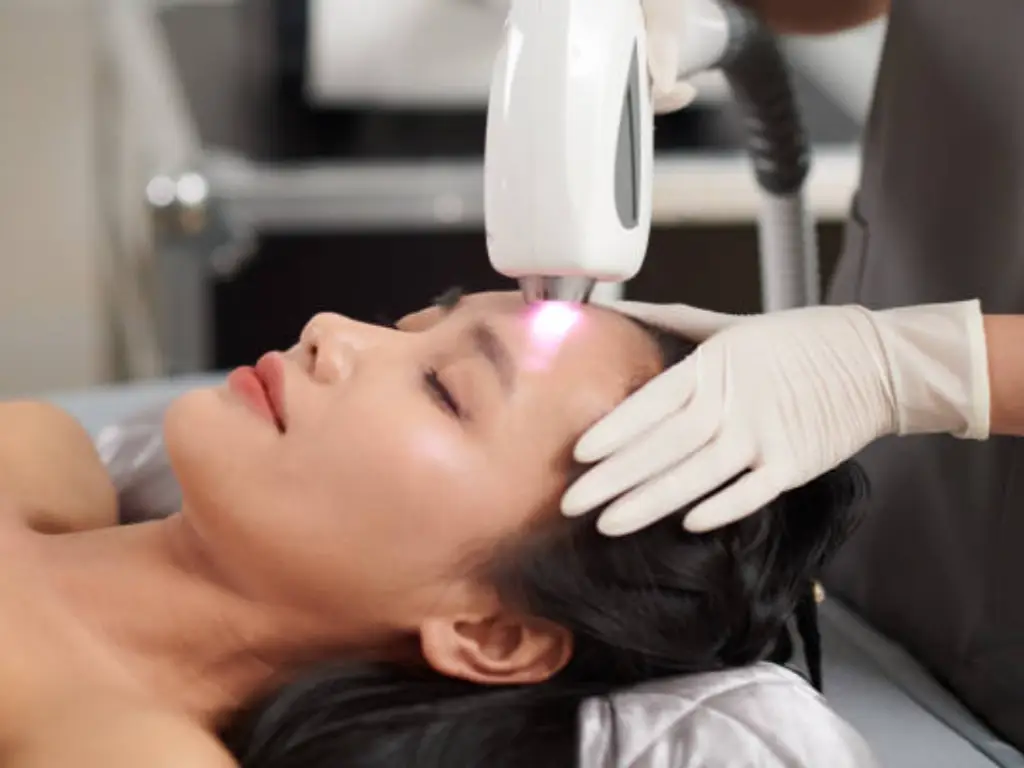
What Laser Facial Technologies Are Available Today
Before you compare specs or negotiate with suppliers, you need a clear picture of the landscape. Laser facial equipment falls into three main technology platforms, and each dominates a different corner of the treatment menu. The dimension that separates them isn’t price — it’s what they treat, who they treat safely, and how much downtime your clients will accept.
Diode Laser (808nm) — The Workhorse for Hair Removal and Rejuvenation
The diode laser is the most widely deployed aesthetic laser platform for a reason: its 808nm wavelength hits the sweet spot where melanin absorption is strong enough to disable hair follicles, but water and hemoglobin absorption is low enough to spare surrounding tissue. This is selective photothermolysis in its most commercially successful form — precise targeting without collateral damage.
In practice, a diode laser handles permanent hair reduction across Fitzpatrick skin types I through IV on a standard single-wavelength unit, with triple-wavelength models (755nm + 808nm + 1064nm) extending safe treatment to type VI. Beyond hair removal, many diode platforms now include skin rejuvenation handpieces that use lower fluence to stimulate collagen without the downtime of ablative treatments.
Key specifications to look for: wavelength accuracy within ±3nm of the stated 808nm, energy output adjustable across 1–120 J/cm2 (higher fluence for darker/thicker hair, lower for fine/light hair), pulse width tunable from 1–400ms, and spot sizes in the 12×12mm to 15×27mm range — larger spots treat faster but sacrifice precision on curved facial areas. A quality diode bar should be rated for 20 million shots before replacement, and the cooling system should stack at least four stages: water, air, semiconductor (TEC), and contact sapphire chilling — if a machine skips the TEC stage, it will overheat mid-session on busy days.
IPL (Intense Pulsed Light) — The Multi-Tool for Skin Rejuvenation
IPL is not a laser. It’s a high-intensity xenon flash lamp that emits broad-spectrum light across 400–1200nm, filtered through interchangeable cut-off filters to target different chromophores at different depths. Think of it as a Swiss Army knife: one device can treat pigmentation, diffuse redness, mild acne, and perform light hair reduction. For a salon just starting out with energy-based treatments, the versatility is compelling.
The trade-off is precision. Because IPL isn’t monochromatic, the energy delivered to any single chromophore is lower than what a dedicated laser would deliver at the same power setting. This means more treatment sessions are needed to reach the same endpoint — typically 8–12 sessions for hair reduction vs. 6–8 with diode, and 3–5 sessions for pigmentation vs. 1–2 with a Q-switched laser. IPL is also significantly riskier on Fitzpatrick skin types IV–VI, where the broadband energy is more likely to be absorbed by epidermal melanin rather than the intended target, increasing the risk of post-inflammatory hyperpigmentation.
Where IPL shines is in the “lunchtime facial” market — clients who want visible skin improvement with zero downtime and are willing to commit to a series. The newer OPT (Optimal Pulse Technology) and SHR (Super Hair Removal) variants address the comfort issue by stretching the pulse into a smooth plateau rather than a sharp spike, reducing the characteristic rubber-band snap sensation. For salons whose client base skews toward general skincare rather than dedicated hair removal, IPL often earns back its investment faster than any single-purpose laser.
CO2 Fractional Laser — The Gold Standard for Skin Resurfacing
If diode is the workhorse and IPL is the multi-tool, the CO2 fractional laser is the specialist surgeon. Operating at 10,600nm in the far infrared, it’s absorbed almost entirely by water — which means it vaporizes skin tissue on contact, layer by microscopic layer. The “fractional” part is critical: instead of ablating the entire skin surface (the old fully-ablative approach that required weeks of recovery), a fractional CO2 laser creates a grid of microscopic treatment zones — each a column of vaporized tissue surrounded by untouched skin that serves as a healing reservoir.
The concept, pioneered by Dr. R. Rox Anderson and colleagues at Harvard’s Wellman Center for Photomedicine, transformed laser resurfacing from a once-in-a-lifetime surgical procedure into a repeatable aesthetic treatment (Anderson & Parrish, Science, 1983). By controlling the density of these micro-treatment zones — typically 5–30% coverage per pass — the practitioner balances aggressiveness against recovery time.
Clinically, CO2 fractionated resurfacing is the reference standard for moderate-to-deep acne scarring, pronounced perioral and periorbital wrinkles, and severe photodamage that doesn’t respond to non-ablative approaches. The results are dramatic — a single session can produce visible improvement that four or five IPL sessions cannot match — but so is the downtime: 5–10 days of redness, swelling, and peeling, with full re-epithelialization taking up to two weeks. On Fitzpatrick types IV–VI, the risk of post-procedure dyspigmentation requires conservative energy settings and longer treatment intervals.
This is not a machine for every salon. It belongs in clinics with medically trained operators who understand laser-tissue interaction at the histological level, have established adverse-event protocols, and can confidently manage patient expectations around recovery. If your clientele skews toward “I want results but I can’t hide for a week,” a non-ablative fractional or a high-end IPL with a skilled operator will serve you better.
How Laser Light Works on Skin — The Science That Determines Your Results
You don’t need a physics degree to buy the right laser. But you do need to understand one principle, because every equipment decision you make from here forward turns on it.
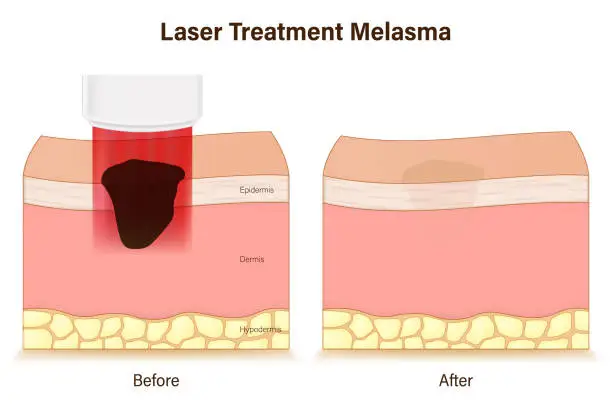
In 1983, dermatologists R. Rox Anderson and John Parrish published a paper in Science titled “Selective Photothermolysis: Precise Microsurgery by Selective Absorption of Pulsed Radiation.” The idea was elegantly simple: if you pick a wavelength of light that is preferentially absorbed by your target (melanin in a hair follicle, hemoglobin in a broken capillary, water in aged collagen) and deliver it in a pulse shorter than the target’s thermal relaxation time, you destroy the target while the surrounding tissue stays cool. That paper launched the entire modern aesthetic laser industry (Anderson & Parrish, Science 220(4596):524-527, 1983).
Three variables flow from this principle, and they’re the only three you need to remember:
Wavelength determines depth. Shorter wavelengths (532nm, 585nm) are absorbed in the epidermis and superficial dermis — good for pigmentation and superficial vessels, useless for hair follicles sitting 2–3mm deep. The 808nm diode wavelength penetrates to the mid-dermis where hair bulbs live. The 1064nm Nd:YAG wavelength reaches the deep dermis (3–5mm), making it the safest choice for darker skin because it bypasses epidermal melanin almost entirely. At the far end, 10,600nm CO2 is absorbed by water in the first 20–50μm of tissue — it doesn’t penetrate at all; it vaporizes.
Pulse width determines safety. If the pulse is shorter than the time it takes the target to cool down (its thermal relaxation time), heat stays confined. A melanosome — the pigment packet inside a skin cell — has a thermal relaxation time of about 0.5–1μs. A hair follicle: 10–100ms. A blood vessel: 1–10ms. This is why picosecond lasers (pulses in the trillionths of a second) shatter pigment particles mechanically rather than thermally, and why hair removal lasers use millisecond-range pulses to gently cook the follicle without burning the skin above it.
Fluence (energy density) determines effect strength, measured in J/cm2. More fluence = more tissue response, but also more risk. The art is finding the minimum effective fluence for the target — and that minimum varies by skin type, hair color, and treatment area.
If you remember nothing else: choose wavelength by target depth, pulse width by target size, and fluence by client tolerance. Every laser machine you evaluate is just a different combination of these three knobs.
Matching Laser Technology to Your Client Demand
The most common mistake in equipment purchasing is buying the machine you’re excited about rather than the machine your clients will actually pay for. Before you look at a single spec sheet, audit your booking data: what are the top three treatments your clients already request? What do they ask about that you can’t currently offer?
The table below maps common client demands to the appropriate technology platform, with realistic session counts and pricing benchmarks.
| Client’s Primary Concern | Recommended Technology | Sessions Needed | Avg Session Price (USD) | Equipment Investment Tier |
|---|---|---|---|---|
| Unwanted facial/body hair | Diode Laser (808nm) | 6–8 | $150–400 per area | $3,500–$7,500 |
| General skin rejuvenation, multiple concerns | IPL / OPT | 3–5 (pigment), 8–12 (hair) | $150–300 | $2,800–$5,500 |
| Fine lines, early aging, mild texture | Non-Ablative Fractional | 3–5 | $500–800 | $5,000–$12,000 |
| Deep wrinkles, acne scars, severe sun damage | CO2 Fractional | 1–3 | $800–2,500 | $7,999–$18,000 |
| Redness, rosacea, broken capillaries | IPL or Pulsed Dye Laser | 3–5 | $200–500 | $3,000–$8,000 |
| Tattoo removal, stubborn pigmentation | Q-Switched Nd:YAG / Picosecond | 4–10 | $200–600 | $5,000–$15,000 |
Here’s a fast way to cut through the options. List your three most-requested treatments. Find them in the left column above. The technology in the second column is your starting point. If two different technologies appear, consider a multi-application platform — but verify that each modality carries enough power for real clinical results, not just a marketing checkbox.
A realistic equipment strategy for most salons: start with the machine that addresses your highest-volume demand. For many, that’s diode hair removal — the category with the shortest payback period at 8–14 months. Add a second platform once that first machine is running at 60% or higher utilization. High-end clinics often converge on a diode + fractional CO2 pairing, which together covers roughly 90% of the aesthetic laser market.
What to Look for in a Laser Facial Machine — The Non-Negotiables
You know which technology fits your clients. Now you need to evaluate individual machines — and the gap between a device that looks good in a brochure and one that holds up under daily clinical load is where most purchasing mistakes happen.
A laser machine’s real value rests on three interdependent pillars: the certifications that prove it’s safe and legal, the manufacturing quality that determines whether it still works after a year of 10-treatments-a-day use, and the after-sales support that keeps your revenue flowing when something breaks. Any one of these can sink your investment.
Certifications and Regulatory Compliance
Certifications are not a nice-to-have. They are the minimum barrier to entry — and in regulated markets, the absence of the right certification means your machine is illegal to use on paying clients, full stop.
The core stack for an aesthetic laser device sold internationally is ISO 13485, CE marking, and FDA clearance. Here’s what each actually means and how to verify it:
- ISO 13485:2016 is the medical device-specific quality management standard (ISO, 2016). Unlike ISO 9001 — which certifies that a company has a quality system — ISO 13485 mandates risk management documentation, clinical evaluation procedures, and post-market surveillance. It’s the difference between a driver’s license and an F1 racing license. Ask the supplier for their ISO 13485 certificate number and verify it against the issuing body’s public database. If they offer ISO 9001 and claim “it’s basically the same thing,” walk away.
- CE Marking is required for the European market, but not all CE marks are equal. A Class IIa CE mark (beauty/aesthetic use) requires self-declaration of conformity; a Class IIb CE mark (medical use) requires review by a notified body — a significantly higher bar. Check the four-digit notified body number next to the CE logo and verify it on the European Commission’s NANDO database.
- FDA 510(k) Clearance is the U.S. market gateway. The manufacturer must demonstrate “substantial equivalence” to an already-cleared predicate device. Search the FDA’s 510(k) Premarket Notification database by manufacturer name or device name — if nothing comes up, the “FDA cleared” claim is false.
- IEC 60825-1 classifies the laser’s safety level. Class 3B lasers require eye protection and controlled access; Class 4 requires full laser safety officer protocols, protective eyewear with the correct optical density for the specific wavelength, and a designated treatment room with warning signs.
- RoHS and FCC round out the compliance picture: RoHS confirms hazardous substance restrictions (lead, mercury, cadmium), and FCC covers electromagnetic compatibility — a machine that interferes with other electronics in your clinic is a liability.
A practical acid test: ask the supplier to send you copies of all five certificates before you discuss pricing. A legitimate manufacturer will have them ready as PDFs. A supplier who hesitates, makes excuses, or offers only “factory inspection reports” instead is telling you something important.
Build Quality and Manufacturing Standards
Certificates prove the machine passed a paperwork review. Build quality determines whether it works the same on treatment #5,000 as it did on treatment #1. Here are the specific, verifiable indicators of manufacturing rigor:
Incoming parts inspection. A quality-driven manufacturer tests every incoming component — not a random sample, but 100% — before it reaches the assembly line. For laser machines, the critical incoming items are the diode bars (or flash lamps, for IPL), power supplies, cooling modules, and control boards. Ask: “What percentage of incoming components do you inspect, and do you have a documented AQL (Acceptable Quality Level) standard?”
PCB burn-in testing. The printed circuit board is the machine’s nervous system. Quality manufacturers run every PCB through a minimum 48-hour continuous operation burn-in at elevated temperature (40–50°C) to screen out early-life failures before assembly. Shorter burn-in or no burn-in at all means the infant-mortality failures happen in your treatment room instead of the factory.
Environmental stress screening. The machine should survive conditions harsher than any treatment room. Look for suppliers who perform high-low temperature cycling (−20°C to 60°C, minimum 3 cycles) and vibration testing on completed units. These tests expose solder joint weaknesses, connector issues, and component tolerance problems that pass a simple power-on test but fail after months of thermal cycling in a busy clinic.
Full-unit burn-in before shipping. Every completed machine should run at full power for an extended period before it leaves the factory. This is different from the PCB-level test — it validates the fully integrated system: laser output stability, cooling system performance under sustained load, UI responsiveness, and safety interlock function.
Cleanroom assembly and component sourcing. Laser optics are sensitive to particulate contamination. A Class 100,000 (ISO 8) or better cleanroom for final assembly is the minimum acceptable standard. Equally important: ask which company manufactured the diode laser bars. The gold-standard suppliers are Coherent (US), DILAS (Germany), and FocusLight (China). A supplier who won’t name their laser bar source is either hiding a low-quality component or doesn’t have traceability.
To make this concrete: Konmison, a Guangzhou-based manufacturer operating since 2013, runs 6 automated assembly lines across a 12,000m2 facility. Their published quality protocol includes 100% incoming component inspection, 48-hour PCB burn-in testing, high-low temperature cycling (−20°C to 60°C), vibration screening, and full-unit light-activation verification before crating — and they hold ISO 13485, CE, FDA, RoHS, FCC, and MSDS certifications as a single integrated compliance stack. Whether you ultimately choose Konmison or not, use their documented process as your evaluation benchmark: if a supplier cannot describe their quality control with this level of specificity, the gap is not in their marketing — it’s in their manufacturing.
After-Sales Support and Warranty
A laser machine will eventually need service. The question isn’t whether — it’s how fast the supplier gets you back online when it happens.
Warranty scope matters more than warranty length. A “2-year warranty” that covers only the power supply and excludes the laser handpiece (the most expensive component, and the one most likely to degrade) is worse than a 1-year comprehensive warranty. Read the exclusions list before you celebrate the headline number. Industry standard: 1–2 years on the main unit, 6–12 months or 50,000–100,000 shots on the handpiece (whichever comes first), and 3–6 months on consumable accessories.
Remote diagnostic capability is the single biggest differentiator in after-sales. A supplier with a structured remote diagnostic protocol — video call, systematic troubleshooting flow, screen sharing for UI issues — can resolve 60–70% of problems without shipping parts or dispatching a technician. Ask them to walk you through their remote diagnostic process step by step. If the answer is “our technician will visit you,” ask what happens when the nearest technician is in another country.
Parts availability. Common wear items — handpieces, flash lamps (for IPL), power supply modules, cooling system pumps — should be stocked by the supplier and shippable within 48 hours. Ask for a written spare parts list with prices and typical lead times. A supplier who can’t provide this within 24 hours of your request is not managing their supply chain seriously.
Training is part of after-sales, not a separate negotiation. The minimum: video-based operational training covering all treatment modes, safety protocols, and maintenance procedures, with multilingual materials. Better: live remote training sessions with a clinical application specialist. Best: on-site training during installation. Factor the training gap into your total cost calculation — a machine that arrives with a 20-page English manual and no training support will cost you weeks of trial-and-error learning and, potentially, a client injury.
Stress-test the service promise. Call the supplier’s support line on a Friday afternoon and see who answers. Ask: “My machine stopped firing mid-treatment on a fully booked Saturday — what happens next?” The answer you want includes a specific response time commitment (ideally under 4 hours for critical issues), not a vague reassurance.
Choosing a Manufacturer That Won’t Let You Down
Alibaba Gold Supplier badges and Made-in-China verification icons are a starting point, not a conclusion. They prove a company exists — not that its machines perform, its warranty is honored, or its after-sales team answers the phone. Real supplier evaluation happens one layer deeper.
How to Verify a Supplier Before You Pay
Run these six checks before you transfer a deposit. If a supplier resists any of them, treat the resistance as data — it tells you what dealing with them will be like after they have your money.
- Company age and stability. The aesthetic laser industry has high churn — factories open and close within 2–3 years. A company with 10+ years of operating history has survived market cycles, regulatory changes, and warranty obligations. They exist because their machines work and their customers reorder. Check company registration databases (China’s NCIIC or equivalent) for the actual incorporation date, not the “Established” claim on their website.
- Verifiable operational data. Ask for: on-time delivery rate (≥95% is the minimum acceptable), customer reorder rate (>25% is a strong signal — it means buyers come back), staff headcount, and factory square footage. These numbers paint a picture of operational maturity. A factory under 3,000m2 with fewer than 50 employees cannot maintain the quality consistency of a 12,000m2 facility with dedicated QA, R&D, and after-sales teams.
- Live video factory tour. Insist on a real-time video walkthrough — not a pre-recorded promotional clip. Watch for: assembly lines that are actually running (not staged), component storage organized by part number and batch, workers wearing ESD protection and following documented procedures, and in-house testing stations with actual equipment (beam profilers, power meters, thermal cameras). A clean, organized floor with visible QC checkpoints at each station is what you’re looking for.
- Third-party test reports. Request device testing reports from an independent lab (TÜV, SGS, or Intertek). These should verify wavelength accuracy (±5nm of claimed), pulse duration consistency across energy levels, spot size uniformity, and electrical safety compliance. A manufacturer who has already paid for third-party testing has nothing to hide.
- Customer references in your region. Ask for contact information for 2–3 buyers in your country or region who purchased similar equipment at least 12 months ago. Call them. Ask about machine reliability, actual downtime, warranty claim experience, and whether they’d buy from the same supplier again. A supplier unwilling to provide references isn’t protecting customer privacy — they’re protecting themselves from what those customers would say.
- Sample order before bulk commitment. Buy one unit. Use it for 30 days. Run it through your full treatment protocol on volunteer test clients. Measure: does the output stay stable across a full day of back-to-back treatments? Does the cooling system hold up? Do the handpiece and UI respond consistently? One month of real-world use reveals more than any specification sheet.
A practical shortcut: prepare a 10-question supplier evaluation form and send it to every manufacturer you’re considering before the first call. If a supplier answers all 10 with specific, verifiable information (not marketing language), they’ve already cleared a bar that eliminates 70% of the market.
Calculating the True Cost of Ownership and Break-Even Timeline
The price on the invoice is the beginning of the cost story, not the end. A $3,500 machine that costs $2,000/year in replacement parts and downtime losses costs you more over three years than a $7,500 machine with negligible operating costs. Run the total cost of ownership on every option.
TCO components over a 3-year horizon:
| Cost Element | Budget Machine | Quality Machine |
|---|---|---|
| Purchase price (DDP) | $3,500 | $7,500 |
| Handpiece replacement (×2) | $1,200 | $800 |
| Consumables & maintenance | $900 | $450 |
| Estimated downtime (revenue loss, 3 days/year vs 1) | $1,800 | $600 |
| 3-Year TCO | $7,400 | $9,350 |
The gap narrows considerably. And this is conservative — it doesn’t account for the reputational cost of cancelled appointments or inconsistent results from an unstable machine.
Break-even calculation (realistic scenario):
Assume a mid-range diode laser, DDP delivered at $6,000. Your pricing: $180 per facial hair removal session (small area), $300 per session (large area). At a conservative 8 treatments per week (mix of small and large areas), monthly revenue is roughly $7,200. Subtract consumables (~$200/month), additional staff time allocation (~$800/month), and financing cost if applicable. Monthly net contribution: approximately $5,400. Break-even: under 2 months.
Even at half that utilization — 4 treatments per week — the machine pays for itself in under 4 months. This is why diode hair removal consistently delivers the fastest ROI in aesthetic medicine: high demand, repeat visits, and consumable costs near zero after the initial handpiece.
The break-even math for a CO2 fractional laser is different. At $12,000 DDP with per-session pricing of $800–1,200 and 3–5 treatments per week, the payback stretches to 12–18 months. But the per-client margin is substantially higher, and the machine differentiates your clinic in a way that an IPL device cannot. The right question isn’t “which one is cheaper” — it’s “which one fits the utilization pattern my client base will actually support.”
FOB vs. DDP. FOB (Free On Board) means you pay the factory price and handle shipping, insurance, customs clearance, and import duties yourself. DDP (Delivered Duty Paid) means the supplier handles everything door-to-door at an all-in price, typically 15–25% higher than FOB. For first-time buyers importing from overseas, the DDP premium is almost always worth it — a shipment stuck in customs for three weeks while you figure out tariff codes and broker fees is not where you want to learn international logistics.
Getting Your Team Ready — Training, Safety, and Ongoing Maintenance
The machine has arrived. The next 30 days determine whether it becomes your highest-margin service line or an expensive corner decoration.
Don’t treat your first paying client as a training case. Run at least 10 full-protocol practice sessions on volunteer models (staff members, friends) before booking a single revenue appointment. Use these sessions to standardize your settings for each skin type and treatment area, build operator muscle memory, and identify any machine quirks — inconsistent handpiece triggering, cooling fluctuations, UI lag — before they surface in front of a paying client.
Lock in your protocols before you go live. Every treatment type needs a written standard operating procedure: exact energy settings by skin type, handpiece movement pattern and speed, number of passes, pre-treatment skin preparation, post-treatment care instructions, contraindications checklist, and adverse event response protocol. These documents protect you legally and ensure consistent results regardless of which staff member operates the machine.
Laser safety is non-negotiable. Depending on your jurisdiction, you may need a certified Laser Safety Officer on staff. Even where it’s not legally required, designate one person responsible for: verifying that protective eyewear matches the laser wavelength (808nm and 10,600nm require completely different optical density ratings — the same goggles cannot work for both), maintaining the treatment room’s warning signage and door interlocks, and logging every treatment session’s parameters. Keep a Class C fire extinguisher within arm’s reach of the treatment bed — electrical fires in laser equipment are rare but catastrophic when they happen.
Equipment maintenance log. From day one, record: date, total shots fired / energy delivered, any error codes or unusual behavior, and cooling system performance. This log is your early warning system — a gradual decline in output energy or an increasingly frequent need to reset the machine during sessions signals a component approaching end of life, not a sudden failure waiting to ambush you on a fully booked day.
Your first 20 clients are your marketing engine. Photograph every case: standardized before-and-after shots in identical lighting, at the same angle, against the same background. These images — not stock photos from the manufacturer’s brochure — are what convert your next 200 clients. Real results from real clients in your own clinic are the most persuasive sales tool in aesthetic medicine.
If you’re building a shortlist of manufacturers to evaluate, Konmison’s catalog is available online — standard models ship in 3–7 days with DDP door-to-door delivery, and their OEM/ODM team handles full customization from housing and logo to UI language, system programming, packaging, and certification documentation. A manufacturer’s website is the fastest way to verify their certification claims and get a sense of their production scale before you schedule that first video call.
References
- Anderson RR, Parrish JA. “Selective Photothermolysis: Precise Microsurgery by Selective Absorption of Pulsed Radiation.” Science. 1983;220(4596):524-527. DOI: 10.1126/science.6836297
- International Organization for Standardization. “ISO 13485:2016 — Medical Devices — Quality Management Systems — Requirements for Regulatory Purposes.” 2016. https://www.iso.org/standard/59752.html
- https://www.konmison.com/quality/
- https://www.konmison.com/laser-hair-removal-machine/
- https://www.konmison.com/



 EN
EN  RU
RU  ES
ES  IT
IT  AR
AR  FR
FR  DE
DE  JA
JA  KO
KO  NL
NL