
Four sessions. That is the number printed on nearly every Emsculpt treatment package, and it is the duration used in every major clinical study on the technology. But what does completing four sessions actually mean for your body — in numbers, in weeks, and in what you will see in the mirror? This guide answers that question with data from peer-reviewed studies, a realistic week-by-week timeline, and one angle that most treatment articles skip entirely: why the same four sessions can produce very different results depending on the equipment delivering them.
01Why 4 Sessions Is the Standard — What Your Body Actually Goes Through Each Round
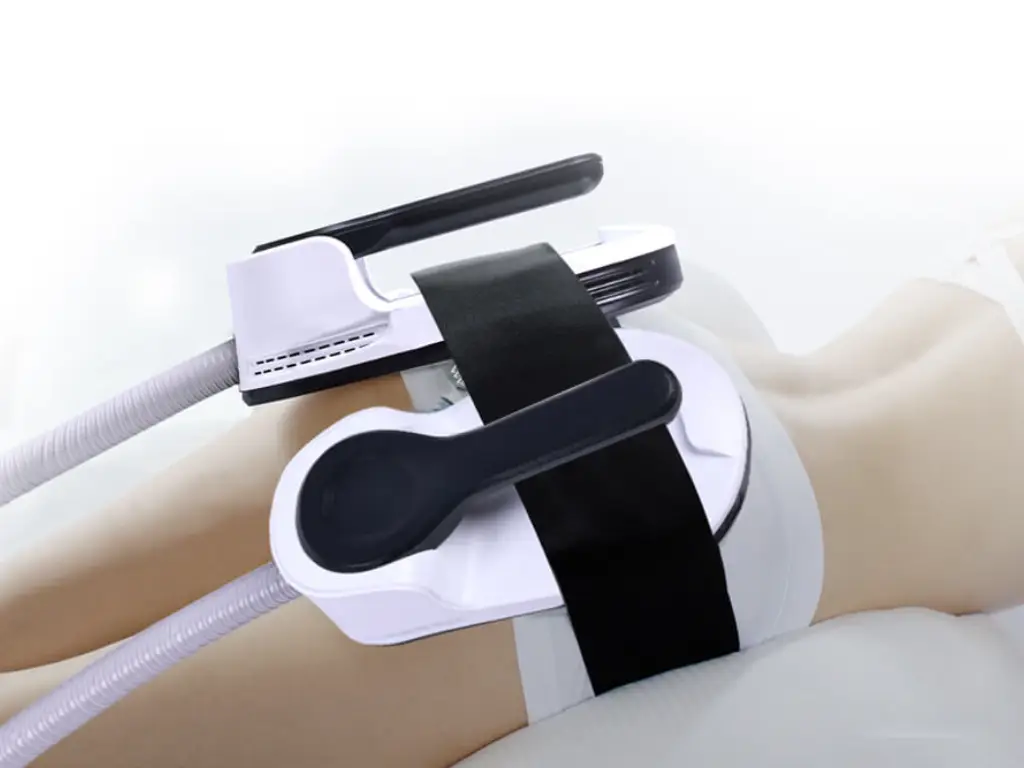
Emsculpt uses High-Intensity Focused Electromagnetic (HIFEM) technology to generate a pulsed magnetic field that penetrates deep into muscle tissue. Unlike a voluntary gym contraction — which typically recruits 40 to 60 percent of available muscle fibers — HIFEM forces near-total fiber recruitment simultaneously. The contraction is so intense that the muscle tissue undergoes stress identical to the microtrauma caused by heavy resistance training, triggering the repair-and-rebuild cycle that results in muscle growth.
The reason four sessions matters biologically comes down to the supercompensation window. Sessions one and two trigger acute muscle fiber stress and initiate the repair cascade. Sessions three and four build on tissue that is already in the recovery phase, amplifying the supercompensation response. Stopping at two sessions means leaving that recovery cycle incomplete — the muscle never fully realizes the growth signal that was triggered.
Eight sessions is a different matter. The original clinical protocols were designed around four sessions measured at two months, with eight sessions positioned as a reinforcement protocol for patients seeking extended results in specific areas. Four sessions is the induction protocol; anything beyond is supplemental.
The standard spacing of two to three days between sessions corresponds to the 48–72 hour window during which the muscle has repaired enough to productively receive another maximal stimulus — the same logic behind rest days in a conventional strength training program.
02The Real Numbers: What Clinical Data Shows After 4 Emsculpt Sessions
Clinical research on HIFEM body contouring spans multiple peer-reviewed journals. The most commonly cited averages (approximately 16 percent muscle increase and 19 percent fat reduction) come from multicenter studies on the original Emsculpt device. Individual studies show a wider range, depending on patient population and imaging methodology.
| Metric | Emsculpt (Original) | Emsculpt NEO |
|---|---|---|
| Muscle Increase | 15–26% across studies | ~25% average |
| Fat Reduction | 16–19% across studies | ~30% average |
| Waist Circumference | 2.8–3.8 cm reduction | ~4.4 cm reduction |
| Patient Satisfaction | 87–100% at follow-up | 96%+ |
These numbers originate primarily from abdominal studies — the most studied treatment area. Results vary by body area, as detailed below.
Abdomen and Core — The Gold-Standard Treatment Area
The most robust clinical evidence on Emsculpt comes from abdominal studies, where MRI imaging allows precise measurement of both muscle thickness and subcutaneous fat layer depth simultaneously.
A 2019 multicenter study published in Lasers in Surgery and Medicine followed 22 patients through a four-session HIFEM protocol and measured outcomes by MRI at two months. Results: a 15.4 percent increase in rectus abdominis muscle thickness and an 18.6 percent reduction in abdominal adipose tissue, with average subumbilical waist circumference decreasing by 3.8 cm. Mean body weight change: −0.5 lb.
A subsequent German prospective study published in the Journal of Clinical and Aesthetic Dermatology (2021) found an even stronger muscle response in the same four-session protocol: a 26.1 percent increase in rectus abdominis thickness with a 15.7 percent reduction in subcutaneous adipose tissue and 100 percent patient satisfaction at eight-week follow-up.
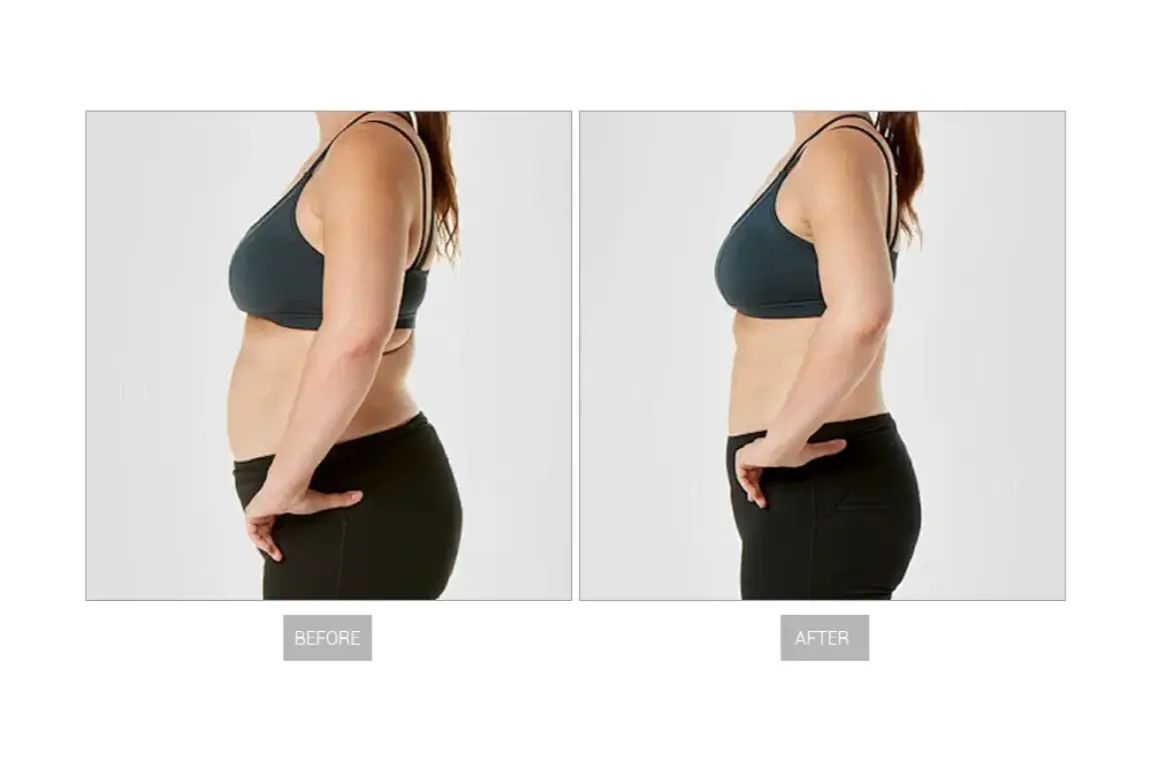
The practical translation of these numbers: visible muscle definition and reduced circumference typically emerge at weeks six to eight, not immediately after the final session. Body weight changes by less than two pounds — yet circumference decreases by centimeters, because one pound of muscle occupies roughly one-fifth the volume of one pound of fat.
One important anatomical distinction: Emsculpt targets subcutaneous fat — the layer directly beneath the skin. It does not act on visceral fat surrounding internal organs. Waist circumference reduction reflects subcutaneous changes, not metabolic improvement.
Emsculpt targets the fat layer beneath the skin. Visceral fat — around organs — is unaffected by HIFEM.
Glutes, Arms, and Thighs — How Results Vary Beyond the Abs
| Area | Primary Effect | Key Caveat |
|---|---|---|
| Glutes | Lift and volume improvement; fat reduction limited | HI-EMT alone delivers lift; adding synchronized RF enhances skin tightening. Best for lift goals, not volume reduction. |
| Arms (biceps/triceps) | Improved muscle definition; fat reduction weaker than abdomen | Dedicated small applicator required. Clinical data less robust than abdominal studies. Expect subtler change. |
| Thighs (inner/outer) | Contour improvement and circumference reduction | Many practitioners recommend 6–8 sessions rather than 4 for visible thigh change. Lower fat-cell density in some areas affects response rate. |
A practical note on body area selection: each session treats one area with a single applicator set. Dividing a four-session package across two areas — for example, two sessions on the abdomen and two on the glutes — roughly halves the stimulus delivered to each site. For strongest results within a four-session course, concentrating on one primary area outperforms dividing attention.
One area. Four sessions. Maximum stimulus.
Splitting sessions across body areas halves the effect at each site.
03Your 4-Session Timeline: When Changes Actually Show Up
Intense muscle soreness for 24–48 hours following each session — similar in character to severe DOMS from heavy strength training, typically milder in intensity. No visible body change. This is expected.
Muscle tissue rebuilding above baseline. Early firmness noticeable to the touch. Subtle contour changes may appear in consistent-lighting photographs.
Subcutaneous fat metabolism completing via lymphatic clearance. Muscle definition visible; circumference reduction measurable with a tape. Most patients notice mirror changes during this window.
Peak muscle growth and maximum measurable fat reduction. Clinical studies schedule their outcome assessments at the two-month mark for exactly this reason.
Without maintenance sessions or consistent resistance training, gradual natural decline begins as the muscle growth signal fades.
One consistently misunderstood point: body weight is a poor progress indicator for Emsculpt results. A patient can lose 3.8 cm of waist circumference while the scale moves by less than a pound — because simultaneous muscle density increase and fat volume decrease cancel each other on the scale. Use circumference measurements and photographs taken under identical conditions as your progress reference, not weight.
- Waist/hip circumference
- Monthly photos (same lighting)
- Body weight
- Daily mirror checks
04Why Two People Get Different Results from the Same 4 Sessions

Four sessions at clinic A and four sessions at clinic B are not necessarily the same physiological stimulus, even if both describe the treatment identically. The outcome depends on two distinct variable sets: the equipment delivering the energy and the body receiving it. This section addresses the first — the one most treatment content avoids.
Device energy output, Tesla rating, certification — the measurable specifications that determine physiological depth.
Starting body composition, BMI, fitness baseline — the physiological headroom available for measurable change.
Energy Output Is What Actually Drives Muscle Contractions — Not Session Count
Clinical results like those above — 15–26 percent muscle increase, 16–19 percent fat reduction — come from devices operating at a specific electromagnetic energy output. Contraction count is not an energy measurement. The frequently marketed “20,000 contractions per session” is a quantity figure, not a measure of how deeply each pulse penetrates.
What determines whether those contractions recruit Type IIb fast-twitch muscle fibers (the fibers responsible for hypertrophy) is peak field strength and energy density per pulse — not contraction count. A device operating at lower peak Tesla values cannot fully penetrate to the deep muscle belly across the full cross-section. The session count stays the same on paper; the actual physiological stimulus does not.
The practical implication: a four-session course on a lower-output device does not produce a result equivalent to four sessions on a device calibrated to the energy levels used in published clinical trials. The “four sessions” variable in those studies was not just duration — it was duration at a specific energy intensity.
Four sessions is not just duration — it is duration at a specific energy intensity.
What to Check Before Booking (or Sourcing) — Technical Signals That Predict Outcomes
Ask for the device’s peak Tesla output. Reference point: 1.5T is a reasonable minimum threshold for full deep-fiber recruitment across the muscle belly.
Confirm CE or FDA medical device certification. This is distinct from a general consumer electronics CE mark, which covers a different regulatory standard entirely.
Verify ISO 13485 certification. This is the medical device quality management system standard — a higher bar than general manufacturing ISO 9001.
Ask whether the manufacturer performs PCB aging tests. Forty-eight hours is a meaningful benchmark; this process catches output consistency failures in power delivery circuitry.
Asking these questions reframes the evaluation. You move from choosing a clinic (or a supplier) by appearance to evaluating whether the device meets the engineering specifications behind published results.
For Clinics and Distributors: Sourcing from manufacturers that strictly adhere to these benchmarks is critical to patient retention. For instance, Guangzhou Konmison, a leading beauty equipment manufacturer, builds its OEM/ODM EMS Body Sculpting Machines under ISO 13485 protocols. Their units undergo rigorous 48-hour PCB aging tests and hold comprehensive CE/FDA certifications, ensuring the clinical-grade consistency required for a successful 4-session protocol.
05Who Gets the Best Results — and What to Expect If You’re Already Fit
The patients who consistently see the strongest four-session results share a common profile: BMI under 30, some baseline physical activity, and a specific goal of local body composition improvement rather than general weight loss. Critically, they have measurable room for improvement — which is the condition under which HIFEM performs most reliably.
- BMI under 30
- Some baseline physical activity
- Goal: local body composition change
- Not primarily seeking weight loss
Two groups where expectations should be calibrated more carefully:
Highly trained athletes (body fat below 12 percent for men, below 18 percent for women): Type IIb fast-twitch fibers in elite-condition muscles already operate near their hypertrophy ceiling. The supercompensation response is real, but the available physiological headroom for measurable change is smaller. Multiple clinical observations and patient reviews document limited visible difference in this group after a standard four-session course — a physiological constraint, not a device failure.
Patients with a primary weight-loss goal: HIFEM is a sculpting tool, not a weight management intervention. Average weight change across published studies is under two pounds. If the goal is losing 20 or 30 pounds, this is not the correct starting point.
06How Long Results Last — Maintenance, Longevity, and Your Next Steps
The muscle gains from four sessions follow the same adaptation rules as gym-built muscle: without continued stimulus — either resistance training or maintenance sessions — fiber size gradually returns toward baseline. Most clinical follow-up data and patient accounts suggest meaningful muscle retention for six months, extending to 12 months or longer in patients who maintain consistent resistance training alongside the treatment.
The fat reduction component behaves differently. HIFEM- and RF-induced apoptosis (programmed fat cell death) is permanent at the cellular level — the destroyed fat cells do not regenerate. However, neighboring fat cells not targeted by the treatment can still expand with prolonged caloric excess. The circumference reduction holds as long as overall body composition is managed.
HIFEM-destroyed fat cells are gone for good. Neighboring cells not treated can still expand with excess calories — diet stays relevant.
Is 4 sessions enough, or should I do 8?
Four sessions is the complete induction protocol — the clinical results cited in peer-reviewed studies were achieved and measured at this mark. Eight sessions is a reinforcement protocol for patients seeking to push further in a specific area or extend the effect duration. It is not required for initial results, and there is evidence of diminishing returns beyond six sessions for patients who are already responding well.
Does the treatment hurt during each session?
During the session itself, the sensation is an intense involuntary rhythmic muscle contraction — not painful in the conventional sense. The 24–48 hours following each session typically produce muscle soreness similar to DOMS from a hard strength training session. Most patients report that by session three or four, they adapt to higher intensity settings more easily than they did at session one.
Emsculpt NEO vs. original Emsculpt: which delivers better 4-session results?
According to a 2023 systematic review in Aesthetic Plastic Surgery, NEO adds synchronized radiofrequency heating to the HIFEM protocol, which raises subcutaneous tissue temperature before contractions begin — accelerating fat cell disruption alongside muscle stimulation. Clinical averages show stronger fat reduction for NEO (approximately 30 percent vs. 19 percent) within the same four-session window. For patients whose primary goal is fat reduction, NEO has the stronger supporting data. For primary muscle building with less point fat concern, both platforms produce comparable muscle outcomes.
Elevate Your Clinic’s ROI with Konmison
Don’t compromise on patient results. Since 2013, Guangzhou Konmison Beauty Equipment Co., Ltd. has delivered premium OEM/ODM aesthetic machines to over 60 countries. Our EMS Body Sculpting platforms are backed by rigorous ISO 13485 standards, comprehensive CE/FDA certifications, and robust 48-hour PCB aging tests to guarantee clinical-grade consistency.
Explore EMS Body Sculpting Machines2026 Update: Where HIFEM Hardware Stands Now
This analysis was published in December 2023, when simultaneous RF and HIFEM delivery was still a premium tier above standard HIFEM. Three years later the four-session protocol described above is unchanged. The equipment landscape around it is not, and two of the buying assumptions from 2023 no longer hold.
RF plus HIFEM is the baseline, not the upgrade
In 2023, a clinic choosing between pure HIFEM and combined RF + HIFEM was choosing between standard and premium. In 2026 the combined configuration is what buyers specify by default, and pure HIFEM consoles have moved down to the entry tier. This matters when reading older comparisons: a 2023 pure-HIFEM specification and a 2026 combined specification are not the same product at different prices — they are different generations. Judge them against their own class, not against each other.
Handpiece pulse life is a real cost line
HIFEM handpieces are rated for a finite number of pulses, not for unlimited use. Every treatment consumes from that budget, which makes the handpiece a consumable with a long service life rather than a permanent part of the console. For a clinic running four-session courses, the handpiece cost per course is calculable before purchase:
- Ask for the rated pulse count per handpiece.
- Ask how many pulses one session on one treatment area consumes.
- Divide to get sessions per handpiece, then cost per course.
A supplier who cannot answer the first two numbers is selling you a machine with an open-ended running cost.
On “permanent” — the precise version
The cellular claim in the original article holds: fat cells destroyed through HIFEM- and RF-induced apoptosis do not regenerate. What does not hold is the shorthand that follows it in most marketing copy. Fat cell number in the treated area is reduced irreversibly. Fat cell volume in the remaining cells is not, and muscle mass gained during a course is subject to the same rules as any other muscle — it responds to load and detrains without it.
The accurate sentence to use with clients: the fat cells treated are gone for good, but the result is not maintenance-free. A maintenance session every three to six months, plus normal activity, is what keeps the contour. Promising permanence without that caveat is how clinics end up in disputes.
| Item | 2023 picture | 2026 picture |
|---|---|---|
| Energy configuration | HIFEM standard, RF + HIFEM premium | Simultaneous RF + HIFEM is the default specification |
| Protocol | 4 sessions, 2 per week | Same 4-session core, commonly sold with a maintenance tail |
| Handpiece | Treated as a durable part | Rated pulse life — budgeted per course |
| Result claim | “Permanent fat loss” | Fat cell loss is irreversible; contour needs upkeep |
If you are buying for a clinic
Compare consoles on three numbers before anything else: energy configuration, rated handpiece pulse life, and whether the supplier stocks replacement hands locally. Our EMS body sculpting range lists configurations and specifications by model. For the sourcing side — factory audits, sample terms, contract checkpoints — the 12-point manufacturer vetting guide covers the questions worth asking before a deposit, and OEM & ODM covers private-label programmes.
Reviewed and updated by the Konmison technical team: October 2026. Original publication date is shown above; protocol details below reflect equipment and consumable practices as of 2026.


 EN
EN  RU
RU  ES
ES  IT
IT  AR
AR  FR
FR  DE
DE  JA
JA  KO
KO  NL
NL