
If you run a beauty salon, aesthetic clinic, or medspa, you’ve probably asked yourself this question more than once: should I invest in laser lipo or ultrasonic cavitation? Both technologies promise non-invasive fat reduction. Both have loyal client followings. But they work through fundamentally different mechanisms — and the wrong choice can leave you with a machine that collects dust instead of generating revenue.
This article breaks down the two technologies side by side, not just for the consumer deciding which treatment to book, but for you, the business owner evaluating which equipment belongs in your treatment room.
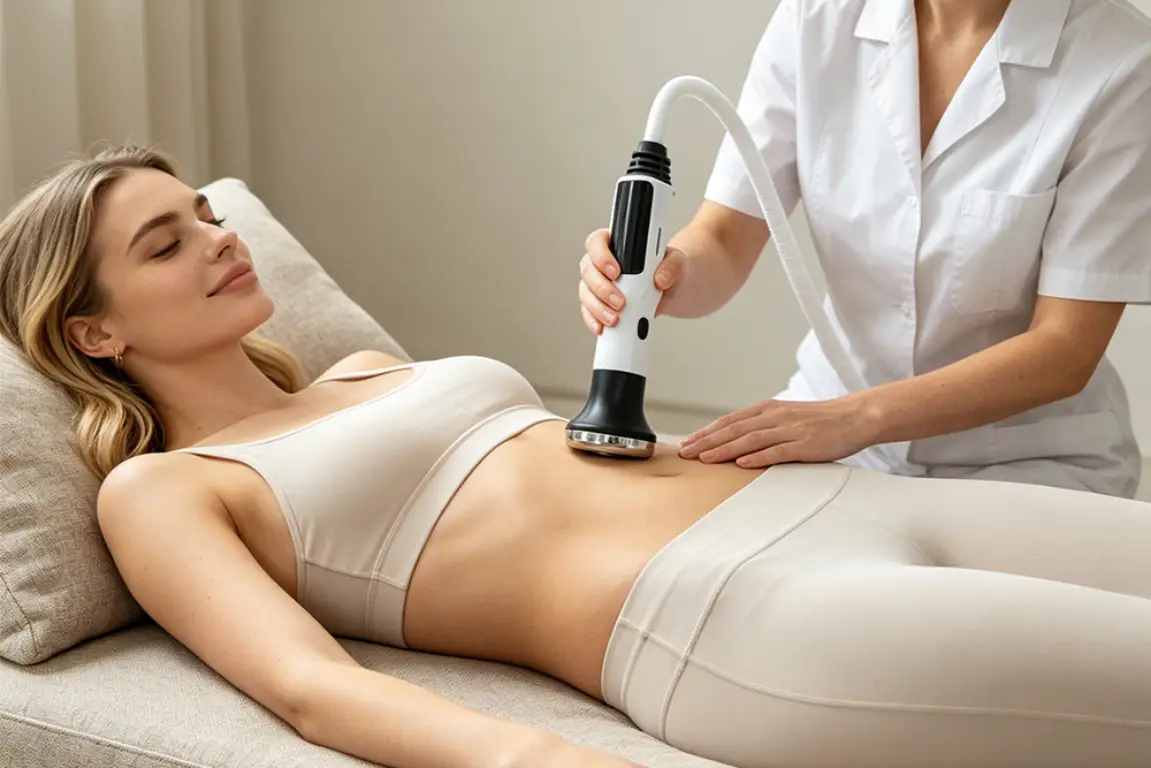
01 What Is Laser Lipo and How Does It Work?
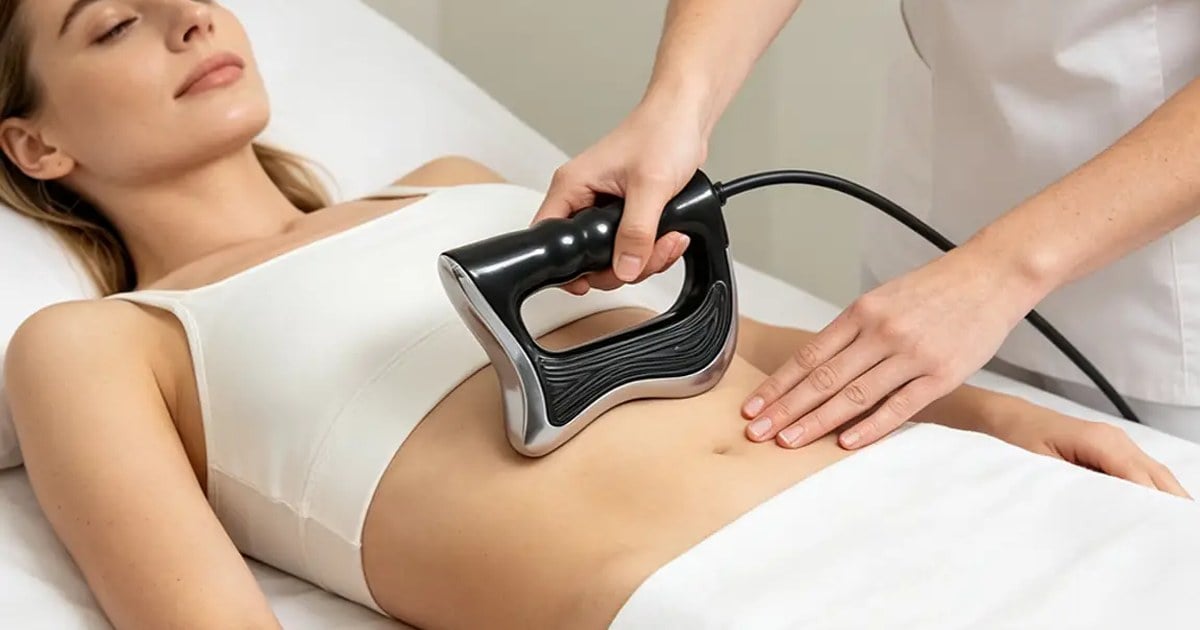
Laser lipo — also called laser lipolysis or low-level laser therapy (LLLT) — uses low-energy laser light, typically in the 635 nm to 650 nm wavelength range, to target subcutaneous fat cells without breaking the skin.
The mechanism is straightforward. Laser energy penetrates the dermis and reaches the fat layer beneath. There, it triggers a photochemical reaction that makes fat cell membranes temporarily permeable, causing the cells to release their stored contents — water, glycerol, and free fatty acids — into the interstitial space. Your body’s lymphatic system then clears these released lipids naturally over the following days and weeks.
Think of it as deflating fat cells rather than destroying them. The cells shrink but remain intact. This is why laser lipo is particularly effective for small, localized areas: under the chin, along the jawline, around the upper arms, and on love handles. These are spots where precision matters more than volume.
A single session takes 20 to 40 minutes. Most protocols call for 3 to 6 sessions spaced one week apart. An added benefit that catches many clients by surprise: the laser’s thermal effect stimulates collagen production in the dermis. Skin in the treated area often looks firmer and tighter after the full course — something no other non-invasive technology can claim as a direct mechanism effect.
02 What Is Ultrasonic Cavitation and How Does It Work?
Ultrasonic cavitation takes a fundamentally different approach. Instead of gently coaxing fat cells to release their contents, it uses high-frequency sound waves — typically at 40 kHz — to physically destroy them.
A handheld probe delivers focused ultrasound energy into the subcutaneous fat layer. The sound waves create microscopic bubbles within the fat tissue. These bubbles expand rapidly, then collapse with intense force (a phenomenon called cavitation), generating shockwaves that literally rupture the membranes of nearby fat cells. The cellular debris is then processed through the lymphatic system and eventually metabolized by the liver.
The analogy that helps clients understand the difference: laser lipo deflates fat cells; cavitation explodes them. This is an irreversible process. Once a fat cell is ruptured, it’s gone for good.
Because cavitation treats tissue in broader passes rather than pinpoint targeting, it excels on larger body areas: the abdomen, thighs, hips, and back. Sessions run 30 to 45 minutes. Clinical studies on focused ultrasound body contouring report a mean circumference reduction of approximately 2 cm after a single session, with cumulative results reaching over 3.5 cm after three treatments (Teitelbaum et al., Plastic and Reconstructive Surgery, 2007).
The trade-off: cavitation offers no skin tightening benefit. After significant fat volume loss in an area, some clients may notice looser skin. That’s precisely why many clinics combine cavitation with radiofrequency (RF) or follow it with laser lipo for the finishing touch.
Laser lipo makes fat cell membranes temporarily permeable, causing them to release stored contents — the cells shrink but remain intact. Ultrasonic cavitation uses high-frequency sound waves to create microscopic bubbles that collapse with intense force, physically rupturing fat cell membranes. One preserves cells; the other destroys them.
03 Laser Lipo vs Cavitation: Head-to-Head Comparison
The right technology for a given client comes down to three dimensions: what kind of result they want (volume reduction vs. sculpting), what they’re willing to invest (time and money), and how their body responds (skin elasticity, treatment tolerance). The three sections below unpack each dimension.
Effectiveness: Fat Reduction, Results Timeline, and Skin Tightening
| Dimension | Laser Lipo | Ultrasonic Cavitation | Key Difference |
|---|---|---|---|
| Fat reduction mechanism | Fat cells release contents and shrink (reversible) | Fat cell membranes physically rupture (permanent) | Laser preserves cells; cavitation destroys them |
| Single-session circumference reduction | ~0.5–1.5 inches across treated areas | ~1.5–2.5 cm per treated area | Cavitation produces larger single-session measurable change |
| Sessions to see visible results | 2–4 sessions | 3–6 sessions | Laser shows earlier visible change for small areas |
| Recommended total sessions | 3–6 | 6–12 | Cavitation requires a longer commitment |
| Best treatment areas | Chin, arms, love handles, knees, bra-line | Abdomen, thighs, hips, back, buttocks | Laser = precision; Cavitation = coverage |
| Skin tightening | Yes (collagen stimulation from thermal effect, 40–45°C) | None (no thermal component) | Laser has a clear edge for clients with skin laxity concerns |
| Results longevity | Months to years (fat cells shrink but can re-expand with weight gain) | Years (destroyed fat cells do not regenerate) | Cavitation results are theoretically more permanent |
The most important thing to communicate to clients: neither technology is a weight-loss solution. Clinical evidence consistently shows that the best candidates are within 10–15 pounds of their goal weight, with localized fat deposits that have resisted diet and exercise. For clients with a BMI above 30, managing expectations is critical. These treatments contour the body; they don’t shrink it wholesale.
A randomized controlled trial by Jackson et al. (2009, Lasers in Surgery and Medicine) found that LLLT-treated subjects lost an average of 3.51 inches in combined circumference across the waist, hips, and thighs, compared to just 0.68 inches in the sham-treated control group — a statistically significant difference (p < 0.001). For ultrasound cavitation, the clinical literature consistently reports a fat layer thickness reduction of 2–3 mm per session, with cumulative effects across multiple treatments.
LLLT circumference reduction
(Jackson et al., 2009)
Sham-treated control group
p < 0.001Cost Breakdown: Per-Session Pricing and Total Investment
This is where the math gets counterintuitive. Cavitation sessions are typically priced lower — $100 to $300 per session in most markets — while laser lipo commands $150 to $500 per session. On a per-visit basis, cavitation looks like the bargain.
But cavitation requires 6 to 12 sessions for a complete course. Laser lipo typically reaches its endpoint in 3 to 6. Do the math:
Laser lipo complete course: 4 sessions × $300 = $1,200 total
Cavitation complete course: 8 sessions × $200 = $1,600 total
The gap narrows or reverses depending on your local pricing. Plus, laser’s skin-tightening benefit often means the client doesn’t need a separate RF treatment. That’s an implicit bundling discount cavitation can’t match.
For clinic owners, the unit economics play out differently. The consumables for laser lipo are minimal — replacement straps and pads, maybe a few dollars per session. Cavitation’s ongoing cost is ultrasound gel, modest but perpetual. Neither represents a meaningful margin drag.
| Cost Factor | Laser Lipo | Ultrasonic Cavitation |
|---|---|---|
| Per-session price (US market) | $150–$500 | $100–$300 |
| Typical sessions per course | 3–6 | 6–12 |
| Estimated total course cost | $600–$2,500 | $800–$3,000 |
| Consumable cost per session | <$5 (pads/straps) | <$3 (ultrasound gel) |
| Machine purchase cost | $8,000–$50,000 | $2,000–$25,000 |
Safety, Side Effects, and Downtime
Both technologies have strong safety profiles when operated by trained professionals. They are non-invasive, require zero downtime, and carry FDA clearance for body contouring indications.
Common side effects are mild and self-limiting:
| Side Effect | Laser Lipo | Ultrasonic Cavitation | Management |
|---|---|---|---|
| Temporary redness | Occasional | Rare | Resolves within hours |
| Mild swelling | Occasional | Common (fluid retention during fat clearance) | Hydration, light movement |
| Bruising | Rare | Occasional | Resolves within days |
| Skin sensitivity | Occasional (photosensitive medications increase risk) | Minimal | Screen for medications |
| Paradoxical fat increase | Extremely rare | Extremely rare | Proper candidate selection |
The universal contraindications apply to both: pregnancy, active implants (pacemakers, cochlear devices), liver or kidney disease (impaired fat metabolism clearance), and active infections or open wounds in the treatment area. Laser lipo adds one precaution: clients taking photosensitizing medications should either pause treatment or choose cavitation instead.
04 How to Match the Right Technology to Your Clients
Choosing between these technologies isn’t about which one is “better.” It’s about which one matches the client sitting in front of you. Three lenses make that call consistently.
By Treatment Area: Small Zones vs. Large Body Regions
The most intuitive way to route clients: look at where they want treatment.
| Target Area | Recommended Technology | Why |
|---|---|---|
| Double chin / jawline | Laser Lipo | Small, contoured area; precision required; skin tightening is a bonus for jaw definition |
| Upper arms | Laser Lipo | Curved, small surface; fat pockets tend to be localized |
| Abdomen (full) | Cavitation | Large, flat treatment surface; broad coverage needed |
| Love handles / flanks | Either — or both | Laser for precision sculpting; cavitation for broader flank reduction |
| Inner/outer thighs | Cavitation | Large surface area; clients typically want overall circumference reduction |
| Above knees | Laser Lipo | Small, defined pocket; difficult to treat with a large cavitation probe |
| Back / bra bulge | Cavitation | Broad area; responds well to wide-pass ultrasound treatment |
The probe geometry tells the story: laser lipo pads are small and can be arranged in targeted clusters, while a cavitation handpiece covers a palm-sized treatment zone with each pass. One is a scalpel; the other is a paint roller.
By Client Profile: Who Benefits Most from Each Technology?
After years of watching clinics match clients to treatments, a clear pattern emerges. Clients tend to fall into three profiles — and each has a natural technology home.
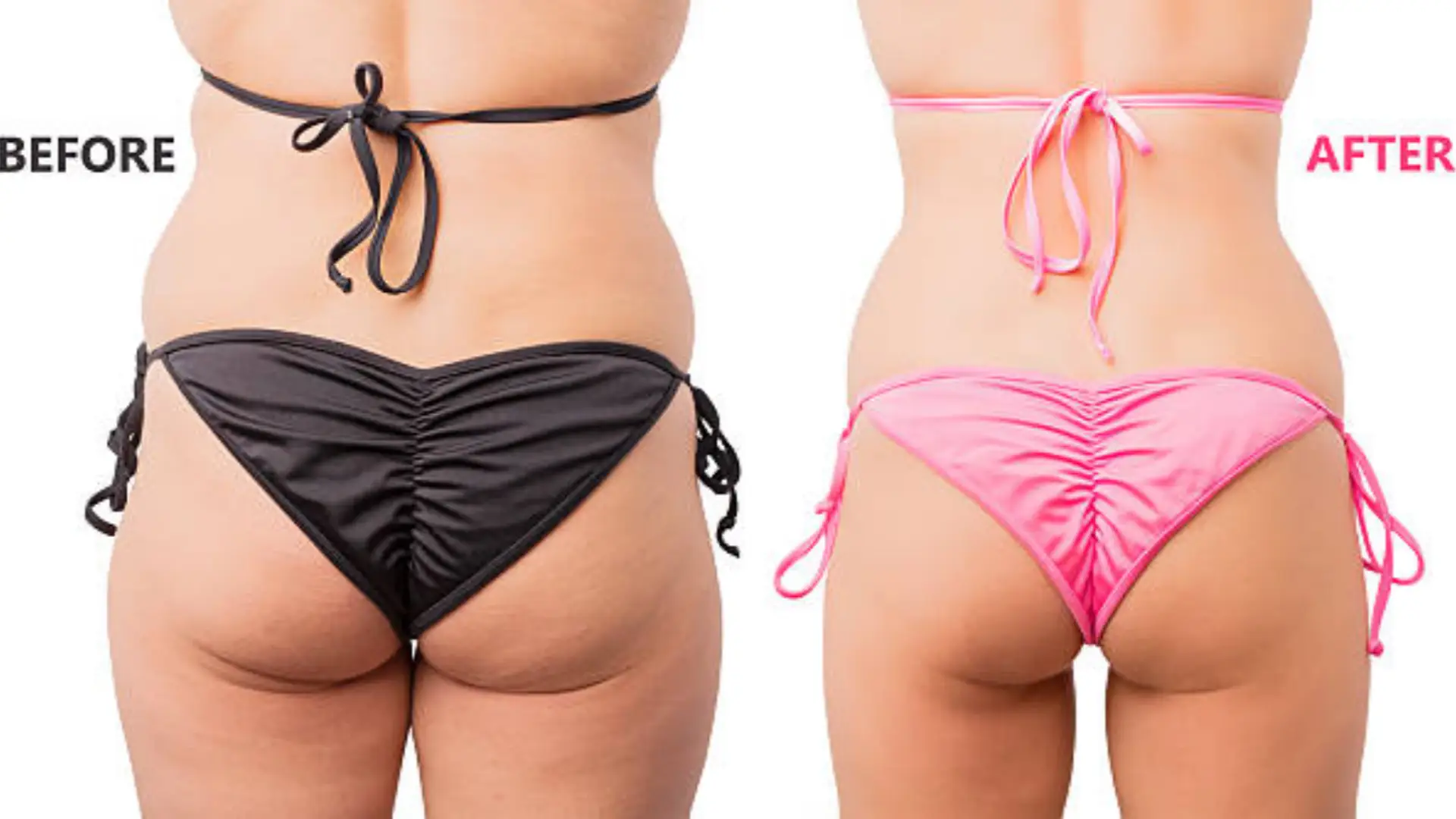
Profile 1: “I’m happy with my weight, but this one spot drives me crazy.”
These clients are at or near their goal weight. They exercise regularly. They eat well. But there’s a stubborn pocket — under the chin, on the love handles — that won’t budge. Recommendation: laser lipo. The precision and skin-tightening bonus address exactly what frustrates them. Session count is low, and they’ll see change quickly, which reinforces satisfaction and generates referrals.
Profile 2: “I want to lose inches overall — my clothes don’t fit the way they used to.”
These clients care about circumference. They’re less concerned with a specific bulge and more focused on dropping a dress or pant size. Recommendation: cavitation. The broader treatment coverage matches their goal, and the multi-session package structure works well for building a recurring client relationship. Just manage the expectation: cavitation works cumulatively, and the best measurements come after session 4 or 5.
Profile 3: “I’ve lost weight, but now my skin looks loose and I still have stubborn areas.”
These clients need both volume reduction AND skin tightening. Recommendation: combination approach — start with cavitation for the bulk volume, finish with laser lipo for precision sculpting plus skin firming. This is your highest-value service package, and the results are visibly superior to either technology alone.
The critical filter: neither technology is appropriate for clients with a BMI above 30–35 who have not yet addressed diet and exercise fundamentals. These are body contouring devices, not weight-loss machines. Setting this boundary protects your reputation. A disappointed client who expected to lose 20 pounds from three cavitation sessions will not come back, and they won’t send referrals.
“I’m happy with my weight, but this one spot drives me crazy.”
→ Laser Lipo“I want to lose inches overall — my clothes don’t fit the way they used to.”
→ Cavitation“I’ve lost weight, but now my skin looks loose and I still have stubborn areas.”
→ CombinationBudget-Driven Decision: Cost Per Result Analysis
From a business perspective, the question isn’t “which machine costs less?” It’s “which machine generates better margin and faster payback?”
Think of it as a gym membership model: cavitation is the high-volume membership tier (lower price, more sessions, recurring revenue). Laser lipo is the premium personal-training tier (higher price, fewer sessions, higher per-visit margin). Both are profitable. They just serve different parts of your client base.
A practical service menu strategy that many successful clinics use:
- Cavitation as the entry-level offer. Price it accessibly. Use it to bring new clients through the door. The 6–12 session package builds a relationship.
- Laser lipo as the premium upsell. Once a client trusts you after their cavitation course, introduce targeted laser sculpting for areas cavitation couldn’t address. The higher per-session price feels justified because they’ve already seen results from your clinic.
- Combination packages as the flagship. Bundle cavitation + laser lipo into a comprehensive body transformation program. Price it at a premium. This is your highest-margin offering.
05 What to Look for When Investing in a Slimming Machine
This is the section that most “laser lipo vs cavitation” articles skip entirely. They’re written for consumers, not for you. But if you’re about to spend thousands of dollars on equipment, you need a procurement framework, not just a technology comparison.
Buying a slimming machine isn’t like buying a hair dryer. It’s a 3-to-5-year revenue asset that will define your treatment menu. Get it wrong, and you’re not just out the purchase price — you’ve lost client trust, staff confidence, and the opportunity cost of the machine you should have bought. Here’s how to evaluate machines systematically.
Essential Certifications and Quality Standards
Certifications are your first filter. If a machine can’t clear this bar, stop evaluating. No price is low enough to justify the regulatory and liability risk.
Non-negotiable (walk away if missing):
- CE marking — Required for the European market. But dig deeper: confirm whether it’s medical-grade CE (under MDD/MDR) or general EMC/LVD CE. The difference is the difference between a medical device and a consumer electronic.
- FDA registration — For the US market. Understand the distinction between FDA 510(k) clearance (the device was reviewed and found substantially equivalent to a predicate device) and mere establishment registration (the factory is listed, but the device itself was never reviewed). The former matters; the latter is a paperwork exercise.
- RoHS compliance — Restriction of hazardous substances. Non-negotiable for any professional equipment that will touch clients’ skin.
Strong differentiators (indicates a serious manufacturer):
- ISO 13485 — The medical device-specific quality management standard. It is significantly more rigorous than ISO 9001, adding mandatory requirements for design control, risk management, traceability, and post-market surveillance. A manufacturer holding ISO 13485 has invested in systems that a commodity assembler has not.
- FCC certification — Electromagnetic compatibility. Important for any device that operates near other electronic equipment in a treatment room.
Before wiring payment, request: original certification certificates (not copies of copies), third-party test reports from an accredited lab, and — if the manufacturer claims a specific clinical result — the published study that supports it.
How to Evaluate a Machine Supplier
Guangzhou, China, is the global manufacturing hub for beauty equipment. The vast majority of laser lipo and cavitation devices on the market originate from factories concentrated in the city’s Baiyun District. Within a 10-kilometer radius, you’ll find everything from world-class manufacturers with ISO-certified production lines to trading companies operating out of a shared office with no factory floor at all. Telling them apart before you visit is a skill.
Five questions separate manufacturers from intermediaries:
- Factory scale and history. Ask directly: “How many square meters is your production facility? How many assembly lines do you run? What is your annual unit capacity?” A manufacturer with 10,000+ square meters, multiple automated lines, and 30,000+ units of annual capacity is a fundamentally different operation from one that subcontracts assembly to a third-party workshop. Also ask how long they’ve been in business — 5 years is a minimum threshold; 10+ years suggests stability.
- OEM/ODM capability. Can they customize the housing, logo, user interface language, system software, packaging, and certification documentation to your specifications? A manufacturer that offers full-spectrum customization — down to the UI language and certification package — signals an in-house R&D and engineering team, not just an assembly operation.
- After-sales infrastructure. Ask about warranty terms (1 year minimum for the main unit is standard; 24 months is exceptional), parts replacement turnaround (72 hours or less is competitive), remote diagnostic capability, and whether they provide video-based operation training. A supplier that can’t describe their after-sales process in detail during the sales conversation won’t deliver it after the invoice is paid.
- Market presence and platform credentials. Check their standing on B2B platforms. An Alibaba Gold Supplier for 9 consecutive years or a Made-in-China certified supplier for 11 years is not a guarantee of quality — but it is a strong signal that the company has been consistently operating and passing platform audits. Short-lived accounts with no verification badges warrant extra scrutiny.
- Reference clients. Ask for clients in your target market who have been using their machines for at least 12 months. A manufacturer that can connect you with reference customers in your region demonstrates both confidence in their product and a distribution track record you can verify.
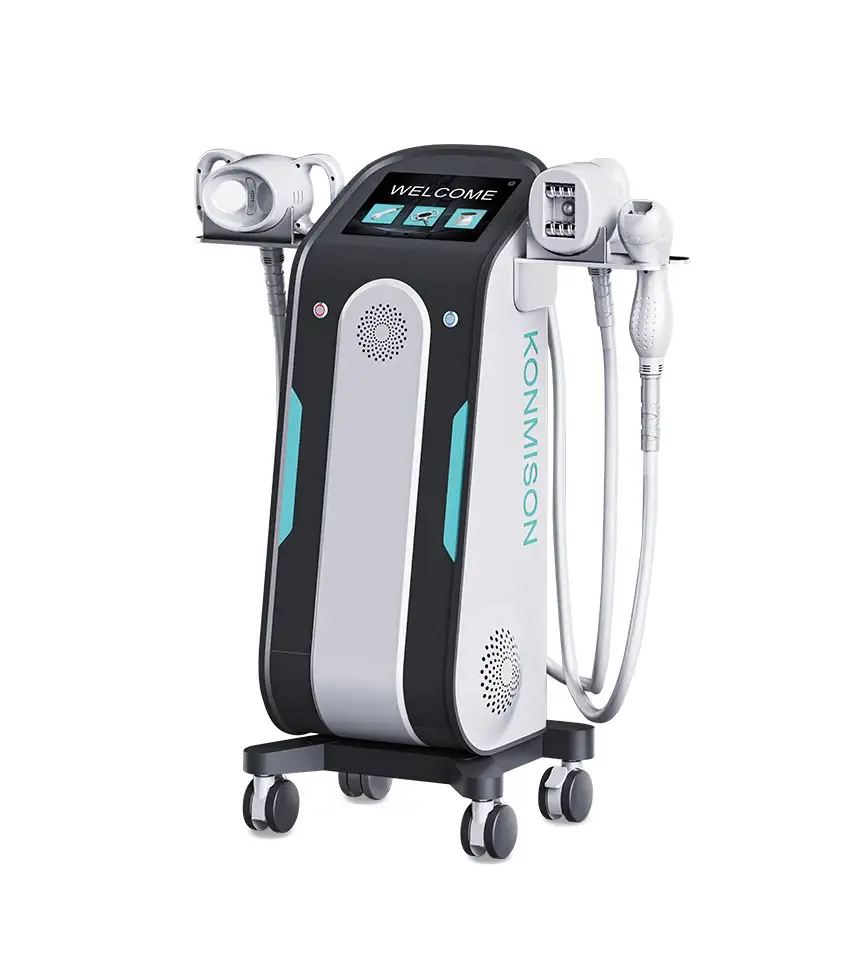
For context: a manufacturer like Guangzhou Konmison Beauty Equipment Co., Ltd. — holding ISO 13485, CE, FDA, RoHS, and FCC certifications, operating from a 12,000 sqm facility with 6 automated assembly lines and an annual capacity exceeding 30,000 units — represents the benchmark for what a well-qualified supplier looks like. Their OEM/ODM program covers the full customization spectrum from housing design through to certification documentation, which is the level of manufacturing depth you should expect when evaluating any serious partner.
Calculating ROI: How Fast Can Your Machine Pay for Itself?
Let’s put real numbers to the question that matters most: how quickly does this investment turn profitable?
Sample ROI calculation (conservative scenario):
Assume you purchase a mid-range cavitation machine at $3,000. You price each session at $150. You book 8 sessions per week (a modest pace — 1–2 clients per day, 5 days a week). With 48 working weeks per year, your annual revenue from this single machine is:
$150 × 8 × 48 = $57,600
Subtract the cost of ultrasound gel (~$200/year) and a conservative maintenance allocation (~$300/year). Your net annual contribution is roughly $57,100. Against a $3,000 purchase, the machine pays for itself in under one month.
Now run the same math for a premium laser lipo system at $20,000. At $300 per session, 6 sessions per week, 48 weeks a year:
$300 × 6 × 48 = $86,400
Even with the higher purchase price, the payback period is approximately 3–4 months. These are conservative estimates; clinics in high-cost urban markets with strong client bases routinely achieve faster payback.
A strategic note on machine selection: multi-function platforms that combine cavitation, laser lipo, and RF in a single unit carry a higher upfront cost but typically deliver the fastest ROI. Why? One machine serves three treatment modalities, tripling your addressable client base without tripling your equipment investment. If your budget allows, a multi-technology platform is almost always the smarter capital allocation than buying separate single-function devices.
Annual Revenue from One $3,000 Machine
Payback: Under 1 Month06 Combining Laser Lipo and Cavitation for Maximum Results
Can you use both technologies on the same client? Absolutely — and the clinics getting the best results and the strongest word-of-mouth referrals almost always do.
The combination protocol that works: cavitation first for broad volume reduction, laser lipo second for precision sculpting and skin tightening. Think of it as a renovation project: cavitation does the demolition (clearing large areas), and laser lipo handles the finish work (fine detailing and polish).
A practical 12-week combination program:
- Weeks 1–6: Cavitation, 1 session per week. Target large areas — abdomen, thighs, hips. Focus on circumference reduction.
- Weeks 7–12: Laser lipo, 1 session per week. Target refined areas — any remaining pockets, plus skin tightening over previously treated zones.
Important protocol rule: Do not treat the same body area with both technologies on the same day. Give the lymphatic system at least 48–72 hours to clear the metabolic byproducts from one treatment before applying the second. And insist that clients drink a minimum of 2 liters of water daily throughout the program. Lymphatic clearance is hydration-dependent, and skipping this step is the single most common reason for underwhelming results.
For your business, offering combination programs achieves three things at once: higher package prices (clients pay a premium for comprehensive transformation), better results (which drive referrals), and competitive differentiation. Most clinics in your area probably offer one technology or the other, not both in a structured protocol.
If you’re evaluating equipment suppliers and want to simplify procurement, working with a manufacturer that produces both laser lipo and cavitation systems under one roof — with unified warranty terms, after-sales support, and training — can reduce your operational complexity considerably. Konmison, for example, offers both technologies within its product portfolio and provides 1-year machine warranty with remote diagnostic support and video-based operator training.
Expanding beyond fat reduction? Muscle toning and fat freezing are the two fastest-growing companion categories — see our Emslim Machine Buyer Guide and Cryolipolysis Machine Buyer Guide for the full sourcing checklists.
Cavitation — Broad volume reduction for abdomen, thighs, hips
Laser Lipo — Precision sculpting & skin tightening over treated zones
References
- Jackson, R.F. et al. “Low-level laser therapy as a non-invasive approach for body contouring: A randomized, controlled study.” Lasers in Surgery and Medicine, 2009. https://pubmed.ncbi.nlm.nih.gov/20014253/
- Teitelbaum, S.A. et al. “Noninvasive Body Contouring by Focused Ultrasound: Safety and Efficacy of the Contour I Device in a Multicenter, Controlled, Clinical Study.” Plastic and Reconstructive Surgery, 2007.
- Jankowski, M. et al. “Low-level laser therapy (LLLT) does not reduce subcutaneous adipose tissue by local adipocyte injury but rather by modulation of systemic lipid metabolism.” Lasers in Medical Science, 2017. https://pmc.ncbi.nlm.nih.gov/articles/PMC5288437/
- Brown, S.A. et al. “Effect of low-level laser therapy on abdominal adipocytes before lipoplasty procedures.” Plastic and Reconstructive Surgery, 2004. https://pubmed.ncbi.nlm.nih.gov/15114147/
- Konmison Quality Certifications. https://www.konmison.com/quality/
- Konmison OEM/ODM Capabilities. https://www.konmison.com/oem-odm/
- Konmison Cavitation Equipment. https://www.konmison.com/cavitation-machine/
- Konmison Official Website. https://www.konmison.com/
Konmison produces both technologies under one roof — ISO 13485 certified, CE/FDA registered, with OEM customization and 1-year warranty. Request a quote and spec sheet today.


 EN
EN  RU
RU  ES
ES  IT
IT  AR
AR  FR
FR  DE
DE  JA
JA  KO
KO  NL
NL