
01 What Is Laser Lipo — and Why It Has Side Effects
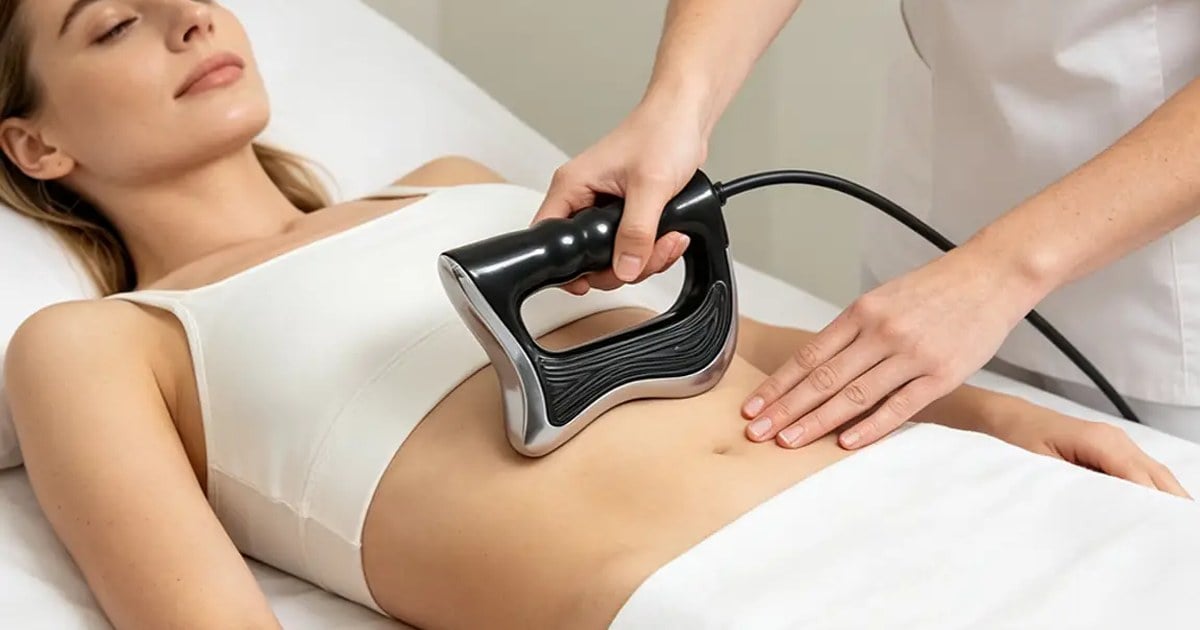
Laser lipo — or laser lipolysis — is a body-contouring procedure that uses focused laser energy to break down fat cells. Rather than surgically removing fat like traditional liposuction, laser lipo heats and damages the membranes of fat cells, triggering your body to naturally clear away the cellular debris over the following weeks.
There are two broad categories. Non-invasive laser lipo uses low-level laser pads (typically 635–650nm wavelength) placed on the skin surface — no incisions, no anesthesia. Minimally invasive laser lipo, by contrast, inserts a thin fiber-optic probe under the skin to deliver deeper laser energy, most commonly at 1064nm (Nd:YAG), the clinical gold standard for penetrating subcutaneous fat.
Both approaches share the same basic mechanism — and the same reason side effects exist. Laser heat creates controlled thermal damage. Your body responds to that damage with inflammation: increased blood flow, fluid accumulation, and immune cell activity to clear dead fat cells. That inflammatory response is what causes the bruising, swelling, and tenderness most people experience. It is not a sign that something went wrong — it is a sign that your body is doing exactly what it is supposed to do.
02 Common Side Effects You Should Expect
A 2024 systematic review and meta-analysis published in the European Journal of Plastic Surgery — the most comprehensive comparison of liposuction techniques to date — found that laser-assisted liposuction had the lowest complication rates across all modalities. But “low risk” does not mean “no side effects.” The same review confirmed that transient, self-limiting reactions are nearly universal. Here is what you will actually feel and see.
Bruising, Swelling, and Redness — The Expected Trio
These three are the most visible — and most reliable — side effects of laser lipo. Bruising occurs because the laser energy disrupts small blood vessels in the treated area, and the breakdown of fat cells releases contents that trigger local inflammation. Clinical data shows bruising affects a substantial portion of patients: one study in a 2023 systematic review reported an ecchymosis rate of up to 45%, though nearly all cases resolved within 10 days.
Swelling follows a predictable arc — but not the one most people expect. It does not peak on day one. Because the inflammatory cascade takes time to fully activate, swelling typically reaches its worst around days 3 to 5 post-treatment. This is when many patients panic, believing the procedure made them look worse. It did not — the swelling is just peaking. Redness at the treatment site usually fades within 2 to 3 days.
When to be concerned: unilateral swelling that is dramatically larger than the other side, swelling accompanied by fever or chills, or redness that spreads beyond the treatment boundaries and does not improve after 5 days. These are not normal and warrant a call to your provider.
Numbness, Tingling, and Skin Sensitivity Changes
Less visible but often more unsettling: the way your skin feels after laser lipo. The laser’s heat can temporarily affect superficial nerve endings, and in minimally invasive procedures, the insertion and movement of the fiber-optic cannula may lightly stretch subcutaneous nerves.
The result is a cluster of odd sensations — numbness like dental anesthetic halfway wearing off, pins-and-needles tingling, or a kind of dull “clay-like” texture when you touch the skin. Most patients find these sensations improve significantly within 2 to 6 weeks as nerve endings regenerate at roughly 1 millimeter per day.
The dividing line between normal and abnormal: sensory changes that last beyond 3 months with zero improvement, or numbness accompanied by actual muscle weakness (not just discomfort). Normal post-procedure numbness affects sensation only — you should still be able to move the area normally.
Temporary Lumpiness and Skin Texture Changes
“If you feel hard lumps under your skin, do not panic.” This is among the most common reassurances plastic surgeons give their laser lipo patients — and among the most Googled post-procedure symptoms.
Those lumps — sometimes described as “ping pong balls” or rope-like firmness — are fibrotic nodules. They form because the laser triggers collagen remodeling while simultaneously disrupting normal lymphatic drainage in the treated area. Fluid and healing cells collect in pockets, creating palpable firmness that typically measures 0.5 to 2 centimeters across.
The good news: they almost always resolve. Lymphatic drainage massage, started around week 2 under professional guidance, accelerates softening. Most nodules are substantially reduced by 4 to 8 weeks. The warning signs that justify a follow-up visit: a lump that is fixed in place and does not move when you press it, one that keeps growing after the first month, or a lump accompanied by skin dimpling or color changes.
03 Rare But Serious Complications
Serious complications from laser lipo are uncommon. The landmark 2008 study by Katz and McBean, reviewing 537 consecutive laser-assisted liposuction cases, reported an overall complication rate of just 0.93% — four skin burns and one infection. A more recent 2024 meta-analysis placed individual complication rates even lower, at roughly 0.13% each for hemorrhage, infection, seroma, and thermal injury when the procedure was performed by experienced operators.
Those numbers are reassuring. But they rest on two assumptions: the device is properly calibrated, and the practitioner knows what they are doing. When either assumption fails, the risk profile changes.
Burns and Thermal Injuries — When Heat Goes Wrong
Skin burns are the most frequently reported serious adverse event in laser lipo — and the complication most directly tied to controllable factors. In the Katz study, all four burns occurred early in a surgeon’s case series, revealing a clear learning-curve effect. Once operators gained experience with energy settings and endpoint judgment, burn rates dropped to near zero.
The mechanism is straightforward. Laser energy that is too high, applied for too long, or delivered without adequate cooling can overheat the skin beyond the safe threshold. Surface temperature during treatment should ideally stay between 40 and 42°C — a range that is warm enough to damage fat cells but cool enough to spare the overlying skin. Devices equipped with real-time infrared thermal monitoring make this far easier to maintain. Without it, the operator relies on feel, and the margin for error narrows.
The FDA’s MAUDE database — a publicly searchable registry of medical device adverse events — contains sobering examples. In one documented case, a device sold under the brand name “Strawberry and Cream” produced progressive burn marks on multiple patients, and the manufacturer reportedly refused to accept returns of the defective unit. These are not abstract risks; they are recorded events tied to specific devices and specific failures of quality control.
Infection, Scarring, and Seroma Formation
Minimally invasive laser lipo requires tiny skin incisions — usually 2 to 3 millimeters — to insert the laser fiber. Those entry points, small as they are, create a pathway for bacteria. Infection occurs in roughly 0.2% of cases, typically presenting as spreading redness, warmth, discharge, or fever within the first several days post-procedure.
Scarring at the incision sites is usually minimal — 2 to 3 millimeter marks that fade to near-invisibility over months. The exception is patients with a personal or family history of keloid or hypertrophic scarring, who should discuss this explicitly with their provider before proceeding.
Seroma — a collection of clear fluid pooling under the skin in the treated area — is one of the more variable complications in the literature. Reported rates range from 0.1% to as high as 9%, depending on how aggressively cases are screened. Small seromas are typically reabsorbed by the body without intervention. Larger ones may require needle drainage. The single most effective preventive measure: wearing your compression garment exactly as instructed, typically for 2 to 4 weeks.
04 Laser Lipo Recovery Timeline — What to Expect Week by Week
Most articles say “you will recover in 1 to 2 weeks.” That is directionally true but not particularly useful — recovery is not a single event; it is a phased process where different side effects follow different clocks.
| Timeframe | Side Effect Status | Appearance | Activity Level |
|---|---|---|---|
| Week 1 | Bruising and swelling peak (days 3–5); redness present; tenderness significant | Worst-looking phase — do not judge results yet | Light daily activities only; no exercise |
| Week 2 | Bruising fading to yellow-green; swelling beginning to subside; numbness may appear | Starting to see initial contour hints | Resume gentle walking; still avoid strenuous exercise |
| Weeks 3–4 | Most bruising gone; lumps and firmness common; sensory changes may persist | “Worse before better” phase fading | Most normal activities resume; compression garment still worn |
| Months 1–3 | Residual swelling fluctuates (worse by end of day); lumps softening | ~70–80% of final result visible | Full activity; compression garment may be discontinued |
| Months 3–6 | Final skin retraction and contour settling | Final results apparent | No restrictions |
One important distinction: non-invasive laser lipo sits on the faster end of this timeline — most people return to work the same day and see initial results around 6 weeks. Minimally invasive procedures extend each phase by a factor of roughly 2 to 3, but also produce more dramatic contour changes.
05 Who Should Avoid Laser Lipo
Laser lipo is a safe procedure for appropriately selected candidates, but it is not for everyone. These are the groups for whom the risk-benefit calculation tilts unfavorably:
- Pregnancy or actively trying to conceive. No safety data exists for laser lipo during pregnancy, and the procedure is universally deferred.
- Implanted electronic devices. Pacemakers, internal defibrillators, and certain neurostimulators can theoretically be affected by laser energy — this is an absolute contraindication.
- Bleeding disorders or anticoagulant use. Conditions that impair clotting, or medications like warfarin and high-dose aspirin, increase the risk of hematoma and excessive bruising. Some anticoagulants can be temporarily paused under physician supervision; others cannot.
- Active skin infection or rash in the treatment area. Introducing laser energy into already-inflamed skin risks spreading the infection or worsening the condition.
- Unrealistic expectations. Laser lipo removes localized fat pockets — it is not a weight-loss procedure. If your BMI is above 30, weight management should generally come first.
Every patient still needs an in-person evaluation. A qualified practitioner will review your full medical history before clearing you — the list above covers the most common disqualifiers, but individual factors always matter.
- Are you pregnant, nursing, or trying to conceive?
- Do you have any implanted electronic devices?
- Do you have a bleeding disorder or take blood thinners?
- Do you have an active skin infection or rash in the treatment area?
- Are your expectations realistic — is your BMI above 30?
06 The Hidden Factor — How Device Quality and Practitioner Skill Shape Your Risk
Here is something the top-ranking articles on this topic rarely tell you: laser lipo’s safety profile is not fixed. The same procedure, performed with different equipment by different hands, carries a meaningfully different risk level. Your side effects — and your risk of complications — depend substantially on choices made before you ever lie down on the treatment table.
Not All Lasers Are Equal — Why Wavelength and Power Control Matter
Laser lipo devices are not interchangeable. The wavelength determines how deeply the energy penetrates and which tissue absorbs it. Low-level lasers in the 635–650nm range target superficial fat only — they are the gentlest option, with the fewest side effects, but also the most modest results. The Nd:YAG 1064nm wavelength, by contrast, penetrates up to 6 millimeters beneath the skin surface and is the most clinically studied option for meaningful fat reduction.
What separates a safe 1064nm device from a risky one often comes down to a single feature: real-time temperature monitoring. Infrared thermal cameras that continuously track skin surface temperature allow the operator to keep the treatment zone locked in the 40–42°C safety window. Without this feedback loop, the operator is guessing — and the difference between therapeutic heat and a burn is measured in single degrees.
Before you book a treatment, ask three questions: What wavelength does your device use? Does it have real-time temperature monitoring? When was the device last calibrated? If the answers are vague, consider that a signal.
- Targets superficial fat only — gentlest option
- Fewest side effects, most modest results
- Non-invasive, no incisions needed
- Penetrates up to 6mm beneath skin surface
- Most clinically studied — meaningful fat reduction
- Requires real-time temperature monitoring for safety
The Practitioner Learning Curve — Why Experience Matters More Than Credentials
A medical license tells you someone is legally permitted to perform the procedure. It does not tell you whether they have done it enough times to do it well.
The clinical data on this point is clear: burns and contour irregularities cluster in a practitioner’s early cases. The Katz study’s complication distribution follows the classic learning-curve pattern — adverse events concentrated at the start, then tapering to near-zero as case volume accumulated. Expert consensus suggests a practitioner needs roughly 20 to 30 cases to reach a stable safety plateau.
When you sit down for a consultation, do not just ask about credentials. Ask about volume: How many laser lipo procedures have you performed in the last year? Have you ever had a patient experience a burn or other serious complication — and how did you handle it? A practitioner who answers these questions directly and transparently is demonstrating the kind of judgment that keeps complication rates low.
What Certifications to Look For — in Both Clinic and Equipment
Most consumers check whether a device is “FDA cleared.” That is a reasonable starting point, but it is not the whole story. FDA 510(k) clearance means the device is substantially equivalent to an already-marketed device — it is a market-access threshold, not a safety guarantee.
The certification that signals deeper quality is ISO 13485. This is the international standard for medical device quality management systems, and it is meaningfully harder to obtain than basic regulatory clearance. An ISO 13485-certified manufacturer has demonstrated that quality control extends across the entire product lifecycle — from design and raw material sourcing through production, calibration, and post-market surveillance. In plain terms, it means someone is checking that each device works correctly before it ever reaches a clinic.
The other question to ask — and this is the one almost nobody thinks to ask — is whether the clinic can show you the device’s maintenance and calibration log. The FDA MAUDE database contains multiple cases where devices continued to be used on patients after known malfunctions, simply because no one was tracking maintenance. A one-page service log is not a technical document — it is proof that patient safety is being taken seriously.

07 How to Minimize Your Risk — Before and After Treatment
You now know what can happen, why it happens, and what determines whether a side effect stays in the “normal” column or drifts into the “complication” column. Here is what to actually do with that knowledge.
Before treatment:
- Verify your provider’s case volume — ask for specific numbers, not general reassurances.
- Ask what wavelength the device uses and whether it has real-time temperature monitoring.
- Confirm the device carries recognized international certifications — FDA clearance or CE marking at minimum; ISO 13485 is the stronger signal.
- Disclose your full medical history, including all medications and supplements — some common ones (aspirin, fish oil, vitamin E) can increase bleeding risk.
- Stop alcohol and blood-thinning substances 48 hours before your appointment.
After treatment:
- Wear your compression garment exactly as instructed — it is the single most effective tool for controlling swelling and preventing seromas.
- Apply cold compresses during the first 24 to 48 hours — not heat, which can worsen swelling.
- Stay hydrated. Your body is metabolizing fat cell debris, and that process requires water.
- Begin lymphatic drainage massage around week 2, under professional guidance — it demonstrably accelerates the softening of fibrotic nodules.
- Take photos weekly, not daily. Day-to-day changes are invisible; week-to-week progress is real.
Choosing a provider is as much about the equipment they use as the hands operating it. When evaluating your options, look for clinics that invest in devices from manufacturers with verifiable international certifications — ISO 13485, CE marking, and FDA clearance together indicate a quality management system that extends from factory floor to treatment room. You can review one such manufacturer’s full certification profile at Konmison’s quality assurance page.
References
- Katz B, McBean J. “Laser-assisted lipolysis: a report on complications.” Journal of Cosmetic and Laser Therapy. 2008. https://pubmed.ncbi.nlm.nih.gov/19016103/
- Al-Matwi MA, et al. “Comparison of complications in isolated aesthetic liposuction procedures across different techniques: a systematic review and meta-analysis.” European Journal of Plastic Surgery. 2024. https://link.springer.com/article/10.1007/s00238-024-02268-0
- DiBernardo BE, et al. “New clinical outcomes utilizing a 1064-nm Nd:YAG laser for lipolysis of the torso oblique region.” Lasers in Surgery and Medicine. 2010. https://pubmed.ncbi.nlm.nih.gov/20653346/
- U.S. Food and Drug Administration. MAUDE — Manufacturer and User Facility Device Experience Database. https://www.accessdata.fda.gov/scripts/cdrh/cfdocs/cfmaude/search.cfm
- International Organization for Standardization. ISO 13485:2016 — Medical devices — Quality management systems. https://www.iso.org/standard/59752.html
- Konmison. Quality Assurance. https://www.konmison.com/quality/


 EN
EN  RU
RU  ES
ES  IT
IT  AR
AR  FR
FR  DE
DE  JA
JA  KO
KO  NL
NL