
The carbon laser facial, often celebrated as the Hollywood Peel, has become a staple in modern skincare due to its ability to instantly deeply cleanse pores, control stubborn oil production, and brighten dull skin with absolutely zero recovery time. However, the cost of this popular treatment can seem mystifying, with single-session prices swinging drastically from double digits to hundreds of dollars depending entirely on where you live. Whether you are a skincare enthusiast looking to plan your personal beauty budget, or a clinic owner evaluating the real equipment costs and return on investment, this complete 2026 guide breaks down the global pricing realities and hidden metrics behind the treatment.
What Is a Carbon Laser Facial and How Does It Work
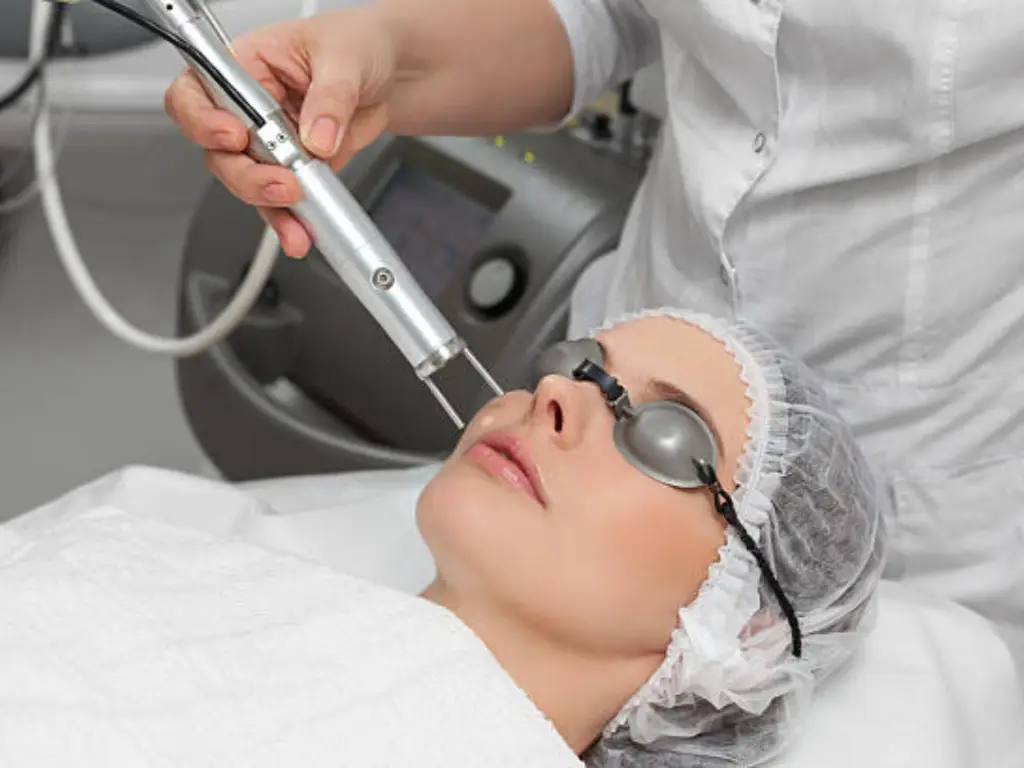
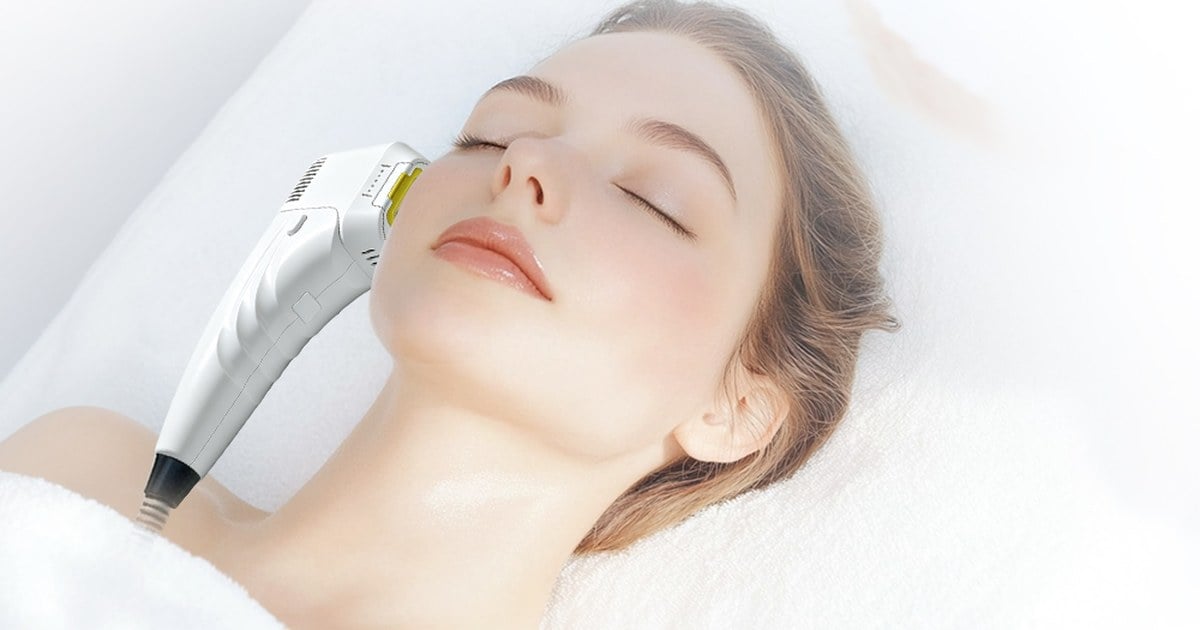
You’ve probably heard the name — Hollywood Peel, China Doll Facial, Black Doll Facial — and wondered if it’s worth the price tag. Behind the branding is a straightforward treatment: a carbon laser facial uses a medical-grade carbon lotion paired with a Q-switched Nd:YAG laser at 1064nm. It earned the nickname “lunchtime facial” because a full session takes 20 to 40 minutes and you walk out looking like yourself — just better. No hiding indoors, no peeling, no “avoid the sun for two weeks.”
The procedure works in two steps. First, a thin layer of liquid carbon goes onto the face. The micron-sized particles slip into pores and bind to oil, dead skin cells, and surface impurities — the way a magnet pulls iron filings out of sand. Then the laser makes two passes: the first heats the carbon and upper dermis to kick off deep cleansing, the second uses a photoacoustic pulse to shatter the carbon particles, exfoliating the surface while triggering collagen production underneath.
What you get from a session:
- Deep pore decongestion — carbon lifts sebum and blackhead-forming debris from inside pores
- Visible brightening — dull, uneven tone improves noticeably after one session
- Oil control — overactive sebaceous glands calm down, cutting T-zone shine
- Collagen stimulation — the heat triggers natural collagen remodeling for firmer skin over time
- Zero recovery — no peeling, no redness beyond mild warmth
How Much Does a Carbon Laser Facial Cost — Regional Price Breakdown
Geography is the biggest price lever in carbon laser pricing. The same treatment, same 1064nm wavelength, costs anywhere from $16 in Bangkok to over $500 in Manhattan. Before diving into the numbers, here’s the framework: every price reflects three decisions — which country you’re in, what tier of clinic you choose, and whether you buy a single session or a treatment package.
United Kingdom and Europe
The UK market offers a clear window into European pricing. Single sessions range from about £120 to £300. London commands the premium — Skin Horizon prices a single session at £300, with a 5-session package at £250 per session (£1,250 total). A trial session runs £200. Outside the capital, pricing drops: SOMA Body Clinic in Trowbridge charges £120 for a full-face session, with a 6-session plan at £648 (£108 per session). The London premium — roughly 2.5× regional pricing — comes from higher commercial rents and staff costs, not better equipment or results.
Package discounts across the UK market land at 15–25%, so single-session pricing is a poor benchmark if you plan a full course.
North America
The US market runs from about $150 to over $500 per session — the widest range in any single country. The driver is not geography alone but who holds the handpiece: a board-certified dermatologist in a Manhattan or Beverly Hills clinic charges $350–500, while a licensed aesthetician at a mid-size city med-spa prices the same treatment at $150–300. The MD-supervised premium adds 30–50% to the session cost. A dermatologist can diagnose the specific type of pigmentation or acne scarring before setting laser parameters, which reduces the risk of post-inflammatory hyperpigmentation in darker skin types.
Most US clinics push 3–6 session packages with 15–20% discounts, and some run membership models where monthly payments unlock lower per-session rates.
Asia-Pacific
The Asia-Pacific region shows the most dramatic price spread. Australia, with high labor costs and TGA regulatory requirements, sits at the top: single sessions run AUD 150–410 at reputable clinics. India occupies the middle at ₹2,000–6,500 per session ($24–78 USD), though the gap between a dermatologist-led clinic and a chain salon can be 2–3× for the same treatment name. Southeast Asia offers the most aggressive pricing — Thai clinics advertise carbon laser sessions from ฿599 ($16–17 USD), making Bangkok a budget destination for medical tourism. The trade-off is equipment quality, which varies sharply at the low end.
Middle East and Africa
Dubai’s market spans the full luxury spectrum — from AED 399 at shopping-mall beauty bars to over AED 2,500 at clinics inside five-star hotels. The UAE requires MOH device registration, so even budget clinics use certified equipment. South Africa has seen a 45% increase in demand for carbon laser treatments (Omegalasers, 2026), with market-rate sessions at R800–1,200 ($42–63 USD) and strong package-driven rebooking.
Key Factors That Influence Carbon Laser Facial Pricing
If the same procedure can cost $16 in one country and $500 in another, what drives those numbers? Four independent variables explain nearly every price you’ll see.
Clinic Location and Local Market Dynamics
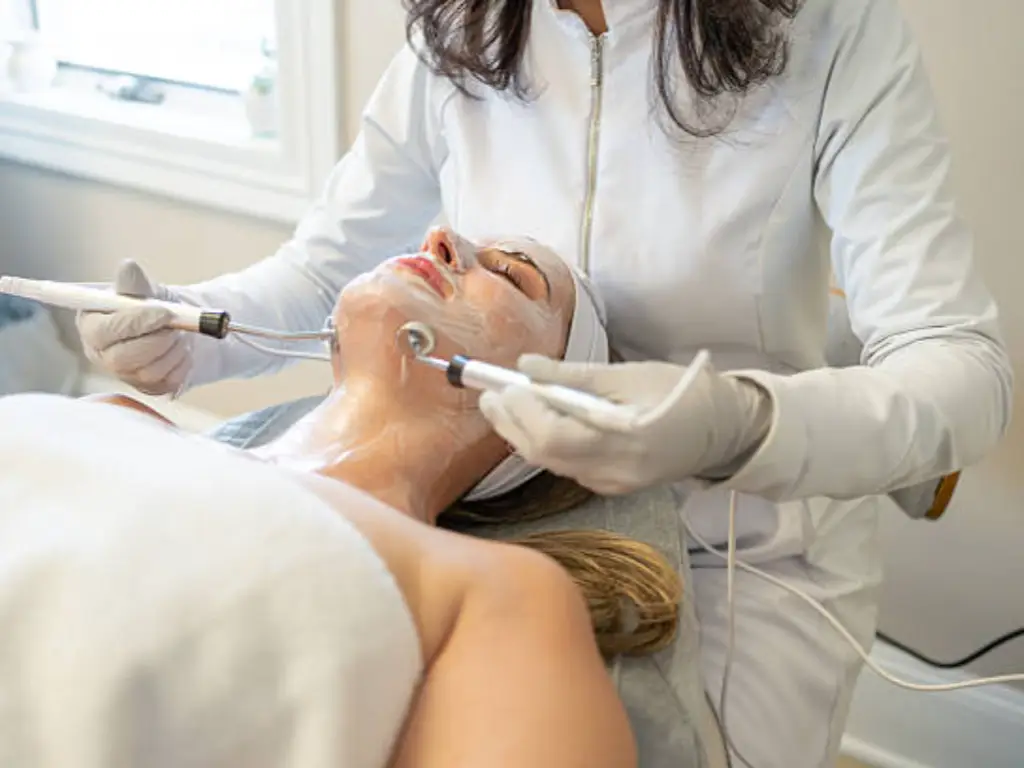
Location is the dominant price lever — and the most intuitive. A clinic on Harley Street in London pays roughly 4× the rent per square foot of one in Bristol; that cost is priced into every treatment. Beyond rent, local labor markets set the floor: in countries where licensed laser technicians earn $25–35 per hour, session prices cannot dip below a certain threshold and still cover costs. Competition density matters too — cities with 50+ med-spas competing for the same customers tend to offer more aggressive package discounts than markets with only a handful of providers.
Practitioner Expertise and Clinic Accreditation
Who holds the handpiece can matter as much as what handpiece it is. A board-certified dermatologist brings diagnostic capability — they can tell melasma from sun damage from post-acne hyperpigmentation, each of which needs different laser parameters on a 1064nm Nd:YAG. A certified laser technician operates the device competently but may lack the medical training to spot when a pigment irregularity needs investigation rather than treatment. An aesthetician at a walk-in beauty bar, depending on local regulations, may have completed only a short training course.
This hierarchy maps directly to price and inversely to risk. Saving $100 per session by choosing the lowest-qualified operator bets your face on the outcome — the 1064nm wavelength is safer for darker Fitzpatrick skin types (IV–VI) than shorter wavelengths like IPL, but parameter errors can still cause post-inflammatory hyperpigmentation that takes months to fade.
Technology and Equipment Quality
Not all Nd:YAG lasers are equal — a distinction that becomes central in the next section when we look at equipment purchasing. For patients, the practical difference: a medical-grade Q-switched platform from an established manufacturer delivers consistent energy output (fluence in the 1–12 J/cm² range, spot sizes 2–8mm, nanosecond-range pulse widths). A generic or unbranded unit may claim the same specs on paper but deliver inconsistent energy shot-to-shot, producing uneven results or, worse, localized burns on darker skin.
Most patients never ask what laser their clinic uses. Ask — it’s the fastest way to separate premium pricing backed by premium equipment from premium pricing backed by nothing.
Treatment Area and Package Commitments
This variable is the one you control directly. A full-face session is the baseline; adding the neck adds 20–30%, and including the décolletage adds another 15–20%. Single sessions are the most expensive way to buy — every clinic studied in the UK and US markets prices individual sessions 15–25% above their package-equivalent rate. A standard treatment course runs 4–6 sessions spaced 2–4 weeks apart, with maintenance every 2–4 months. If you know you’ll commit to a full course, prepaying the package locks in today’s price and saves hundreds over pay-as-you-go.
Carbon Laser Facial vs. Other Treatments — Cost and Value Comparison
Carbon laser is one option in a crowded field. How does it compare?
| Treatment | Avg Cost/Session | Sessions | Downtime | Best For | Key Limitation |
|---|---|---|---|---|---|
| Carbon Laser Facial | $100–400 | 4–6 | None | Oily skin, dullness, pores | Not for deep wrinkles |
| HydraFacial | $150–300 | Ongoing | None | Instant hydration | No collagen stimulation |
| Light Chemical Peel | $100–300 | 3–6 | 1–3 days | Superficial pigmentation | PIH risk in darker skin |
| Microneedling | $200–500 | 3–4 | 1–2 days | Acne scars, texture | Pain, longer recovery |
| IPL Photofacial | $150–400 | 3–5 | Mild | Redness, sun spots | Unsafe for Fitzpatrick IV–VI |
The carbon laser’s standout advantage is safety on darker skin tones — the 1064nm wavelength penetrates deeper than IPL’s broadband light, bypassing melanin in the epidermis and cutting the risk of burns or post-inflammatory hyperpigmentation. For patients with Fitzpatrick Type IV–VI skin who want visible results without downtime, carbon laser is often the safest, most cost-effective entry into energy-based treatments.
Carbon Laser Equipment Cost — What Clinic Owners Need to Know
If you’re a clinic owner or med-spa operator searching for “carbon laser facial cost,” you’re asking a different question than the consumer: not “what will I pay per session?” but “what will it cost to offer this service?” This section answers that question — starting with a common mix-up that costs first-time buyers real money.
Types of Carbon Laser Equipment — Nd:YAG vs. CO₂ Clarified
A carbon laser facial machine is not a CO₂ fractional laser. They are completely different devices for completely different purposes.
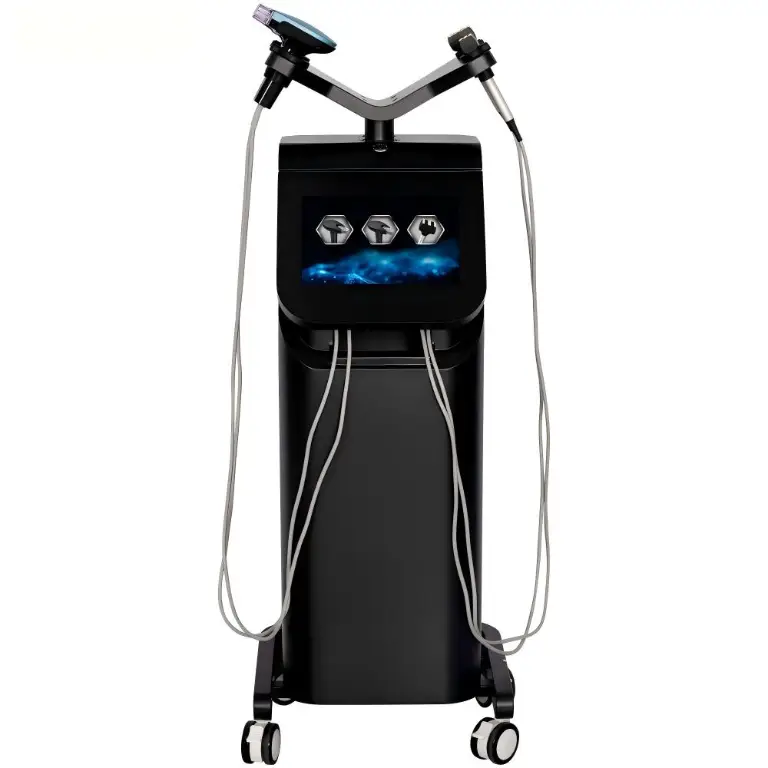
A carbon laser facial uses a Q-switched Nd:YAG laser at 1064nm. It’s non-ablative — it treats the skin without removing its surface. Equipment prices for dedicated carbon peel platforms start around $3,000 for portable units and reach $50,000+ for multi-function professional workstations. A CO₂ fractional laser operates at 10,600nm and is ablative — it vaporizes microscopic columns of skin to trigger deep collagen remodeling. Prices for CO₂ start around $30,000 for entry-level clinical units and exceed $150,000 for premium platforms (Cocoon Laser, 2025).
If you want to offer carbon laser facials (Hollywood Peel, Black Doll Facial), you need a Q-switched Nd:YAG — not a CO₂. Buying a CO₂ for carbon facials is like buying a pizza oven to make toast.
Equipment Price Ranges by Tier
| Tier | Price Range | Features | Best For |
|---|---|---|---|
| Entry-Level | $3,000–10,000 | Portable, single-wavelength 1064nm, air-cooled, flashlamp 500K+ pulses | Startup med-spas testing the laser market |
| Mid-Range | $10,000–25,000 | Desktop, multi-wavelength options, stable energy output, spot-size control | Growing clinics with steady patient flow |
| Professional | $25,000–50,000+ | Multi-function platform, branded components, clinical training, warranty | Established clinics needing reliability |
The jump from entry to mid-range is not about feature count — it’s about energy stability. A $5,000 portable unit may fire 8 J/cm² on one shot and 5.5 J/cm² on the next. A $20,000 unit keeps that variance under 5%. For a treatment that depends on consistent carbon particle vaporization, shot-to-shot consistency separates predictable results from disappointed patients.
- Portable, single-wavelength
- Air-cooled, 500K+ flashlamp
- Dedicated carbon peel
- Desktop, multi-wavelength
- Stable energy output (<5% variance)
- Fine spot-size control
- Multi-function platform
- Clinical training included
- Comprehensive warranty
Hidden Costs Beyond the Machine Price Tag
The sticker price is only part of the story. First-year total cost of ownership runs 30–50% above the equipment invoice. Here’s where the money goes:
- Shipping and import duties — international freight plus customs clearance adds 5–15% to the equipment price, depending on the destination country’s tariff schedule for medical and aesthetic devices
- Installation and training — on-site setup and clinical training ranges from $500–2,000 if not included in the purchase contract. Some manufacturers bundle this; others charge separately
- Annual maintenance — service contracts run 8–12% of the equipment price per year. On a $15,000 machine, budget $1,200–1,800 annually for preventive maintenance and calibration
- Consumables — carbon lotion runs $1–3 per treatment, and the flashlamp needs replacement every 500,000+ pulses (roughly every 1–2 years at moderate volume), costing $500–1,500
- Patient acquisition — new services need marketing. Budget 10–20% of initial treatment revenue for patient acquisition during the launch phase
A practical rule: if the equipment quote is $10,000, plan for $13,000–15,000 in first-year outlay. This is where supplier choice becomes a financial decision. Manufacturers with ISO 13485 certification and full international compliance — CE, FDA, RoHS, FCC — command slightly higher equipment prices, but the hidden-cost math often tilts in their favor: certified devices clear customs faster, meet local regulatory requirements without modification, and come with warranty and remote-diagnosis infrastructure that keeps downtime to hours rather than weeks. Konmison, a Guangzhou-based beauty equipment manufacturer operating since 2013, fits this model — ISO 13485-certified production with CE and FDA clearance, bundled clinical training, and a 1-year machine warranty with remote technical support. Each of these directly reduces the operational risks that inflate total cost of ownership for uncertified alternatives.
Clinic ROI — How Quickly Can a Carbon Laser Machine Pay for Itself
Thinking about equipment as a cost is accountant logic. Thinking about it as a revenue engine is owner logic. Here’s the math that turns a purchase order into a profit center.
| Scenario | Equipment | Sessions/Week | Price/Session | Monthly Revenue | Monthly Costs | Monthly Net | Payback |
|---|---|---|---|---|---|---|---|
| Conservative | $5,000 entry | 8 | $120 | $3,840 | $1,540 | $2,300 | ~2.2 months |
| Moderate | $15,000 mid | 12 | $180 | $8,640 | $3,240 | $5,400 | ~2.8 months |
| Ambitious | $30,000 pro | 16 | $250 | $16,000 | $5,600 | $10,400 | ~2.9 months |
Monthly costs assume 30% labor share, $3/session consumables, and amortized annual maintenance. Even the conservative scenario — a modest portable unit running two patients a day — reaches breakeven in about 9 weeks. The ambitious scenario, with a premium multi-function platform treating four patients daily, breaks even in under three months while generating six figures in annual net revenue.
The payback curve stays flat across price tiers because treatment pricing scales with market positioning — a clinic that invests in a professional platform can charge higher per-session rates, offsetting the steeper equipment cost. Entry-level units pay back fastest in absolute months, but the professional tier generates 4.5× the monthly net profit once paid off.
One strategic note: selling treatment packages (3–6 sessions prepaid) converts future revenue into today’s cash flow, further shortening the effective payback period. This is the highest-leverage pricing decision a new carbon laser service can make.
What to Look for in a Carbon Laser Equipment Supplier
You know the equipment budget. You’ve run the ROI numbers. The last question is who to buy from — and it matters more than the price difference between two quotes. Ask every potential supplier these five questions before signing.
1. Certifications — does the equipment hold CE, FDA, and ISO 13485?
These are not optional extras. ISO 13485 is the international standard for medical device quality management systems. CE marking is mandatory for the European market. FDA clearance is required for the US. If a supplier cannot produce current certificates for all three — and cannot explain why — walk away. A missing certification that blocks your shipment at customs costs more in lost revenue than you saved on the purchase price.
2. Warranty — what’s covered, for how long, and what’s excluded?
The industry standard is a 1-year warranty on the machine and 3 months on consumable parts. Some manufacturers offer longer coverage on specific product lines. Read the exclusions — flashlamp replacements are typically not covered under standard warranty, and neither is damage from improper voltage or water exposure.
3. Training — is clinical operation training included, and is it on-site or remote?
Reputable manufacturers include training in the purchase price, either as on-site sessions or structured video training with live Q&A. The difference matters: on-site training means your staff handles the actual device under supervision. Remote-only training means your team learns on their own — and their first real patient is the test case.
4. After-sales — what happens when the machine goes down?
Remote diagnostic capability is the minimum. The supplier should be able to video-call into your clinic, watch the machine’s behavior, and diagnose the issue in real time. Parts replacement speed is equally critical — waiting three months for a replacement flashlamp means three months of zero revenue from the device. Ask for a written SLA: diagnostic response within 24 hours, parts shipped within 48 hours of confirmed fault.
5. Customer evidence — can you show me a working device in a real clinic?
Ask for references. A manufacturer that has shipped to 60+ countries and completed 1,000+ projects should be able to connect you with at least one clinic in your region that uses their equipment. If they cannot — or will not — treat it as a red flag.
The cheapest quote rarely stays the cheapest once you add the cost of delayed shipments, untrained staff, unsupported downtime, and patients who never return after a bad first experience. Good equipment from a certified supplier with responsive after-sales support is the difference between a machine that prints money and a machine that collects dust.
If you’re evaluating suppliers against this checklist, compare specifications and support terms side by side. Konmison offers its full equipment catalog and certification documentation online, with technical consultants available to provide quotes and clinical training details.
References
- Konmison. “Quality Assurance.” https://www.konmison.com/quality/
- Konmison. “OEM/ODM Services.” https://www.konmison.com/oem-odm/
- Konmison. “Homepage — Custom Beauty Machine Manufacturers.” https://www.konmison.com/


 EN
EN  RU
RU  ES
ES  IT
IT  AR
AR  FR
FR  DE
DE  JA
JA  KO
KO  NL
NL