
Scrolling through before and after photos of laser facials can be misleading if you do not know exactly what you are looking at. The term laser facial actually covers several completely different technologies, ranging from intense ablative CO2 to gentle broadband light, each with its own recovery timeline and unique results. This guide decodes the reality behind these images, explaining how the final outcome relies on a precise combination of machine engineering, provider expertise, and your own skin biology. Whether you are a patient managing recovery expectations or a clinic owner evaluating device certifications and clinical efficacy, you will discover what truly drives a successful transformation.
What a “Laser Facial” Actually Covers — The Technology Landscape
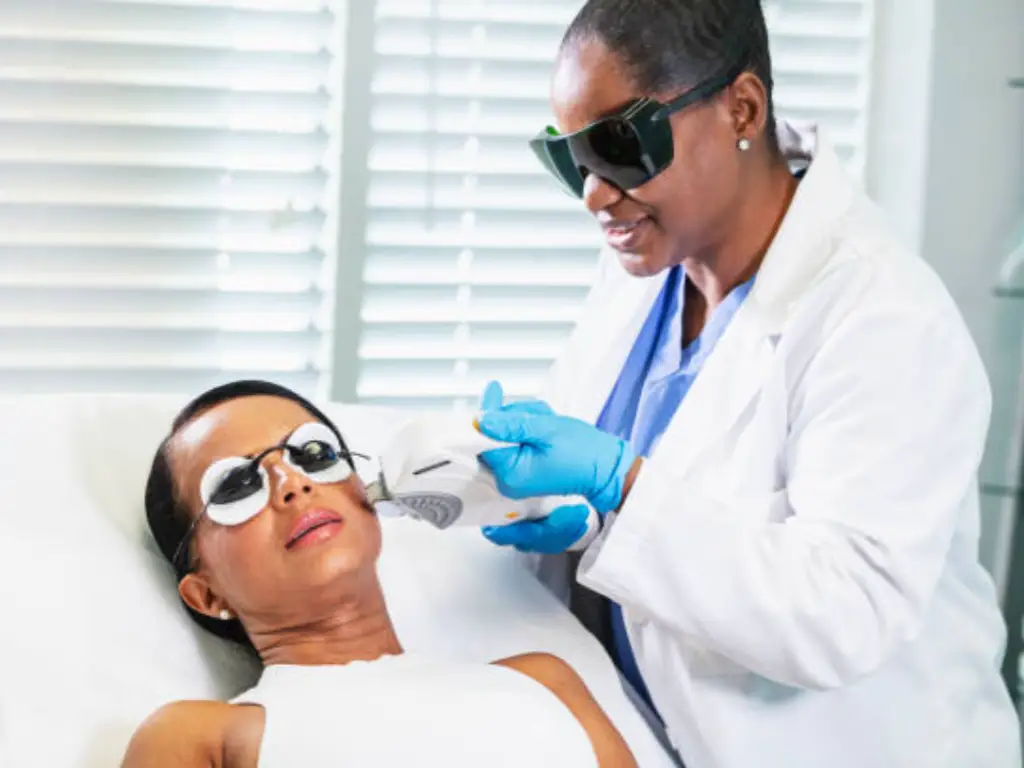
Type “laser facial before and after” into a search engine, and you will find thousands of photos — some dramatic, some subtle, some barely distinguishable from a good moisturizer ad. The problem is that “laser facial” is not one thing. It is a label stretched across four fundamentally different technology categories, each producing a completely different kind of before-and-after photograph.
Understanding which technology produced which result is the first step to reading those photos honestly.
Ablative lasers — primarily CO₂ (10,600 nm) and Er:YAG (2,940 nm) — are the heavy hitters. They vaporize thin layers of skin to trigger wholesale tissue remodeling. Think of this as tearing down a damaged wall and rebuilding it from the studs. The results can be dramatic, but so is the recovery.
Non-ablative fractional lasers — typically 1550 nm erbium-glass or 1927 nm thulium — take a different approach. Instead of removing the surface, they create microscopic columns of thermal injury surrounded by healthy tissue. Collagen production kicks in as a repair response. If ablative is demolition-and-rebuild, fractional is drilling micro-holes and injecting grout — less dramatic per session, but repeatable with far less downtime.
Picosecond and IPL technologies occupy the precision end. Picosecond lasers (pulse durations of 300–900 ps) shatter pigment mechanically rather than thermally — a distinction that matters for darker skin types, where heat can trigger post-inflammatory hyperpigmentation. IPL, despite being marketed alongside lasers, is not a laser at all: it is broadband pulsed light (400–1200 nm) that treats surface-level redness and pigmentation. It refinishes the paint; it does not rebuild the wall.
Hybrid platforms like Halo combine ablative and non-ablative wavelengths in a single pass, attempting to deliver depth and surface renewal simultaneously — a recognition that no single wavelength solves every problem.
Knowing these categories, you can now look at before-and-after photos and ask the right question: not just “did it work?” but “which technology produced this result, and at what cost in downtime?”
Before & After by Technology — What Real Results Look Like
The table below maps each technology category to the outcomes documented across clinical literature, RealSelf patient reviews, and FDA-cleared device data. These are not marketing claims. They represent the typical range a well-operated device should deliver.
| Laser Type | Typical Indications | Sessions Needed | Recovery | Core Before/After Change | Best For |
|---|---|---|---|---|---|
| CO₂ Ablative | Deep wrinkles, severe photoaging, acne scars | 1–2 | 7–14 days | Wrinkle reduction visible at 1 month; full skin remodeling at 3–6 months | Patients with downtime to spare seeking maximum results in one round |
| Non-Ablative Fractional (1550/1927 nm) | Fine lines, enlarged pores, shallow scarring, texture | 3–5 | 2–5 days | Progressive smoothing; pore refinement; even tone after series completion | Gradual improvers who cannot afford a week of social downtime |
| Picosecond (Pico) | Sunspots, melasma, uneven tone | 1–3 | 1–2 days | Visible pigment lightening after 1 session; brightening without peeling | Pigment-concerned patients; darker skin types (Fitzpatrick IV–VI) |
| IPL (Broadband Light) | Redness, broken capillaries, mild sun damage | 3–6 | Near zero | Gradual complexion evening; vascular clearance over multiple sessions | Mild photoaging; patients who will not accept any recovery period |
The timeline most before-and-after galleries leave out: right after treatment, skin looks worse — red, swollen, sometimes crusted. At one week, fresh skin emerges and the glow begins. At one month, textural improvement is visible. But the collagen remodeling that produces true before-and-after transformation peaks at three to six months. A photo taken at week two tells a very different story from one taken at month four. Whenever you see a dramatic laser before-and-after online, check the timeline — and check whether the image metadata even records it.
Why Laser Before/Afters Vary — The Machine-Provider-You Equation
But even within the same technology category, one patient walks out with skin that looks five years younger while another sees almost no change. The gap comes down to three variables that multiply each other: the device itself, the person holding the handpiece, and the patient’s own biology. If any one of them is weak, the whole result suffers. This is why the same laser model in two different clinics can produce before-and-afters that look like different procedures entirely.
The Machine Behind the Result — Why Equipment Quality Is Non-Negotiable
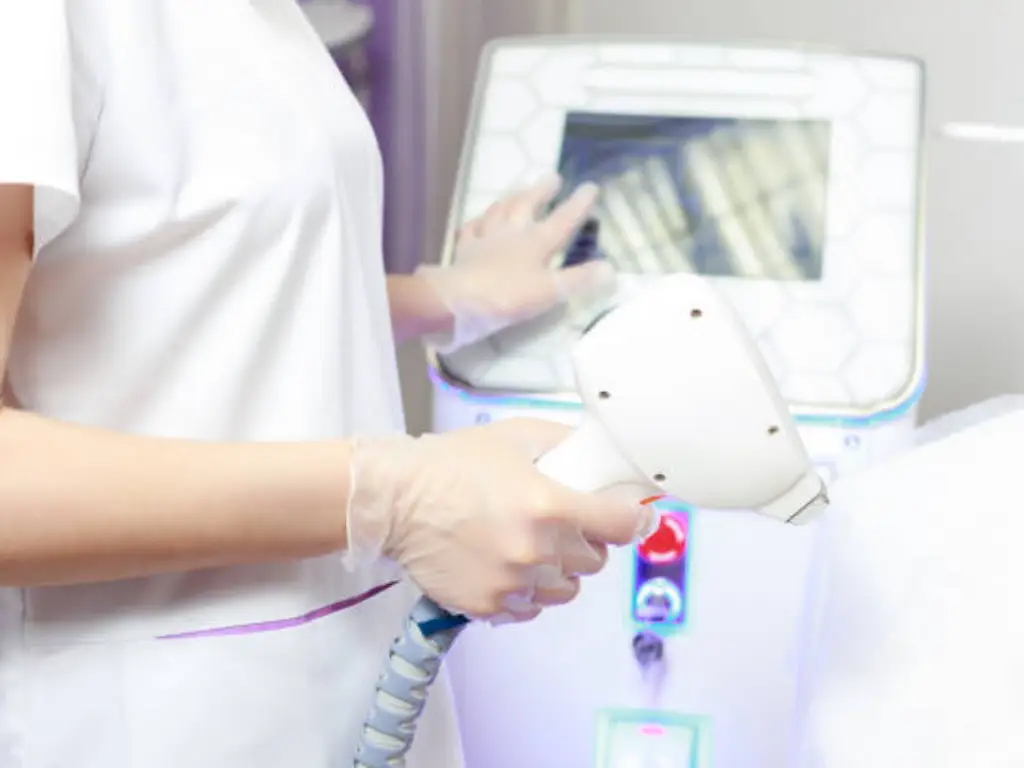
Not all lasers — even those labeled “1550 nm fractional” or “Q-switched Nd:YAG” — are created equal. The difference between a medical-grade device and an uncertified import is measurable.
A properly engineered laser maintains wavelength accuracy within ±5 nm. Budget devices can drift by 20 nm or more, shifting the absorption profile away from the intended tissue target. Beam homogeneity — how evenly energy is distributed across each spot — should exceed 90% in medical-grade equipment; a “hot spot” from an uneven beam profile is how you get a burn on one side of the treatment area and no effect on the other.
Then there is cooling. Quality platforms use sapphire contact cooling maintained at −4°C to protect the epidermis while therapeutic energy reaches the dermis. Without active cooling, the epidermis absorbs too much heat — increasing pain during treatment and pigmentation risk afterward.
International certifications provide a minimum quality floor. ISO 13485:2016 certifies that a manufacturer operates a medical-device quality management system. CE marking (Class IIa/IIb) is required for the European market and indicates conformity with health and safety standards. FDA 510(k) clearance means the device has been reviewed against a predicate device already on the US market. A manufacturer holding all three — ISO 13485, CE, and FDA — has passed a gauntlet that most factories never attempt. Fewer than 15% of Chinese beauty-device exporters hold FDA clearance. When you see a before-and-after photo, part of what you are looking at is whether the device that produced it came from a factory that cleared that bar.
- ISO 13485:2016 — Medical device quality management
- CE Marking (Class IIa/IIb) — EU market conformity
- FDA 510(k) — US market clearance
The Hands That Guide the Laser — Provider Expertise Matters
Put a Formula 1 car in the hands of a learner driver and the lap time will be unremarkable. The same principle applies to an FDA-cleared laser in inexperienced hands.
The operator controls three variables that directly determine the gap between a good result and a complication. Fluence (J/cm²) sets the energy per unit area — too low and the treatment does nothing, too high and the patient gets a burn. Coverage density — the percentage of skin surface actually treated in a fractional pass — balances efficacy against downtime: 15–35% per session is a typical clinical range. Endpoint recognition — knowing when tissue response signals “enough” rather than “too much” — cannot be learned from a manual; it requires supervised case experience.
The clinical literature confirms what common sense suggests. Studies on fractional laser in Asian skin (Fitzpatrick III–IV) report post-inflammatory hyperpigmentation (PIH) rates ranging from roughly 7% with conservative, expertly calibrated settings to over 30% with aggressive parameters (Negishi et al., 2013). The device was the same. The operator made the difference.
For anyone considering treatment, three questions asked at consultation serve as a rough operator-quality screen: How many cases have you performed with this specific device? Have you treated patients with my skin type before? If PIH develops, what is your protocol for managing it? A clinician who answers all three with specificity — numbers, examples, a clear escalation path — has likely crossed the experience threshold. One who waves the questions away has not.
Your Skin, Your Recovery, Your Outcome
Even when the device is certified and the provider is experienced, the patient’s own biology sets the ceiling. Fitzpatrick skin type is the starting point: Types I–III tolerate most laser modalities well; Type IV (common among Asian, Hispanic, and Mediterranean populations) carries moderate PIH risk and requires conservative parameters; Types V–VI should generally avoid anything except 1064 nm Nd:YAG or picosecond lasers, where the longer wavelength and shorter pulse duration reduce melanin absorption at the epidermis.
Beyond skin type, four personal factors shape the final before-and-after:
- Age determines collagen reserve. A 30-year-old’s dermal repair response outpaces a 60-year-old’s, all else equal.
- Sun exposure history sets the baseline level of photodamage the laser is working against — and dictates how aggressively the provider can treat without triggering a pigment rebound.
- Smoking status matters more than most patients realize: clinical data associate smoking with a 20–40% reduction in collagen synthesis capacity, directly undermining the mechanism that lasers rely on.
- Post-treatment compliance — specifically, daily SPF 50+ sunscreen use for at least three months after treatment — is non-negotiable. One serious sun exposure during the remodeling window can reverse months of improvement and leave permanent pigmentation in its wake.
Before treatment: discontinue retinoids and exfoliating acids for two weeks. After treatment: sunscreen, gentle cleansing, moisturization, and avoidance of heat (saunas, hot yoga, heavy exercise) for at least one week. These are not suggestions. They are the difference between a before-and-after worth posting and one worth hiding.
Recovery, Risks, and What Real Patients Say
Clinic marketing pages tend to describe laser recovery in one sentence: “mild redness for a few days.” RealSelf reviews, where patients post under no obligation to make the procedure look appealing, tell a more useful story.
The arc is consistent across treatment types, differing only in intensity and duration. Right after the procedure, skin feels hot and tight — patients routinely describe it as “the worst sunburn of my life.” For non-ablative fractional treatments, tiny dark spots called MENDS (microscopic epidermal necrotic debris) appear over days two through five, giving the skin a sandpaper texture before flaking away. For fully ablative CO₂, the timeline stretches longer: oozing, crusting, and a full week or more before makeup can be applied. The universal patient refrain is “it looks worse before it looks better” — and knowing this in advance is the difference between panicked regret and calm patience.
The risks, ordered from common to rare but real:
- Post-inflammatory hyperpigmentation (PIH) is the most frequent complication, particularly in Fitzpatrick III–IV skin. Incidence varies enormously by laser type and settings — from single-digit percentages with conservative fractional protocols to the majority of cases with aggressive full-beam pigment lasers. PIH typically fades over months but can persist.
- Post-inflammatory hypopigmentation — permanent lightening — is far rarer but irreversible when it occurs. It is associated with overly aggressive ablative treatment in darker skin types.
- Acneiform eruptions — a transient acne flare in the weeks after treatment — are common enough to be considered expected rather than aberrant.
- Facial fat loss is the risk that generates the most anxiety in online forums, and for good reason. It is rare, but documented: a RealSelf review from a patient who underwent four sessions of 1540 nm fractional laser plus two IPL treatments reported progressive facial volume loss over two and a half years, describing it as lasers having “eaten away my face padding” (RealSelf patient review). The mechanism is not fully characterized in the literature, but repeated high-energy treatments are the common denominator in reported cases. This is not a reason to avoid laser treatment — it is a reason to treat energy-based devices with respect and to avoid the “if one session is good, ten must be better” mindset.
Three hard rules minimize risk: no sun exposure or tanning for at least two weeks before treatment; choose a provider with documented experience treating your Fitzpatrick skin type; and follow the aftercare protocol exactly — no shortcuts, no “just this once” exceptions.
What Before/Afters Tell You About the Machine — An Equipment Buyer’s Lens
Every before-and-after photo in this article — and every one you will find online — is simultaneously a clinical outcome and an equipment review. The photo does not just show what happened to a patient’s skin. It shows what a specific machine, operated at specific parameters by a specific person, was capable of producing on that day.
For clinic owners, medspa operators, and distributors evaluating which laser platform to invest in, reading before-and-after photos as equipment intelligence is a skill worth developing. Here are four questions to ask about any treatment result you are shown:
- How many sessions produced this result? A device that achieves the same endpoint in two sessions that a competitor requires four to reach has a genuine throughput advantage — more patients treated per month, faster ROI.
- Are the treatment parameters disclosed? Fluence, spot size, coverage density, and pulse duration are not proprietary secrets. A manufacturer that provides parameter transparency makes it possible to replicate results; one that hides behind “proprietary settings” makes it impossible to verify them independently.
- Does the device have clinical data filed with a regulator? FDA 510(k) summaries, CE technical files, and published clinical studies are the closest thing to an objective performance record. Marketing brochures are not.
- How consistent are results across different operators and skin types? A device that produces great outcomes only in the hands of its own company’s trainers, on a narrow band of Fitzpatrick I–II patients, is a device with a narrow commercial envelope.
The geography of laser manufacturing adds another layer. An estimated 80% of the world’s aesthetic laser equipment is produced in China, with distinct regional specializations. Beijing-based manufacturers lead in premium, FDA-grade devices with advanced R&D. Shandong dominates high-volume, value-focused production. The Guangdong cluster — Guangzhou, Foshan, Shenzhen — has built an OEM/ODM ecosystem that supplies private-label equipment to brands across more than 60 countries. Understanding which cluster a manufacturer operates in tells you something about the kind of device you are likely to receive.
When evaluating a manufacturer, three verification points separate serious suppliers from the rest:
- Certification stack: ISO 13485, CE marking, and FDA clearance together signal a quality infrastructure that has passed external audit — not just internal claims.
- Service chain: Pre-sale consultation with technical specificity, production-stage milestone tracking, and post-sale support with defined response SLAs form a closed loop. A manufacturer that goes quiet after the wire transfer clears is a liability, not a partner.
- Customization capability: For brands building a differentiated equipment line, OEM/ODM flexibility — housing design, UI language localization, system programming, packaging, and certification documentation — determines whether the manufacturer is selling you a product or building your product.
If you are currently comparing equipment suppliers, verifying certifications is a practical first step. Konmison, a Guangzhou-based manufacturer, holds ISO 13485, CE, and FDA certifications across its beauty device range — details are available through its quality page (Konmison Quality).
References
- American Society for Laser Medicine and Surgery (ASLMS). “Laser Resurfacing Clinical Guidelines.” https://www.aslms.org/for-the-public/general-information/laser-resurfacing
- Gold, M.H. et al. Journal of Cosmetic Dermatology. “Fractional Photothermolysis: Current and Future Applications.” https://onlinelibrary.wiley.com/journal/14732165
- RealSelf. “Halo Laser Reviews.” https://www.realself.com/reviews/halo-laser
- RealSelf. Patient-reported facial fat loss after repeated fractional laser treatments. https://www.realself.com/review/glendora-ca-lux-1540-36-years-fractional-laser
- Negishi, K. et al. Journal of the European Academy of Dermatology and Venereology. “Comparative study of treatment efficacy and PIH incidence with Q-switched lasers on Asian skin.” https://pubmed.ncbi.nlm.nih.gov/22181827/
- Chan, H.H. et al. Lasers in Surgery and Medicine. “PIH after fractional resurfacing in Asian patients.” https://onlinelibrary.wiley.com/journal/10969101
- Mar, K. et al. Journal of Cutaneous Medicine and Surgery. “Treatment of Post-Inflammatory Hyperpigmentation in Skin of Colour: A Systematic Review.” https://journals.sagepub.com/doi/10.1177/12034754241265716
- Konmison. “Quality Certifications.” https://www.konmison.com/quality/
- Konmison. Homepage. https://www.konmison.com/


 EN
EN  RU
RU  ES
ES  IT
IT  AR
AR  FR
FR  DE
DE  JA
JA  KO
KO  NL
NL