
Walk into any medspa or dermatology clinic today, and you will see at least one device promising to rejuvenate skin with light. The most common of them is the IPL machine — often called a “laser facial” by patients, though the name is technically inaccurate. IPL is not a laser. And understanding that distinction is the first step toward understanding what this technology can actually do — whether you are a consumer considering treatment or a clinic owner deciding which device to invest in.
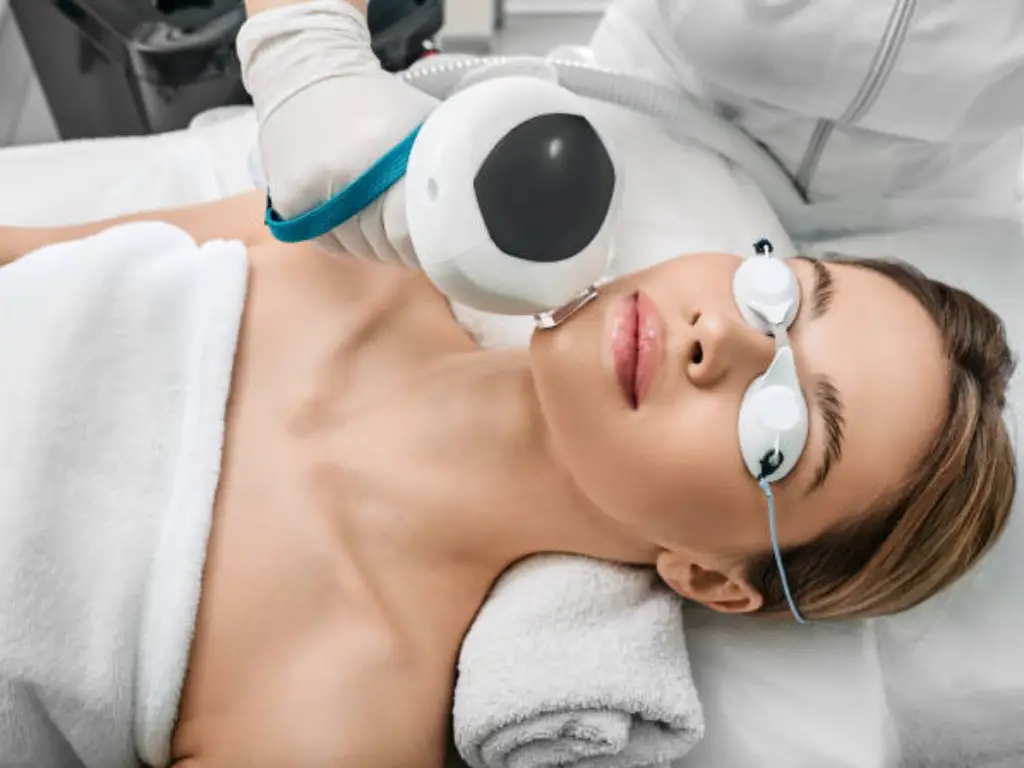
What Is IPL Laser Facial and How Does It Work?
Despite the widespread use of the term “IPL laser facial,” IPL — short for Intense Pulsed Light — is not a laser at all. A laser emits a single, focused wavelength of light. IPL emits a broad spectrum of wavelengths, typically spanning 500 to 1,200 nanometers, in each pulse. That broad coverage is both its greatest strength and the reason it requires careful parameter control: one device can treat multiple skin concerns, but only if the operator knows which wavelengths to use for which target.
The Physics of IPL: Broad-Spectrum Light Explained
A laser produces monochromatic, coherent light — think of it as a single-color beam where every light wave marches in lockstep. IPL produces polychromatic, non-coherent light — closer to a camera flash that has been filtered to allow only certain wavelengths through.
The filtering is done by interchangeable cutoff filters, which act like gates that block shorter wavelengths while letting longer ones pass. Common clinical filters include 515 nm, 560 nm, 590 nm, 640 nm, and 690 nm — each opening a different treatment window. A 560 nm filter, for example, blocks everything below 560 nm and delivers energy from 560 to 1,200 nm, which happens to overlap with hemoglobin’s absorption peaks — making it ideal for vascular treatments (Gold, JCAD, 2012).
Why does wavelength matter? Because different structures in the skin absorb different wavelengths. This principle — called selective photothermolysis — was first described by Anderson and Parrish in a landmark 1983 Science paper and remains the theoretical foundation of every light-based skin treatment in use today (Anderson RR, Parrish JA. Science. 1983;220(4596):524–527). The core insight: if you match the wavelength to what you want to destroy, and deliver the energy in pulses shorter than the target’s cooling time, you destroy the target and spare the surrounding tissue.
How IPL Light Interacts with Skin: Chromophores and Selective Photothermolysis
The targets — called chromophores — are molecules in the skin that absorb light at specific wavelengths. In IPL therapy, three chromophores matter most:
Melanin absorbs broadly across the visible spectrum, with absorption decreasing as wavelength increases. This makes shorter-wavelength filters (515–590 nm) effective for treating surface-level pigmentation: sun spots, freckles, and age spots. When melanin absorbs the light energy, it heats rapidly and fragments, and the resulting micro-damage triggers the skin to shed the pigmented cells over the following days.
Hemoglobin has two sharp absorption peaks at 542 nm and 577 nm. Filters in the 560–590 nm range are the gold standard for vascular targets: broken capillaries, rosacea-related redness, and spider veins. The light heats hemoglobin inside the blood vessel, causing the vessel wall to coagulate and collapse. The body then clears the closed vessel naturally.
Water absorbs most strongly in the infrared range. The longer wavelengths in IPL’s spectrum (above 800 nm) generate diffuse heat in the dermis, which stimulates fibroblasts — the cells responsible for producing collagen and elastin. This is the mechanism behind IPL’s skin-tightening and texture-improvement effects.
Each chromophore also has a thermal relaxation time (TRT) — the time it takes to cool by half. To confine thermal damage to the target, the pulse duration must be shorter than the target’s TRT. Melanosomes (melanin particles) have a TRT of roughly 0.5–1 millisecond. Blood vessels range from 1–10 milliseconds depending on caliber. IPL devices manage this by splitting energy into multiple sub-pulses with controlled delays — a technique called Optimal Pulse Technology (OPT) in modern systems.
IPL Device Components: Handpieces, Filters, and Cooling Systems
A professional IPL machine has three core components working together:
The light source is a xenon flashlamp — a high-intensity bulb that produces the broad-spectrum pulse. Flashlamp lifespan is a critical purchasing consideration: quality bulbs deliver 100,000 to 300,000 pulses before replacement, with replacement costs typically ranging from $500 to $2,000.
The filter system is what makes IPL versatile. A machine with five or more interchangeable cutoff filters can treat pigmentation, vascular lesions, acne, and perform skin rejuvenation — whereas a unit with only one or two filters is effectively a single-purpose device.
The cooling system protects the epidermis during treatment. Sapphire contact cooling — which maintains the treatment tip at 0–5°C — is the current clinical standard. Semiconductor cooling is a step down but still effective; air cooling alone is insufficient for professional use and is a common red flag on budget machines.
IPL vs. Traditional Laser: Key Differences
Ask anyone about IPL, and the first thing they want to know is whether it beats a laser. The answer: they are different tools for different jobs. Knowing when to use each is what separates an informed buyer from someone reading a brochure.
| Dimension | IPL (Intense Pulsed Light) | Traditional Laser |
|---|---|---|
| Light Type | Broad-spectrum (500–1200 nm), polychromatic, non-coherent | Single wavelength, monochromatic, coherent |
| Precision | Multi-target — treats several conditions in one session | Single-target — highly precise for one condition |
| Treatment Scope | Pigmentation + vascular + skin texture + acne in one platform | One primary indication per device |
| Downtime | Minimal — mild redness for hours to 1 day | Varies — days (non-ablative) to weeks (ablative CO₂/Er:YAG) |
| Sessions Needed | 3–5 typically, maintenance annually | 1–3 for many indications |
| Pain Level | Mild (“rubber band snap”), no numbing required | Varies — topical anesthetic often needed |
| Best For | Diffuse skin rejuvenation, mild-to-moderate concerns, multi-condition practices | Deep focal concerns, darker skin types (Nd:YAG 1064 nm), specific lesions |
| Machine Cost (Professional) | $2,000–$50,000 | $10,000–$150,000+ |
The practical takeaway: a clinic that wants to offer photorejuvenation, treat rosacea, clear pigmentation, and manage mild acne — all from one device — should start with IPL. A clinic that needs to remove a specific deep tattoo, treat a port-wine stain on a Fitzpatrick V patient, or perform full-field ablative resurfacing needs a dedicated laser. The two technologies are complementary, not competitive — and many established clinics own both.
Core Benefits of IPL Facial Treatment
IPL’s broad wavelength range means it can address multiple skin concerns simultaneously. That versatility is its defining clinical advantage: one treatment session can improve pigmentation, calm redness, and stimulate collagen — whereas achieving the same with lasers would require three separate devices and three separate appointments.

Reducing Hyperpigmentation and Sun Damage
Hyperpigmentation — the dark spots left behind by sun exposure, hormonal changes, or inflammation — is the single most common reason consumers seek IPL treatment. The mechanism is straightforward: melanin in the darkened cells absorbs the light energy, heats to the point of coagulation, and the damaged pigment rises to the skin’s surface as micro-crusts that flake off within 7 to 14 days.
IPL is effective on epidermal pigmented lesions: solar lentigines (sun spots), ephelides (freckles), and post-inflammatory hyperpigmentation. Patients typically notice spot darkening 2–3 days after treatment — this is normal and signals that the pigment is being lifted. The dark spots then shed, revealing clearer skin underneath.
One important clinical caveat: IPL’s efficacy on melasma is limited and, in some cases, treatment can trigger a rebound worsening. Fitzpatrick skin types IV–VI also require reduced fluence settings to avoid post-inflammatory hyperpigmentation. A thorough pre-treatment consultation — including a Wood’s lamp examination to distinguish epidermal from dermal pigment — is essential.
Treating Facial Redness, Rosacea, and Broken Capillaries
Persistent facial redness is notoriously difficult to treat with topical products alone. Creams can calm inflammation temporarily, but they cannot close a dilated blood vessel. IPL can.
The 560–590 nm filter range targets hemoglobin directly. When light energy is absorbed by hemoglobin inside the vessel, the blood heats and the vessel wall denatures and collapses. The endpoint reaction — visible graying or purpura of the vessel immediately after the pulse — tells the operator the treatment was effective. The closed vessel is then absorbed by the body over the following 2–3 weeks.
For rosacea patients, a typical course is 4–6 sessions spaced 3–4 weeks apart, with maintenance treatments every 6–12 months. The improvement in background erythema and flushing frequency is often significant enough to reduce or eliminate the need for daily topical prescriptions — a quality-of-life change that patients value highly.
Skin Texture, Fine Lines, and Collagen Stimulation
Beyond clearing spots and calming redness, IPL produces a longer-term structural benefit: new collagen. The dermal heating generated by longer IPL wavelengths activates fibroblasts through the TGF-β signaling pathway, stimulating the production of type I and type III collagen — the two proteins responsible for skin firmness and elasticity.
The most compelling evidence for IPL’s long-term anti-aging effect comes from a 10-year longitudinal study by Dr. Michael H. Gold, presented at the IMCAS World Congress in 2026. Patients who received a single IPL maintenance treatment each year showed continued improvement in photoaging scores over the entire decade. Blinded photographic analysis rated their perceived biological age as consistently lower than their chronological age.
This collagen response takes time. Pigmentation and vascular improvements show up within weeks. The textural benefits — smoother skin, reduced fine lines, smaller-appearing pores — typically emerge 3–6 months after the first treatment series as new collagen remodels.
Acne Management and Oil Control
IPL’s role in acne treatment is less widely known but clinically supported. The mechanism is twofold: bactericidal and sebostatic.
The blue-light band (420–480 nm, accessed via a 420 nm cutoff filter) activates porphyrins — naturally occurring molecules inside Cutibacterium acnes bacteria — to produce singlet oxygen, which kills the bacteria. Simultaneously, thermal energy from longer wavelengths temporarily suppresses sebaceous gland activity, reducing oil production.
For moderate inflammatory acne, Dr. Michael H. Gold’s protocol combining short-contact ALA-PDT (1-hour aminolevulinic acid incubation) with IPL activation has shown efficacy comparable to longer traditional protocols while significantly improving patient comfort. This combination approach is particularly useful for patients who cannot tolerate or prefer to avoid oral antibiotics or isotretinoin.
What to Expect: Treatment Sessions, Recovery, and Results
Knowing what the process actually feels like removes most of the anxiety that keeps people from booking their first IPL treatment.
Before treatment, patients should avoid direct sun exposure and self-tanning for at least two weeks. Retinoids and exfoliating acids should be stopped 3–5 days prior. The treatment area is cleansed and a cool conductive gel is applied — the same type used in ultrasound imaging.
During treatment, the practitioner places the handpiece against the skin and delivers a pulse. The sensation is often described as a rubber band snapping against the skin — sharp but momentary, and well tolerated without numbing. A full-face session takes 20–30 minutes.
After treatment, the skin appears mildly red — similar to a light sunburn — for a few hours to one day. Pigmented spots darken over the next 48–72 hours, forming tiny coffee-ground-like micro-crusts that flake off naturally within 1–2 weeks. Makeup can usually be applied the following day.
The standard treatment course is 3–5 sessions spaced 4–6 weeks apart, with maintenance sessions once or twice a year. Consistent sun protection (SPF 50+, broad-spectrum) is non-negotiable throughout the treatment period — unprotected UV exposure can reverse results and increase complication risk.
For clinic owners and entrepreneurs, understanding this treatment flow is more than clinical knowledge — it is the foundation of a sound equipment investment. The next two sections translate that clinical understanding into procurement criteria: what technical specifications to evaluate, and how to verify that a manufacturer’s claims hold up under scrutiny.
How to Choose the Right IPL Machine for Your Clinic
Choosing an IPL device is not about finding the machine with the highest numbers on the spec sheet. It is about matching the machine’s capabilities to your practice’s treatment menu and client demographics — then verifying that the manufacturer stands behind their product.

Key Technical Specifications to Evaluate
Six parameters separate a reliable IPL workhorse from a machine that will under-deliver and over-cost in maintenance. Every one of them translates directly to a business outcome.
| Specification | What to Evaluate | Business Impact |
|---|---|---|
| Fluence Range (J/cm²) | 1–50 J/cm² is standard professional range; wider range = greater treatment flexibility | Determines how many skin types and conditions you can safely treat |
| Energy Stability | Consistent output pulse-to-pulse (±5% or better) | Unstable output causes uneven results and increases burn risk |
| Cutoff Filters | Minimum 5 filters (420 nm, 515 nm, 560 nm, 590 nm, 640 nm+) recommended | Each filter unlocks a new treatment category — fewer filters = fewer revenue streams |
| Spot Size | 15×50 mm large spot for body; 8×35 mm for face | Larger spot size treats faster — 2–3× throughput difference vs. small spots |
| Cooling System | Sapphire contact cooling (0–5°C) = gold standard; semiconductor = acceptable; air-only = red flag | Directly affects client comfort, safety, and treatment tolerance |
| Flashlamp Lifespan | 100,000–300,000 pulses before replacement; verify replacement cost upfront | Replacement costs $500–$2,000; this is the machine’s primary consumable expense |
One specification that deserves extra attention is pulse technology. Standard IPL delivers energy in a single pulse. OPT (Optimal Pulse Technology) splits the energy into multiple sub-pulses with controlled delays, achieving a smoother energy profile: the peak power is lower, so epidermal heating is more gradual, and the risk of burns — particularly on higher Fitzpatrick skin types — is reduced. When comparing machines, OPT or equivalent multi-pulse capability is a meaningful differentiator, not marketing fluff.
Matching Machine Capabilities to Your Treatment Menu
The right IPL configuration depends on who walks through your door:
For a medical dermatology clinic, where patients present with diagnosed conditions (rosacea, actinic keratoses, poikiloderma), a full filter set plus high fluence output and documented FDA 510(k) or CE marking is non-negotiable. These clinics need the ability to treat across the full severity spectrum and must meet regulatory and insurer requirements for device classification.
For a day spa or beauty salon, where clients seek “brightening” and “anti-aging” rather than medical treatment, a machine with three to four core filters (560 nm, 590 nm, 640 nm, 690 nm) and strong ease-of-use features may be more appropriate than a top-spec dermatology platform. Operator training burden and treatment speed — a full-face session in under 30 minutes — matter more than marginal gains in maximum fluence.
For a multi-location chain or franchise, device consistency across locations becomes the priority. All machines should be the same model, from the same manufacturer, with identical filter sets and software versions. This ensures uniform treatment protocols, interchangeable staff training, and centralized spare-parts management. Many chains also explore OEM arrangements — having machines branded with their own logo and interface language — which requires a manufacturer with dedicated OEM capability.
Red Flags When Buying an IPL Machine
Certain patterns reliably signal a machine — or a supplier — to avoid:
Vetting IPL Manufacturers: Certifications, Support, and OEM Capability
A well-specified machine from an unreliable manufacturer is a liability waiting to happen. The device and the company behind it need to be evaluated together — because when something goes wrong, you are calling the manufacturer, not the spec sheet.
Certification Verification: The Only Proof That Counts
In medical aesthetics, certifications are not marketing badges — they are legal requirements that determine which markets a device can legally operate in and what liability exposure its owner carries.
ISO 13485:2016 is the foundational quality management standard specific to medical device manufacturing. It covers design controls, production process validation, supplier management, and post-market surveillance. An ISO 13485 certificate means the manufacturer operates under a documented, audited quality system — not a workshop assembling parts. Certificates are issued by IAF-accredited bodies (SGS, TÜV, BSI, DNV) and can be verified through the IAF CertSearch global database.
CE marking is required for devices sold in the European Union and many markets that recognize EU standards. Since the Medical Device Regulation (MDR) (EU) 2017/745 took full effect, CE marking for IPL devices requires a Notified Body review — the manufacturer’s certificate should display a four-digit Notified Body number (e.g., CE 1023).
FDA 510(k) clearance is required for IPL devices sold in the United States. Under 21 CFR 878.4810, professional IPL systems are Class II medical devices (product code ONF) requiring premarket notification. The FDA’s 510(k) database is public and searchable at accessdata.fda.gov.
For clinics purchasing equipment, the verification protocol is straightforward: request the certificate numbers, look them up in the issuing body’s public database, and confirm the certificate is active and covers the specific device model being purchased. If a manufacturer hesitates to share verifiable certificate numbers, find another supplier.
To take one real-world example: Guangzhou-based Konmison operates under an ISO 13485-certified quality system, and its certification stack — spanning CE, FDA, RoHS, and FCC — is publicly documented on its quality assurance page. That kind of transparency — putting the certificates where anyone can verify them — is exactly what to look for in a supplier.
After-Sales Support: The Test That Matters Most
A warranty is only as good as the support infrastructure behind it. When evaluating a manufacturer’s after-sales commitment, look at three specific dimensions:
Warranty terms: The industry standard for professional IPL machines is a 12-month warranty on the main unit and 3–6 months on consumable components (flashlamps, filter glass, handpiece tips). Longer warranties exist — some manufacturers offer 24 months on the main unit — but the warranty duration matters less than the service-level agreement backing it.
Response infrastructure: Ask these specific questions before signing a purchase order: What is the guaranteed response time for technical issues? Is remote video diagnosis available? Does the manufacturer maintain a spare-parts inventory with confirmed shipping lanes to your country?
Training and onboarding: A manufacturer that ships a machine without structured training is signaling that their relationship with you ends at the payment. Acceptable support includes video operation manuals, live remote training sessions for your operators, and guidance on treatment-protocol setup for the specific skin types in your client base.
OEM Considerations for Brand Startups
For entrepreneurs building a branded clinic chain or a private-label beauty-device business, OEM (original equipment manufacturing) capability turns a supplier into a strategic partner. Key considerations when evaluating a manufacturer’s OEM readiness:
Minimum order quantity (MOQ) varies significantly — some manufacturers require 50+ units for custom branding, while others accept as few as 5 units for entry-level OEM projects. Customization scope matters: logo application and packaging are baseline; UI language customization, housing-color options, and software-parameter pre-configuration represent deeper OEM capability. Certification support — where the manufacturer provides the technical documentation needed for you to register the device under your own brand in your target market — separates full-service OEM partners from contract assemblers.
Choosing the right IPL equipment is a decision that shapes your clinic’s treatment capabilities for years. Take the time to verify certifications, test machines hands-on where possible, and ask manufacturers the hard questions before you commit. The right partner delivers more than a machine — they deliver the support infrastructure that keeps your practice running.
The verification frameworks and red flags outlined above give you a practical starting point. Bookmark the certification databases, save the checklist, and apply the same scrutiny to every supplier you evaluate — including the one featured in this article. Transparency is the standard, not the exception.
References
- Anderson RR, Parrish JA. “Selective photothermolysis: precise microsurgery by selective absorption of pulsed radiation.” Science. 1983;220(4596):524–527. pubmed.ncbi.nlm.nih.gov
- Gold MH. “Current Trends in Intense Pulsed Light.” Journal of Clinical and Aesthetic Dermatology. 2012. jcadonline.com
- Gold MH. “IPL Technology – What We Know From Research From Long-Term Analyses.” IMCAS World Congress 2026. imcas.com
- U.S. Food and Drug Administration. “Product Classification: Powered Light Based Non-Laser Surgical Instrument With Thermal Effect.” 21 CFR 878.4810. fda.gov
- Konmison. “Quality Assurance.” konmison.com
- Konmison. Homepage. konmison.com



 EN
EN  RU
RU  ES
ES  IT
IT  AR
AR  FR
FR  DE
DE  JA
JA  KO
KO  NL
NL