
Navigating the world of skin rejuvenation can feel overwhelming, especially when considering a treatment as powerful as the CO2 laser facial. Known for its ability to dramatically reduce deep wrinkles, smooth stubborn acne scars, and correct years of sun damage, it remains the gold standard in cosmetic dermatology. However, this is not a casual spa treatment. It requires a clear understanding of the technology, the expected downtime, and the actual costs involved. Whether you are a patient preparing for your first session or a clinic owner looking to invest in clinical grade equipment, this guide provides everything you need to make an informed decision.
What Is a CO2 Laser Facial and How Does It Work?
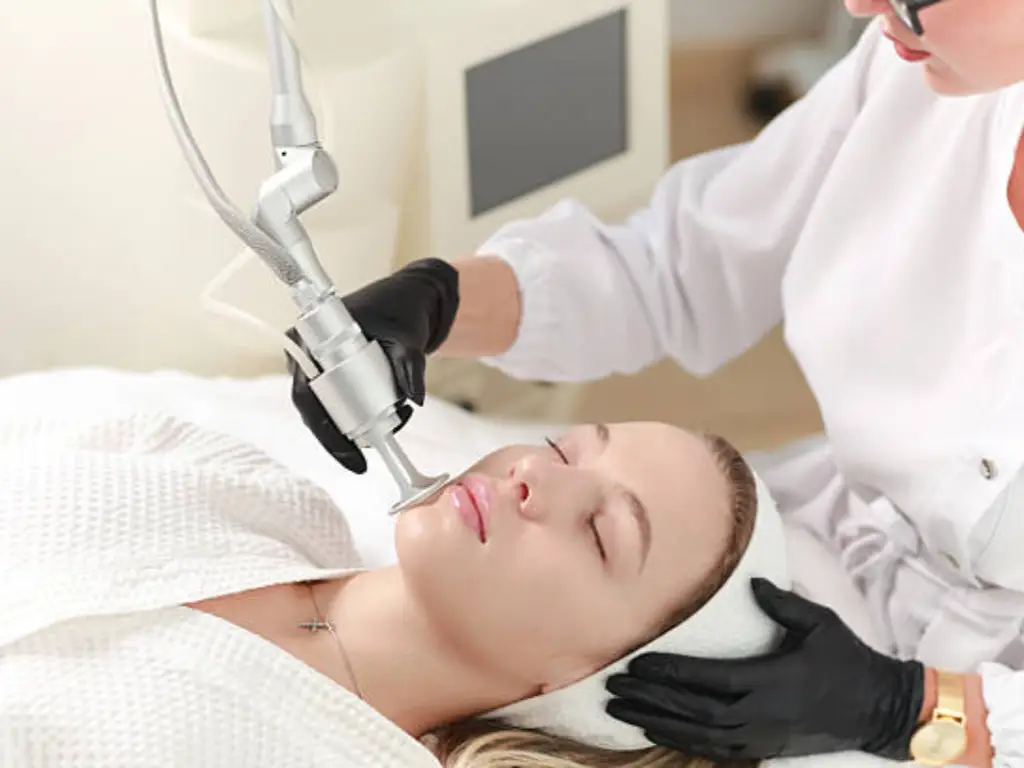
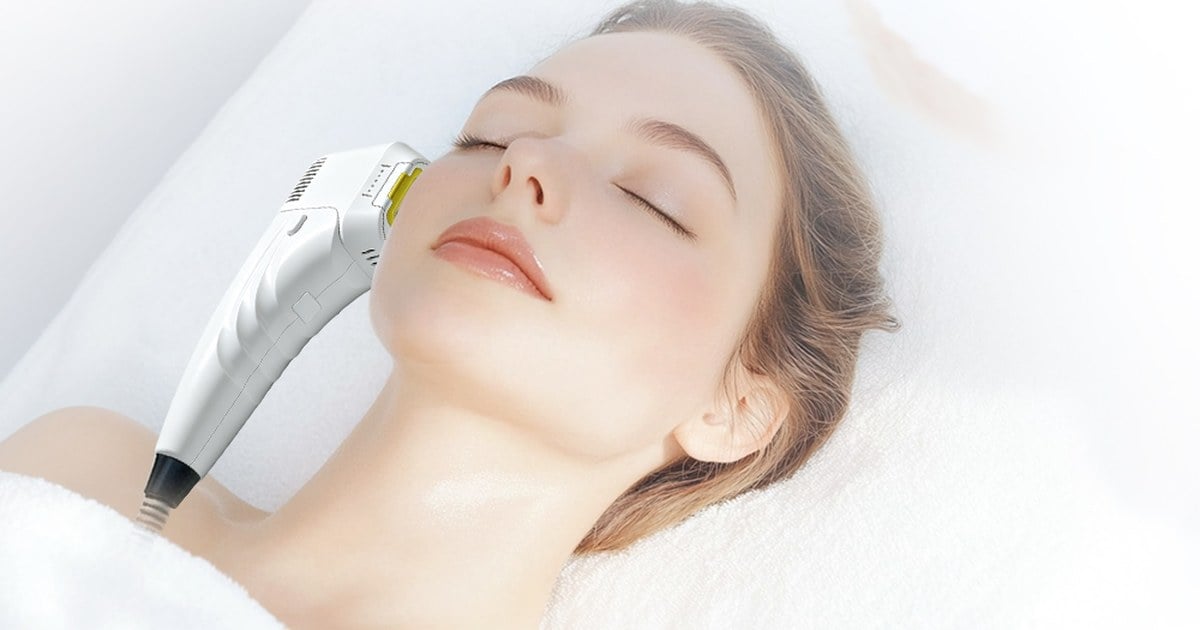
A CO2 laser facial, more precisely called CO2 laser resurfacing, is a minimally invasive cosmetic procedure. It uses concentrated beams of carbon dioxide laser light at a wavelength of 10,600 nm to remove damaged outer skin layers while heating the deeper dermis. That heat triggers new collagen production. Think of it as a controlled, precision-guided skin renewal process: the laser vaporizes what is worn out and signals your body to rebuild what is underneath.
The technology comes in two distinct forms, and understanding the difference is essential before reading any further. Traditional fully ablative CO2 laser removes the entire surface layer of skin in the treatment area. The results are dramatic, but expect 2 to 3 weeks of visible recovery. Fractional CO2 laser, the far more common modern approach, creates thousands of microscopic treatment zones (MTZs), each roughly 100 to 300 μm in diameter, surrounded by bridges of healthy, untouched skin. These healthy bridges act as reservoirs of regenerative cells, which dramatically accelerates healing.
A useful analogy: think of fractional CO2 laser like aerating a lawn. Instead of stripping the entire lawn and replanting from scratch, you punch thousands of small holes, leaving most of the healthy grass intact. New growth emerges from these holes, and the surrounding healthy turf supports rapid recovery. The laser’s thermal energy also penetrates deeper, reaching 500 to 1,000 μm into the dermis, triggering a collagen remodeling cascade that continues long after the surface has healed.
Key Benefits: What a CO2 Laser Facial Can Treat
CO2 laser exerts its effects across three skin layers: surface texture, mid-dermal structure, and deep collagen scaffolding. Understanding this layered mechanism helps explain why one treatment can address such a wide range of concerns.
Wrinkle Reduction and Anti-Aging
CO2 laser is one of the few non-surgical interventions capable of genuinely reversing, not merely slowing, the visible signs of photoaging. The mechanism goes deeper than surface exfoliation. The laser’s thermal energy activates TGF-β (transforming growth factor-beta) signaling pathways, which stimulate fibroblasts to synthesize new collagen and elastin fibers. This structural rebuilding is why results continue to improve for months after the skin surface has healed.
Clinically, CO2 laser is particularly effective for static wrinkles. These are the lines visible even when your face is at rest, around the eyes (crow’s feet), mouth (nasolabial folds), and forehead. A 2020 study published in Aging demonstrated that CO2 lattice laser successfully reversed UVB-induced skin aging at the cellular level, with histological evidence of new collagen deposition and improved dermal architecture (Wang et al., 2020). Most patients see a 40 to 60 percent reduction in wrinkle depth after a single fractional treatment, with peak results visible at 3 to 6 months as collagen remodeling reaches its maximum.
Acne Scar Improvement
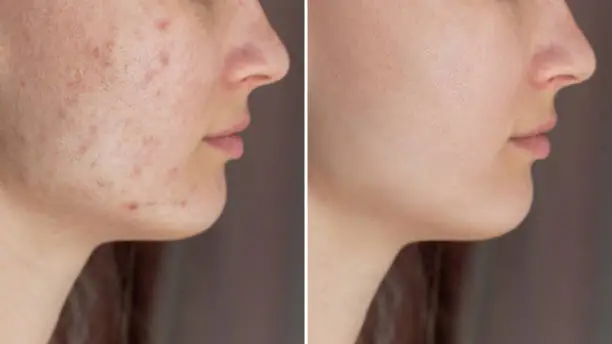
For atrophic acne scars, those depressed, pitted scars that rank among the most challenging aesthetic concerns to treat, fractional CO2 laser is widely regarded as a gold-standard intervention. The laser’s micro-beams penetrate through scar fibrotic tissue, triggering synchronized epidermal and dermal regeneration that gradually elevates the scar base to match surrounding skin.
Results vary by scar type, and understanding these differences sets realistic expectations. Boxcar scars (broad, U-shaped depressions with defined edges) respond best, often showing 50 to 70 percent improvement after 3 to 4 sessions. Ice pick scars (narrow, deep punctures) are more resistant and frequently require combination with TCA CROSS technique, short for chemical reconstruction of skin scars. Rolling scars (shallow, undulating depressions) benefit most when CO2 laser is paired with subcision to release the fibrous bands tethering the skin downward.
A 2021 meta-analysis of nine controlled studies confirmed that fractional CO2 laser combined with platelet-rich plasma (PRP) significantly outperformed laser alone. The combination delivered higher clinical improvement scores, greater patient satisfaction, and faster crusting resolution (Wu et al., Lasers in Medical Science, 2021). Typical protocols involve 3 to 4 sessions spaced 4 to 6 weeks apart, with energy settings of 15 to 30 mJ per microbeam and density of 5 to 10 percent.
Pigmentation and Sun Damage Correction
CO2 laser addresses pigmentation through a dual mechanism: physical vaporization of melanin-laden epidermal keratinocytes, combined with thermal suppression of hyperactive melanocyte activity. It is particularly effective for solar lentigines (age spots), ephelides (freckles), and stable post-inflammatory hyperpigmentation (PIH).
An important caveat: CO2 laser is generally not the first-line treatment for melasma. The thermal injury can paradoxically stimulate melanocyte activity in melasma-prone skin, potentially worsening the condition. When used for melasma, ultra-low energy settings and experienced operator judgment are non-negotiable. For darker Fitzpatrick skin types (IV to VI), the risk of post-treatment hyperpigmentation is elevated. Pre-treatment with topical tyrosinase inhibitors, such as hydroquinone or tranexamic acid, for 2 to 4 weeks is strongly recommended.
Skin Texture Refinement and Tightening
Beyond addressing specific lesions and scars, CO2 laser produces an overall refinement in skin quality that patients often describe as the most satisfying outcome. The combination of epidermal resurfacing (which smooths roughness and shrinks the appearance of enlarged pores) and dermal collagen remodeling (which restores structural support) results in skin that looks and feels healthier.
The tightening effect occurs in two phases. Immediately after treatment, collagen fibers heated to 55 to 65 degrees Celsius undergo conformational contraction of their triple-helix structure, producing visible skin tightening of approximately 15 to 20 percent. Over the following 3 to 6 months, newly synthesized collagen progressively replaces the contracted fibers, delivering gradual but lasting firmness improvement, particularly noticeable along the jawline and lower face.
The CO2 Laser Facial Procedure: Step by Step
Demystifying the treatment process goes a long way toward reducing pre-procedure anxiety. Here is what a typical session looks like.
Step 1: Consultation and photography. Your provider assesses your skin type using the Fitzpatrick scale, documents baseline photos, and confirms your treatment goals. This is when candidacy is determined. Not everyone is an ideal candidate, particularly those with active skin infections, recent isotretinoin (Accutane) use within 6 to 12 months, or a history of keloid scarring.
Step 2: Anesthesia. A topical numbing cream, typically 5 percent EMLA (lidocaine/prilocaine), is applied to the treatment area and left on for 30 to 60 minutes. Some clinics may supplement with oral anxiolytics for patient comfort. Metal corneal shields are placed to protect the eyes from reflected laser energy.
Step 3: Laser application. The provider moves the laser handpiece systematically across the treatment area. A full-face fractional CO2 session takes approximately 30 minutes; traditional fully ablative treatment may take 60 to 90 minutes. Patients describe the sensation as similar to a rubber band snapping against the skin, accompanied by warmth. With adequate anesthesia, pain is typically rated 3 to 4 out of 10.
Step 4: Immediate cooling and dressing. Cold compresses or chilled air is applied to reduce the initial heat sensation. A thick layer of occlusive ointment, either pure petrolatum or Aquaphor, is applied to keep the treated skin moist and protected.
Step 5: Discharge with written instructions. You will leave with a detailed aftercare sheet and a follow-up appointment scheduled. Someone else should drive you home, as your face will be visibly red and swollen.
Recovery and Downtime: What to Expect After a CO2 Laser Facial
Recovery follows the predictable trajectory of wound healing: inflammation, then proliferation, then remodeling. Knowing which phase you are in transforms discomfort from “something is wrong” into “this is progressing normally.”
Days 1 to 3: The Inflammatory Phase
These are the hardest days, but also the shortest. On Day 1, your skin will feel hot, tight, and sunburned, with mild serous oozing. Swelling peaks on Days 2 and 3, especially around the eyes, where the skin is thinnest. Thin brownish crusting begins to form.
Care during this phase is straightforward but non-negotiable. Apply cold compresses for 10 to 15 minutes at a time, with at least 30-minute intervals to avoid cold injury. Sleep with your head elevated 30 degrees to minimize swelling. Apply the prescribed occlusive ointment liberally. Moist wounds heal 40 to 50 percent faster than dry wounds. Do not use any active skincare ingredients (retinoids, AHAs, vitamin C), and do not apply makeup. For pain management, acetaminophen is preferred. Avoid NSAIDs like ibuprofen or aspirin, which inhibit platelet function and increase bruising risk.
Days 4 to 7: Peeling, Flaking, and the First Glimpse of New Skin
By Day 4, the acute discomfort has largely subsided, and peeling begins. The brownish crusts lift away in thin sheets, revealing pink, fresh skin underneath. This is the phase where discipline matters most: resist the urge to pick, peel, or scrub. Forced removal of crusts can cause secondary trauma, prolonged redness, and even hypertrophic scarring.
Continue generous moisturizing. Mineral-based sunscreen (SPF 50+, zinc oxide or titanium dioxide) becomes essential the moment skin begins to seal, usually around Day 5 to 7. Most patients can return to remote work by Day 4 or 5 and may feel comfortable appearing in public with mineral makeup by Day 7 to 10.
Weeks 2 to 12: Redness Fading and Collagen Building
The dramatic peeling is over, but residual pinkness persists. For fractional CO2, significant redness fades within 2 to 4 weeks; for traditional fully ablative treatment, 2 to 3 months is more typical. A faint pink undertone may linger up to 6 months. This is normal and easily covered with cosmetics.
Meanwhile, beneath the surface, collagen remodeling is in full swing. Visible improvement becomes apparent at roughly 1 month, accelerates through month 3 (the collagen synthesis peak), and final results are appreciated at 6 months. Histological studies confirm that new collagen deposition continues for up to 12 months post-treatment. Daily SPF 50+ sunscreen with physical filters remains mandatory throughout this period. Newly regenerated skin is exquisitely vulnerable to UV damage.
Cost Breakdown: What a CO2 Laser Facial Costs, and Why
The price of a CO2 laser facial varies dramatically, from roughly $1,000 to over $6,000 per session. The range is explained by three primary factors: the laser device used, the provider’s expertise, and the clinic’s geographic market.
| Region | Cost per Session (USD) | Notes |
|---|---|---|
| United States | $2,000 to $6,000 | Major metro areas and renowned providers command 30 to 50 percent premiums |
| United Kingdom | £2,500 to £3,500 | Includes VAT; London clinics at the higher end |
| China | ¥2,000 to ¥5,000 | Wide variation by city tier and clinic type |
| India | ₹5,000 to ₹40,000 | Ranges from med-spa to hospital dermatology department |
A complete treatment course typically requires 1 to 3 sessions, bringing the total investment to $2,000 to $15,000. Insurance rarely covers the procedure unless it is performed for a documented medical indication, such as precancerous actinic keratosis or functionally impairing scars. Many clinics offer package discounts of 15 to 25 percent when multiple sessions are booked upfront.
The single largest variable behind the price tag is the laser device itself. A premium system like the Lumenis UltraPulse costs a clinic 10 to 20 times more to acquire than an entry-level fractional CO2 unit, and that equipment cost is amortized into every treatment session. This is not merely a branding difference. It reflects differences in laser tube longevity, energy output stability, scanning pattern sophistication, and manufacturer-supported clinical training.
CO2 Laser vs. Other Skin Rejuvenation Treatments
CO2 laser is not universally “the best.” It is the best fit for specific needs and tolerance levels. The following matrix places it alongside the most common alternatives.
| Treatment | Depth Reached | Downtime | Best For | Cost/Session (USD) | Typical Course |
|---|---|---|---|---|---|
| CO2 Fractional Laser | Deep dermis | 7 to 14 days | Moderate-to-severe photoaging, atrophic scars | $2,000 to $6,000 | 1 to 3 sessions |
| Er:YAG Laser | Epidermis to superficial dermis | 3 to 7 days | Mild photoaging, fine lines | $1,500 to $3,500 | 2 to 4 sessions |
| Microneedling | Mid-dermis | 2 to 4 days | Mild-to-moderate scarring, texture | $300 to $800 | 3 to 6 sessions |
| TCA Chemical Peel | Epidermis to superficial dermis | 5 to 10 days | Pigmentation, rough texture | $500 to $1,500 | 1 to 3 sessions |
| RF Microneedling | Deep dermis | 2 to 5 days | Skin laxity, moderate scarring, darker skin types | $800 to $2,000 | 3 to 4 sessions |
The physics explains the trade-offs. Er:YAG laser, at 2,940 nm, is absorbed by water 16 times more efficiently than CO2 at 10,600 nm. This means it ablates with greater precision but penetrates more shallowly and produces a narrower coagulation zone. Er:YAG works well for superficial concerns but is less effective for deep wrinkles and scarring. CO2‘s broader thermal coagulation zone is precisely what drives its superior tightening effect.
For patients with Fitzpatrick skin types IV to VI, RF microneedling deserves special consideration. It delivers energy through mechanical needles rather than light, which means it carries zero risk of pigment alteration. That makes it the safest “deep” option for darker skin tones.
The decision framework, in plain terms: if you want the most dramatic single-treatment result and can accommodate 1 to 2 weeks of social downtime, CO2 fractional laser is the answer. If downtime is not an option, consider RF microneedling or Er:YAG. If budget is the primary constraint, microneedling or a medium-depth chemical peel offers meaningful improvement at a fraction of the cost.
The best treatment is the one that matches your goals, your skin type, and your tolerance for downtime. CO2 laser delivers the most dramatic single-session result. RF microneedling is the safer choice for darker skin. Microneedling and peels are the accessible entry points.
What to Look for in a CO2 Laser Machine: A Clinic Buyer’s Guide
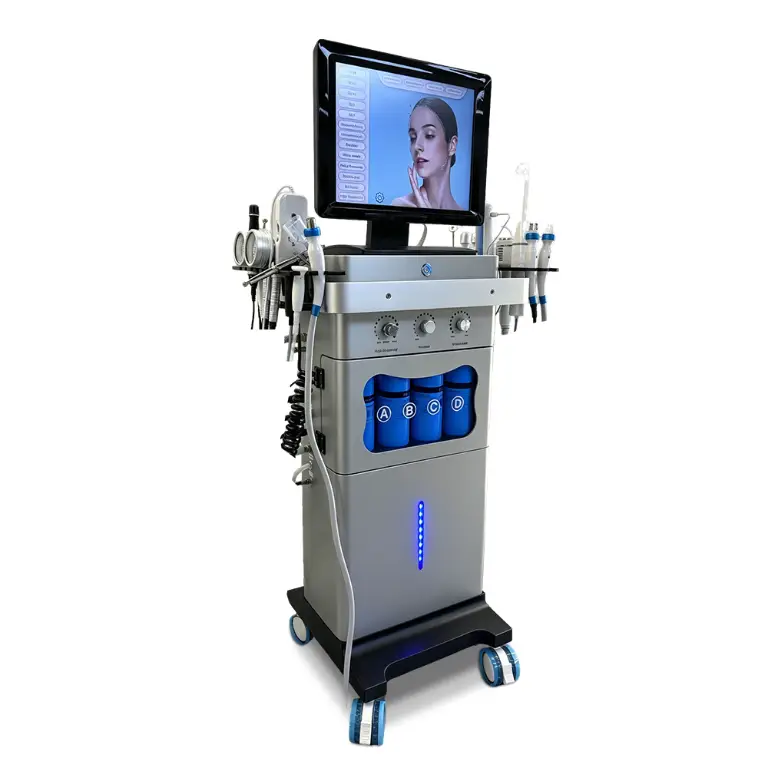
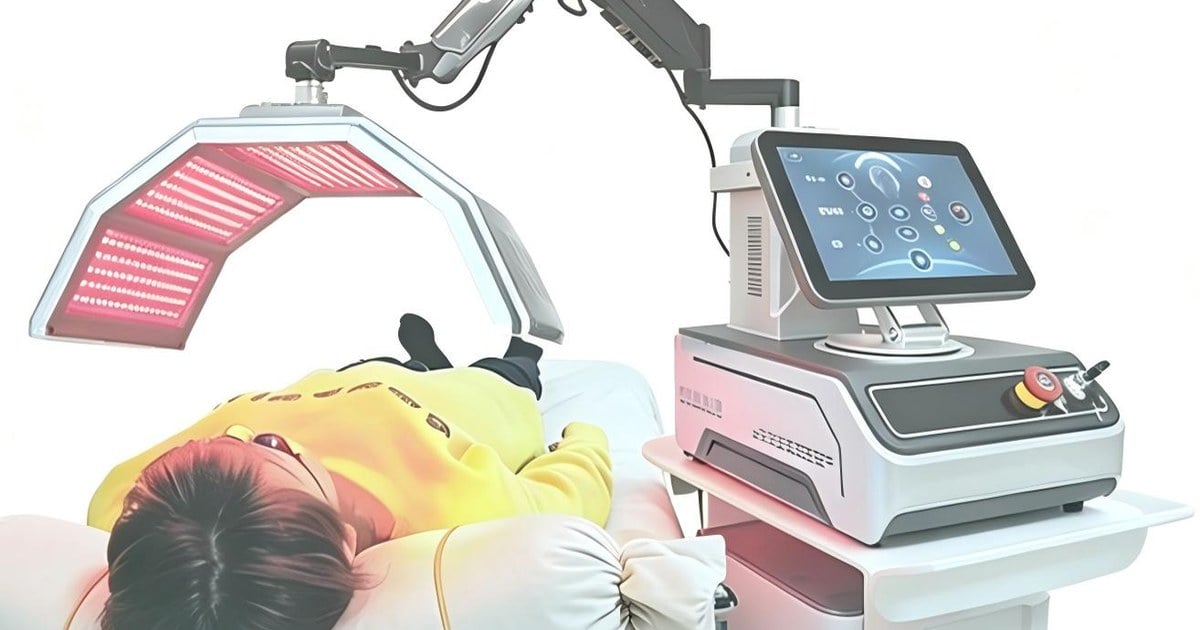
For clinic owners and aesthetic practitioners, the discussion shifts from “what can this treatment do for my patients” to “what can this equipment do for my practice.” A CO2 laser machine is a 5 to 10 year capital investment. The real cost is not the sticker price; it is the total cost of ownership over the device’s service life.
RF Metal Tube vs. Glass Tube: The Hidden Cost Difference
This is the single most consequential specification in a CO2 laser purchase, and it is also the one most likely to be obscured by aggressive sales language. The table below shows why.
A $2,500 glass-tube machine looks attractive on a purchase order. But over five years, with seven tube replacements and the cumulative cost of treatment downtime during each replacement cycle, the actual outlay easily exceeds $14,000. A $5,500 RF metal-tube machine, by contrast, may require zero tube replacements over the same period, keeping the five-year total under $8,500. The math is unambiguous: glass tubes have no place in a clinical setting.
The physics behind the difference is worth understanding. RF (radio-frequency) excited metal tubes use a sealed cavity where the CO2 gas mixture is not consumed during operation. The tube degrades only through gradual electrode erosion. DC-excited glass tubes, by contrast, progressively crack the CO2 molecules through electrical discharge, contaminating the gas mixture and causing rapid power decay. By the 500-hour mark, a glass tube may be delivering only 70 to 80 percent of its rated output, yielding inconsistent clinical results.
Certification Checklist: What Your Machine Must Have
Regulatory compliance is not a marketing checkbox. It is a legal and ethical floor. Before signing any purchase order, verify the following.
The most common pitfall: supplier websites display certification logos, but when pressed for the actual certificate documents, they cannot produce them, or the certificates are expired. Always verify FDA 510(k) numbers directly in the public FDA database. For the European market, note that the EU Medical Device Regulation (MDR 2017/745) has replaced the older Medical Device Directive (MDD 93/42/EEC). New devices must now be certified under MDR.
ROI Calculation: When Does a CO2 Laser Machine Pay for Itself?
For a clinic owner, the value equation is straightforward. How quickly does the equipment generate enough revenue to cover its cost? And what does the profit trajectory look like afterward? Here is a worked example based on a mid-range RF metal-tube fractional CO2 system at approximately $5,500.
Per-session economics:
- Patient price per full-face session: $1,000 (adjust for your local market)
- Consumable cost per session (ointment, disposables, anesthesia): approximately $50
- Net profit per session: approximately $950
- Sessions to break even: approximately 6 full-face treatments
- Break-even timeline: as little as 3 weeks at 2 sessions per week
Annualized projection (conservative):
- 3 sessions per week × $950 net × 48 weeks = approximately $136,800 annual profit contribution
- Equipment cost: $5,500, meaning ROI exceeds 2,400 percent in Year 1
These numbers assume competent marketing, appropriate pricing for the local market, and consistent operator skill. The equipment is only one variable in the profitability equation, but it is the variable that sets the ceiling on clinical outcomes and patient satisfaction.
When evaluating specific suppliers, certifications and factory capabilities become the practical bridge between spreadsheet projections and real-world reliability. For example, manufacturers with an ISO 13485-certified quality management system, full CE, FDA, RoHS, and FCC compliance, and vertically integrated production facilities, such as Konmison (Guangzhou) with its 12,000 square meter factory, six automated assembly lines, and transparently disclosed full certification stack, remove a layer of procurement risk that abstract price comparisons cannot capture (verified quality certifications).
References
- Wang H, Guo B, Hui Q, Lin F, Tao K. CO₂ lattice laser reverses skin aging caused by UVB. Aging (Albany NY). 2020;12(8):7056-7065. https://pubmed.ncbi.nlm.nih.gov/32312940/
- Wu N, et al. A meta-analysis of fractional CO₂ laser combined with PRP in the treatment of acne scar. Lasers in Medical Science. 2021;36(1):1-9. https://pubmed.ncbi.nlm.nih.gov/32827074/
- U.S. Food and Drug Administration. 510(k) Premarket Notification Database. https://www.accessdata.fda.gov/scripts/cdrh/cfdocs/cfpmn/pmn.cfm
- Konmison. Quality Certifications. https://www.konmison.com/quality/
- Konmison. Official Website. https://www.konmison.com/


 EN
EN  RU
RU  ES
ES  IT
IT  AR
AR  FR
FR  DE
DE  JA
JA  KO
KO  NL
NL